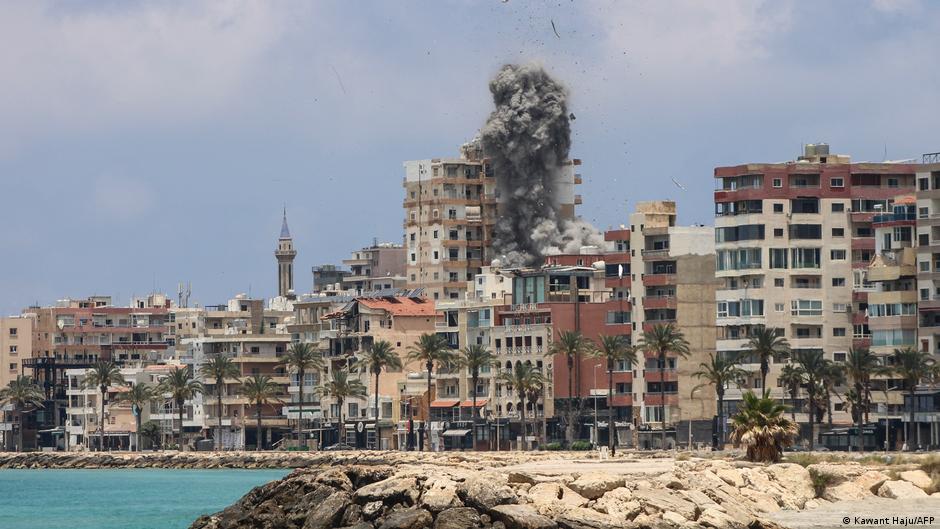
Israeli airstrikes hit the city of Tyre in southern Lebanon on Tuesday, June 9, 2026, killing eight people and injuring at least 32. The attacks followed forced evacuation orders for the city’s historic Christian quarter, even as a UN commission reported that civilians across the region remain trapped in a cycle of mass atrocities committed by all parties.
Escalating Conflict in Tyre and Southern Lebanon
The bombardment of Tyre represents a significant intensification of hostilities. According to The Guardian, Israeli forces struck the al-Masaken neighborhood without warning Tuesday morning, igniting fires and sending smoke plumes over the city. Airstrikes also hit the village of Abbasieh, located north of the city.
For the first time in this round of fighting, Israel issued a forced evacuation notice for Tyre’s historic Christian quarter, an area previously regarded as a safe zone. Many Shia Muslim residents had sought refuge there, and the Lebanese army had deployed troops to the district last week to demonstrate that Hezbollah maintained no armed presence in the area. The evacuation order triggered a chaotic exodus, with families jamming narrow streets in vehicles packed with mattresses and household belongings.
The strikes have drawn desperate appeals from local leadership. Clergy representing three Christian denominations in Tyre issued a public statement urging international intervention to prevent the destruction of the old city. “The old city is not merely a residential area,” the clergy said. “It is the historical and human heart of Tyre, home to thousands of civilians, including families, children and the elderly.”
UN Commission Findings on Regional Rights Violations
While the kinetic conflict expands in Lebanon, a new report from the UN Independent International Commission of Inquiry on the Occupied Palestinian Territory, including East Jerusalem, and Israel, has leveled severe accusations against all sides of the conflict. The commission, as DW reports, found that Palestinians are “systematically and deliberately subjected to severe violations of human rights law by all parties to the region’s conflict.”
For more on this story, see Israel-Hezbollah clashes erupt along Lebanon’s Litani River after deadly strikes.
- In the West Bank: The commission stated that Israel is “primarily responsible” for settler violence, characterizing such acts as a state policy intended to annex territory and displace Palestinians.
- In Gaza: The UN reported that civilians are being “violently repressed and controlled by the very faction that claims to govern them,” referring to Hamas and its affiliated forces.
Srinivasan Muralidhar, the Commission’s chair, noted that while the motivations of the warring parties differ, the impact on non-combatants is disturbingly uniform. “What is alarmingly similar is the deliberate infliction of suffering on Palestinian civilians,” Muralidhar said.
Casualties and the Toll of Continuous Displacement
The human cost of the regional violence continues to climb as military operations persist. In the West Bank, data from the Palestinian Health Ministry indicates that at least 1,080 Palestinians have been killed by Israeli troops or settlers since October 2023. Conversely, Israel reports that 46 soldiers and civilians have been killed by Palestinian attacks or during military operations in the same timeframe.
This follows our earlier report, Iran-Israel Ceasefire Halted After Trump Intervention.
The situation remains particularly dire in Gaza. According to the UN and local health officials, more than 72,000 Palestinians have been killed since the war began in October 2023. Nearly the entire population of 2.1 million has been displaced at least once.
In Lebanon, the humanitarian burden is compounding as civilians face repeated displacement. Residents of Tyre’s Palestinian refugee camps, some of whom had only recently returned after failing to find shelter elsewhere, are now being forced to flee again. The damage extends to the region’s cultural heritage as well; strikes on Sunday near the Roman hippodrome at al-Bass have already resulted in damage to archaeological sites in the ancient city.
Military Maneuvers and Diplomatic Friction
The Israeli military has justified its recent actions in Tyre by alleging that Hezbollah members had infiltrated the city’s refugee camps and the Christian quarter to launch attacks. On the border, the Israeli army reported killing a gunman who crossed into Israel and opened fire, marking a notable shift in tactics. It remains unclear if this individual held formal affiliation with Hezbollah.

Israel has consistently rejected the findings of the UN commission, accusing the body of “systematic anti-Israel discrimination.” As the military campaign continues despite international warnings, the displacement of populations—from the Christian quarter of Tyre to the war-torn zones of Gaza—suggests a conflict that is increasingly difficult to contain within established lines of engagement.
