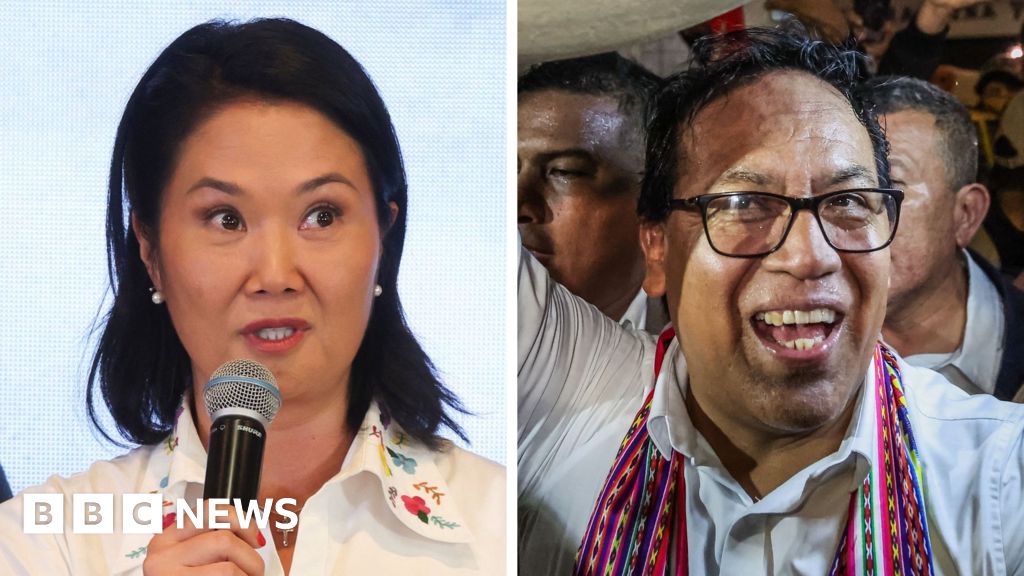
Peru’s presidential runoff election remains in limbo, with conservative candidate Keiko Fujimori holding a narrow lead over nationalist Roberto Sánchez, though official results could take weeks to finalize. As of June 7, 2026, electoral authorities reported Fujimori with 52.6% of votes (5.96 million) and Sánchez with 47.4% (5.36 million), but the race’s proximity has sparked concerns over delayed resolution and public frustration. “Previous presidents didn’t remember towns like ours, our hillside where we live, the needs people have,” a voter told the BBC, highlighting deep-seated grievances about political neglect. The outcome, overshadowed by surging crime and economic anxieties, risks further destabilizing a nation already grappling with its ninth leader in 10 years.
Vote Counting Delays and Public Anxiety
Electoral authorities in Lima have faced criticism for the sluggish tallying process, with results expected to remain unofficial for days. Unlike the April first-round vote, there were no major disruptions on Election Day, but voter turnout in the capital was notably lower, with few lines at polling stations despite mandatory voting. A 2025 national survey by the National Institute of Statistics and Informatics revealed that 84% of urban Peruvians fear becoming victims of crime in the next year, a sentiment amplified by rising extortion and violence. “Five years ago, I was disappointed by Castillo with his corruption, and… Roberto Sánchez is the same,” one voter told the AP, reflecting skepticism toward both candidates.

The slow count has intensified uncertainty, with officials acknowledging the complexity of verifying ballots. Fujimori, daughter of disgraced former president Alberto Fujimori, and Sánchez, an ally of jailed ex-leader Pedro Castillo, both failed to secure a majority in the April vote, forcing the runoff. Their campaigns, marked by polarizing rhetoric and limited policy clarity, left many voters undecided. A June poll by Ipsos found 30% of respondents still uncertain, underscoring the electorate’s disillusionment with Peru’s political class.
Historical Context and Candidate Legacies
Fujimori’s campaign has drawn sharp contrasts with her father’s 1990s presidency, which was plagued by human rights abuses and authoritarianism. Despite her efforts to rebrand, her association with that era persists. “Fujimori hasn’t done anything either,” a voter said, echoing widespread skepticism. Sánchez, meanwhile, faces scrutiny for his ties to Castillo, whose 16-month term was defined by instability and corruption allegations. Both candidates’ crime-fighting proposals failed to resonate, as voters linked them to Peru’s legacy of political dysfunction.
The runoff’s outcome could reshape Peru’s political landscape. With crime and economic inequality dominating the agenda, the next president will inherit a nation where 84% of urban residents fear violence, according to the National Institute. Organized crime’s growing influence—fuelled by illegal gold mining in the Andes and Amazon—has further complicated the electoral calculus, as experts warn that neither candidate’s plans address systemic issues. “The candidates’ crime-fighting proposals were not enough to make inroads with voters,” the AP noted, highlighting a disconnect between rhetoric and public priorities.
What Comes Next: Uncertainty and Stakes
The delayed results have raised fears of post-election unrest, particularly if either candidate contests the outcome. Electoral authorities, who took over a month to declare Fujimori and Sánchez as first-round finalists, face pressure to expedite the process. Meanwhile, observers warn that a narrow victory for either candidate could deepen polarization. “This is a moment of high stakes,” said a political analyst quoted in the AP, noting that Peru’s fragile institutions are under strain. The next 30 days will determine whether the country avoids a prolonged crisis or slides into further instability.
For now, Peruvians await clarity, their hopes pinned on a process as uncertain as the candidates themselves. As one voter put it, “I want her to go out, not to be an office-bound president, and to be for the people and fight like that.” Whether Fujimori or Sánchez can fulfill that promise remains to be seen.
BBC | <a With elections looming, Peru’s future hinges on whether either candidate can bridge deep societal divides and restore public trust in the nation’s democratic foundations.
