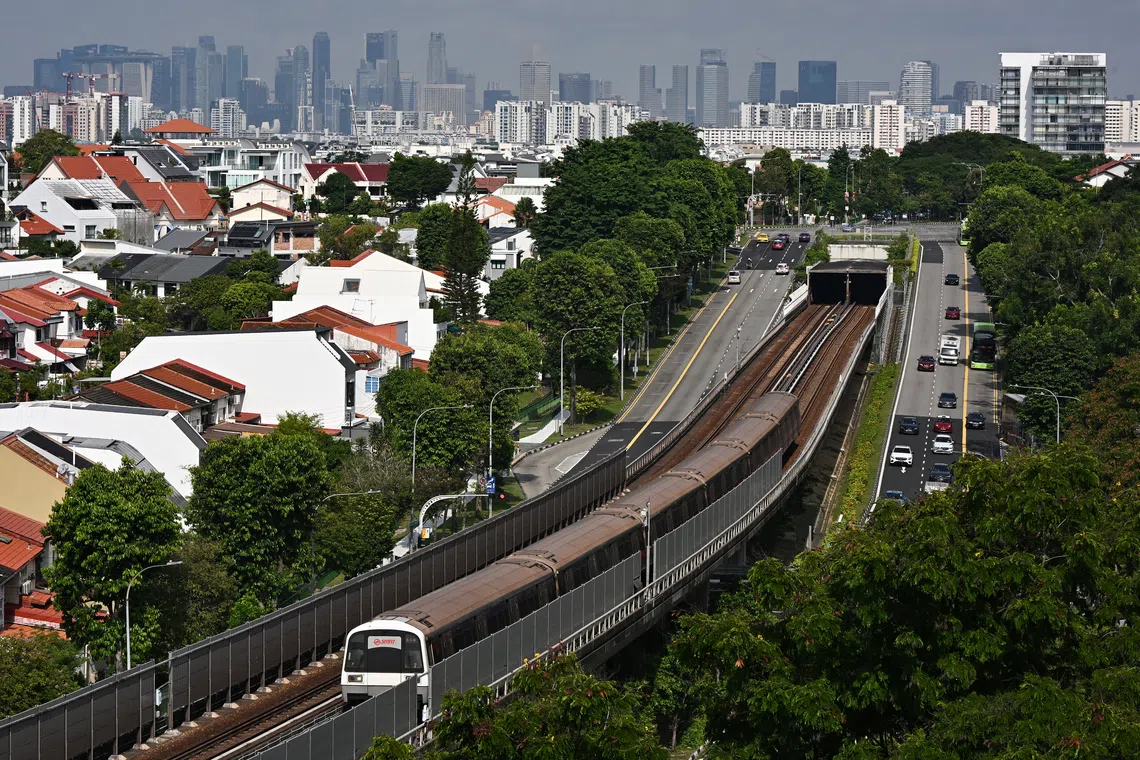
Singapore MRT East-West Line Service Resumes Ahead of Schedule
Singapore’s East-West Line (EWL) partially resumed service on December 8th, a day earlier than initially projected, following the completion of track work and safety testing. The resumption of service between Bedok and Tampines stations, as well as Tanah Merah and Expo, mitigates potential disruptions for commuters during peak travel times. The Land Transport Authority (LTA) announced the early completion, citing efficient operations and favorable weather conditions despite recent inclement weather, which could have delayed critical infrastructure projects.
The accelerated reopening follows intensive work to connect the EWL with the upcoming East Coast Integrated Depot (ECID), slated to begin operations in the latter half of 2026. The ECID represents a S$3 billion investment aimed at significantly increasing rail capacity and improving maintenance efficiency. Reuters reported in November that the project is crucial for accommodating Singapore’s growing population and increasing demand for public transportation. Alongside the track connection, new platform construction at Tanah Merah station was also completed during the service suspension.
Economic Impact and Operational Considerations
While the partial suspension affected approximately 100,000 commuters daily, according to LTA estimates, the swift completion of the work demonstrates Singapore’s commitment to minimizing disruption during essential infrastructure upgrades. The project’s successful and early completion is viewed favorably by transport analysts, reinforcing Singapore’s reputation for efficient project management in critical infrastructure. Delays in such projects often lead to increased congestion on alternative routes and potential economic losses due to reduced productivity.
The LTA deployed a comprehensive mitigation strategy, including shuttle trains operating at increased frequencies and a dedicated bus service, to manage passenger flow. Approximately 880 personnel, including engineers and contractors from both the LTA and SMRT, worked around the clock to expedite the completion of the project. The effective coordination of manpower and resources proved crucial in achieving the accelerated timeline. The effort highlights the importance of skilled labor and efficient logistics in infrastructure development, areas where Singapore has consistently invested heavily.
Future Infrastructure Projects and Potential Disruptions
The LTA has indicated that further track closures are anticipated in both 2025 and 2026 to finalize the ECID’s integration with the EWL network. While specific dates and durations haven’t been announced, commuters should expect potential service disruptions during these future phases. The phased approach to the project is intended to minimize overall disruption to the public transit system while allowing crucial construction and testing phases to proceed safely and effectively.
These ongoing improvements are part of a broader S$60 billion rail expansion plan unveiled in 2019, aimed at doubling Singapore’s rail network by 2030. While these expansions are expected to alleviate long-term transportation challenges, they necessitate periodic service disruptions. The ability to efficiently manage these short-term inconveniences will be crucial for maintaining public confidence in the nation’s public transport system. Analyst at Maybank Kim Eng, Lee Yue Ning, noted that “Singapore’s well-planned infrastructural development is essential for sustaining its economic growth and attracting foreign investment.”
For more in-depth analysis on Singapore’s infrastructure investments, read more on Globally Pulse Business.
