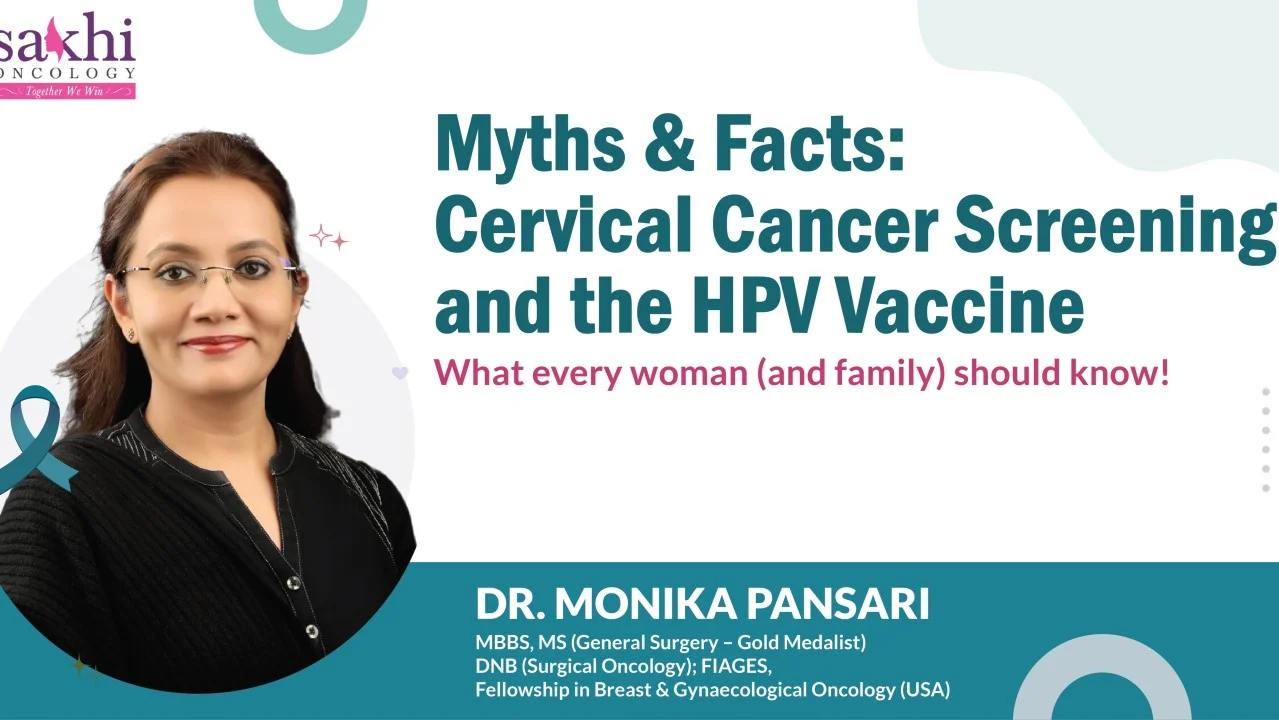
Cervical Cancer: Myths and Facts
Monika Pansari, Senior Surgical Oncologist at Manipal Hospitals (MHEPL), recently highlighted the importance of cervical cancer prevention through timely screening and HPV vaccination. Cervical cancer is one of the most preventable cancers, yet many women still miss opportunities for early detection and immunization due to misconceptions.
Understanding the Risks of Cervical Cancer
Myth 1: Cervical cancer only affects older women.
Fact: Cervical cancer can actually develop in women of all adult ages. While the risk does increase after age 30, precancerous changes can begin much earlier, making screening crucial regardless of age or health status. According to the American Cancer Society, cervical cancer is most commonly diagnosed in women aged 35-44.
Myth 2: No symptoms mean I don’t need screening.
Fact: Early cervical changes are often asymptomatic, which means many women may not exhibit any signs until the disease progresses. Routine screening is essential to catching potential issues before they develop into cancer, as emphasized by the CDC.
Myth 3: A Pap smear is painful and unsafe.
Fact: The Pap smear is a relatively quick and generally painless procedure. Some women may experience minor discomfort, but the test is safe and critical for early cancer detection. The World Health Organization (WHO) supports the Pap smear as a vital component of cervical cancer screening.
Myth 4: Only sexually active women need screening.
Fact: The virus responsible for cervical cancer, HPV, is prevalent and can be contracted even with minimal exposure. Therefore, screening recommendations are based on age rather than sexual history. The WHO recommends that screening begin at age 30, regardless of marital status.
Myth 5: A single normal test means I’m safe for life.
Fact: While a normal result from a Pap test is reassuring, it is not a guarantee of lifelong safety. Regular screenings remain essential, and healthcare providers recommend intervals based on specific guidelines and individual health needs.
Understanding HPV (Human Papillomavirus)
HPV is a highly prevalent virus, with most sexually active individuals being infected at some point in their lives. Most infections resolve naturally, but persistent infection with specific high-risk strains of HPV can lead to cervical cancer over time. The CDC notes that HPV vaccines can significantly lower the risk of developing cervical cancer.
Myth 6: HPV vaccination is only for teenagers.
Fact: While the vaccine is most effective when administered before the onset of sexual activity, it can still be beneficial for young adults. Health professionals recommend discussing vaccination options with a healthcare provider, regardless of age.
Myth 7: HPV vaccine encourages unsafe behavior.
Fact: The purpose of the HPV vaccine is to provide protection against certain cancer-causing virus strains, not to promote risky behavior. Education surrounding this vaccine is paramount for public health messaging.
Myth 8: HPV vaccine causes serious side effects.
Fact: The HPV vaccine has undergone extensive research and monitoring. Most reported side effects are mild and may include soreness at the injection site or low-grade fever. The WHO has noted the safety and efficacy of HPV vaccination programs globally.
Myth 9: Vaccinated women don’t need screening.
Fact: Even after receiving the HPV vaccine, regular screening is still critical. The vaccine protects against certain high-risk HPV types but not all. Regular Pap tests remain important for comprehensive cervical cancer prevention.
Holistic Approach to Cervical Cancer Prevention
Comprehensive cervical cancer prevention is most effective when it includes:
- Regular screening
- HPV vaccination
- Ongoing education and medical guidance
Together, these measures can collectively prevent the majority of cervical cancer cases.
Taking Charge of Your Health
Prioritizing your health is a communal responsibility. Those due for screening or seeking information about the HPV vaccine should consult their healthcare provider to take actionable steps toward prevention. Awareness and proactive measures can save lives.
Dr. Monika Pansari
MBBS, MS (General Surgery – Gold Medalist)
DNB (Surgical Oncology); FIAGES,
Fellowship in Breast and Gynaecological Oncology (USA).
For additional insights on similar topics, read more on Globally Pulse Health.
