Singapore and Indonesia pledge to keep Strait of Malacca open and safe
Prime Minister Lawrence Wong and President Prabowo Subianto committed to maintaining the Strait of Malacca's security and expanding cross-border energy trade.
- Headline Dispatch: Singapore and Indonesia pledge to keep Strait of Malacca open and safe
- Core Takeaway: Prime Minister Lawrence Wong and President Prabowo Subianto committed to maintaining the Strait of Malacca's security and expanding cross-border energy trade.
- Source Synthesis: Continuous live monitoring aggregated across major news wires and independent bureaus.
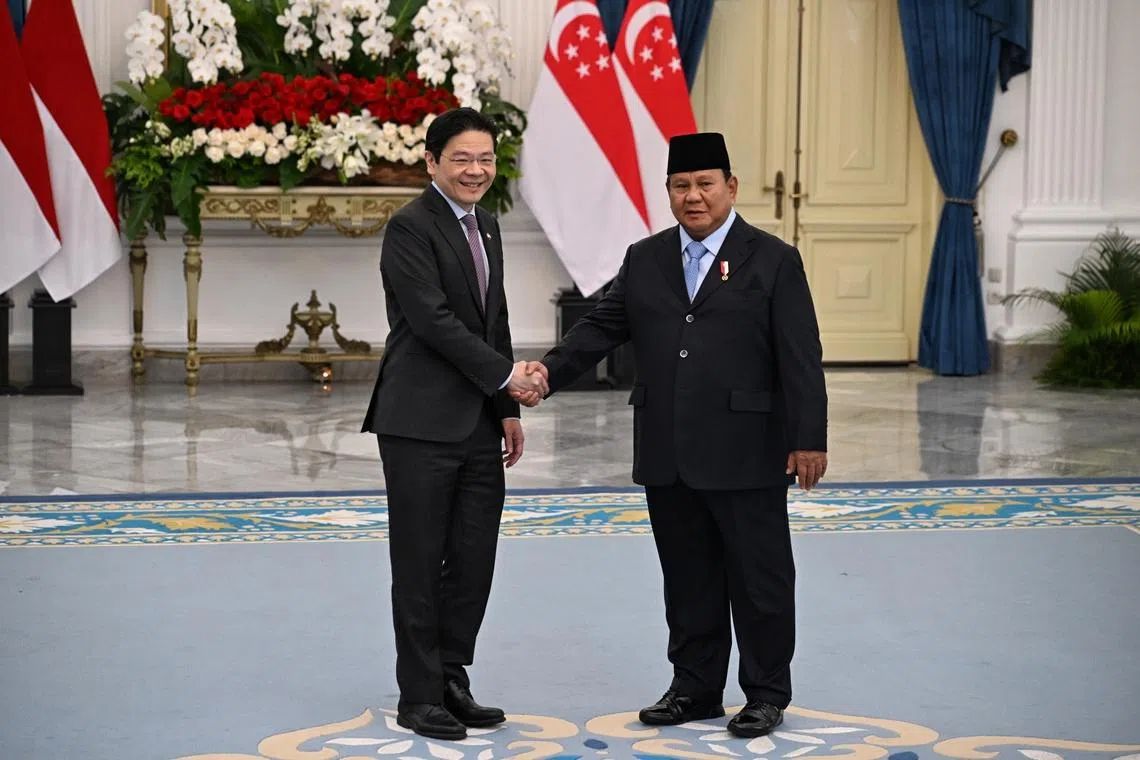
Singapore and Indonesia pledge to keep Strait of Malacca open and safe
Singapore and Indonesia have committed to ensuring the Strait of Malacca remains open, safe, and accessible to all, positioning maritime security as a central pillar of their bilateral relations. The pledge followed talks on Monday, July 6, 2026, between Singapore Prime Minister Lawrence Wong and Indonesian President Prabowo Subianto during the annual Singapore-Indonesia Leaders’ Retreat in Jakarta.
The two leaders emphasized the need to safeguard the waterway, which connects the Indian Ocean and the South China Sea and serves as a critical corridor for global energy shipments and trade. Both nations, as littoral states bordering the strait, agreed to coordinate with Thailand and Malaysia to maintain the passage in accordance with the 1982 United Nations Convention on the Law of the Sea (UNCLOS).
President Prabowo stated that the two countries share a responsibility for regional security and economic growth, noting that prosperity will never come without peace and stability
. He specified that protecting the strait involves safeguarding it from piracy, accidents, and pollution.
Global Tensions and Maritime Rights
The commitment comes amid heightened geopolitical uncertainty. Prime Minister Wong linked the importance of maritime security to recent events in the Middle East, where conflict disrupted traffic in the Strait of Hormuz and impacted the global supply of oil and trade. While vessels resumed passage through the Strait of Hormuz following a June memorandum of understanding between the U.S. And Iran, the incident served as a warning.
Wong previously cautioned at the 48th ASEAN Summit in Cebu that the weaponization or restriction of international waterways like the Strait of Hormuz could set a dangerous precedent for sea lanes closer to home. He asserted that Singapore and Indonesia are strategically aligned
in upholding navigational rights, freedoms, and the unimpeded transit passage of vessels under customary international law.
This diplomatic alignment follows a brief period of friction. Weeks before the ASEAN summit, Indonesian Finance Minister Purbaya Yudhi Sadewa suggested imposing a levy on ships transiting the Malacca Strait, citing Iran's plans for the Strait of Hormuz. The proposal was later dismissed after foreign ministers from both nations stressed the necessity of freedom of passage.
Expanding Economic and Energy Ties
Beyond security, the retreat focused on evolving the bilateral relationship into new economic sectors. A primary development is the progress on cross-border electricity trade. Indonesia announced that its sovereign investment fund, Danantara, will lead implementation for electricity trade, the digital economy, and energy collaboration.
To advance these discussions, new agreements were signed involving Danantara and Singaporean firms Sembcorp Industries, Keppel Electric, and Singapore Energy Interconnections. Prime Minister Wong described the initiative as a win-win
project and a building block for a wider ASEAN Power Grid to enhance regional energy security.
Other collaborative efforts include:
- Renewable Energy: A planned solar project in Morowali, central Sulawesi, to provide clean electricity for one of Indonesia’s largest nickel processing centers.
- Infrastructure: Cooperation in cybersecurity, digital ecosystems, and supply chain resilience.
- Industrial Expansion: The Kendal Industrial Park in central Java, which marks its 10th anniversary in 2026, has reached full capacity and is slated to expand by 1,000ha.
Strategic and Diplomatic Outlook
President Prabowo characterized the discussions as heart to heart
and forward-looking
, agreeing that any misperceptions or misunderstandings between the two nations should be resolved openly as friends. He noted that the partnership is built on trust between both governments and their respective peoples.
Prime Minister Wong expressed confidence in Indonesia’s future, stating that Singapore intends to remain a long-term partner in the country's development. He also noted that institutional links, such as the relationship between the Tentara Nasional Indonesia and the Singapore Armed Forces, help foster trust.
The leaders also reaffirmed ASEAN's position that global and regional disputes must be resolved through diplomacy and dialogue. The two nations are now preparing to commemorate 60 years of diplomatic relations in 2027, a milestone that coincides with Singapore's ASEAN chairmanship that same year.
Cabinet Secretary Teddy Indra Wijaya confirmed that the bilateral discussions included the signing of 26 agreements or memorandums of understanding.
How significant is this development?
Participate in our community survey on the trajectory and real-world impact of this news.