Palestinians mourn Gaza World Cup screenings organiser killed in Israeli strike
Palestinians mourn the death of Mohammed al-Wahidi, a prominent aid worker and former teacher who organized public World Cup screenings for families in Gaza.
- Headline Dispatch: Palestinians mourn Gaza World Cup screenings organiser killed in Israeli strike
- Core Takeaway: Palestinians mourn the death of Mohammed al-Wahidi, a prominent aid worker and former teacher who organized public World Cup screenings for families in Gaza.
- Source Synthesis: Continuous live monitoring aggregated across major news wires and independent bureaus.
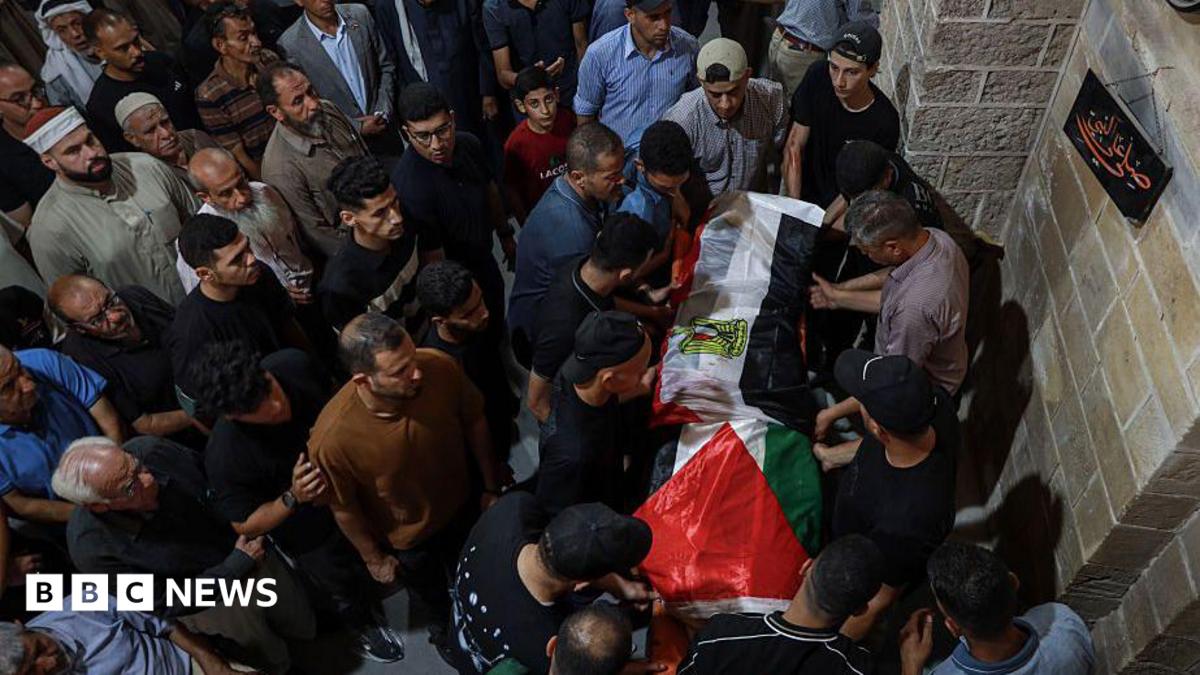
Palestinians mourn Gaza World Cup screenings organiser killed in Israeli strike
The killing of Mohammed al-Wahidi, a prominent Palestinian aid worker and organizer of World Cup public screenings, in an Israeli air strike on Tuesday has sparked widespread grief across the Gaza Strip. Al-Wahidi, 65, was killed in the Sabra neighborhood of Gaza City when an Israeli missile struck the taxi he was traveling in.
According to Dr. Mohamed Abu Selmiya, director of Shifa Hospital, three other people died in the attack: the driver, 33-year-old Ahmed Daghmush, and two brothers who were passing by, 10-year-old Hamza al-Deri and 8-year-old Fari. Funeral processions for al-Wahidi were held Wednesday, July 8, 2026, at the Great Omari Mosque in Gaza City.
The Israeli military stated that al-Wahidi was not the target of the strike, which it claimed was aimed at a Hamas militant. The military added that it is investigating whether Daghmush was the intended target. However, Dr. Abu Selmiya maintained that Daghmush was a taxi driver with no known links to militant groups.
A "Door to Hope"
Before the war, al-Wahidi was an English teacher. He later became a senior official and director of public relations for the Egyptian Relief Committee in Gaza, an Egypt-backed organization providing food, shelter, and emergency assistance. For more than two-and-a-half years, he coordinated aid for displaced families, often remaining in the field at distribution points rather than working from an office.
In the weeks preceding his death, al-Wahidi became widely recognized for organizing public World Cup match screenings in Deir al-Balah, the al-Mawasi area of southern Gaza, and Gaza City. These events, which utilized giant screens placed among destroyed buildings, were intended to give children and families a brief escape from the conflict. The screenings were particularly popular for matches involving Egypt, reflecting the long-standing cultural and political ties between Palestinians and their neighbors.
Al-Wahidi was killed only hours before a scheduled screening of Egypt's Round of 16 match against Argentina. Activist Mohammed Hmeid, who documented al-Wahidi's work, wrote:
"He was not simply an aid worker in a humanitarian committee. He was a door to hope that opened every day for displaced people and those who had lost everything."
Mohammed Hmeid, activist, via BBC
Political and Sporting Context
The public screenings gained additional meaning due to the support of Egypt's national team coach, Hossam Hassan. Hassan dedicated a victory over Australia on Friday to both Palestinians and Egyptians and waved a Palestinian flag on the pitch. In a Monday briefing, Hassan urged the global community to "let the Palestinian people be, let them exist, let them live a life of their own."
The strike occurred despite a truce reached in October. According to local health officials, Israeli attacks have killed 1,084 people since that ceasefire. Other reports from the Gaza Health Ministry state at least 1,007 or 1,027 Palestinians have been killed by Israeli fire since the truce took effect.
Humanitarian Toll and Military Control
The death of al-Wahidi highlights the ongoing risks to humanitarian personnel. By late April, the UN recorded at least 593 aid workers killed since the war began, including eight since the October ceasefire.
The overall Palestinian death toll from the Israel-Hamas war is reported by the Gaza Health Ministry as ranging between 73,018 and 73,118. The ministry notes that women and children account for approximately half of all fatalities. The conflict began on 7 October 2023, after Hamas-led militants attacked southern Israel, killing about 1,200 people and taking 251 hostage.
Simultaneously, the National Committee for the Administration of Gaza (NCAG) announced Thursday that it has finalized recovery and reconstruction priorities following a meeting in Cairo with British Home Secretary Yvette Cooper. However, these plans face uncertainty as Israel expands its military control. Maps shared with aid organizations in March indicate the Israeli military controls about 64 percent of the Gaza Strip, up from 53 percent under the ceasefire agreement. Israeli Prime Minister Benjamin Netanyahu has reportedly instructed the military to expand this control to 70 percent of the territory.
How significant is this development?
Participate in our community survey on the trajectory and real-world impact of this news.