US strikes 90 targets in Iran as Tehran attacks Gulf nations
A wave of US airstrikes targeting Iranian military infrastructure has sparked retaliatory drone attacks across Kuwait, Qatar, and Bahrain.
- Headline Dispatch: US strikes 90 targets in Iran as Tehran attacks Gulf nations
- Core Takeaway: A wave of US airstrikes targeting Iranian military infrastructure has sparked retaliatory drone attacks across Kuwait, Qatar, and Bahrain.
- Source Synthesis: Continuous live monitoring aggregated across major news wires and independent bureaus.
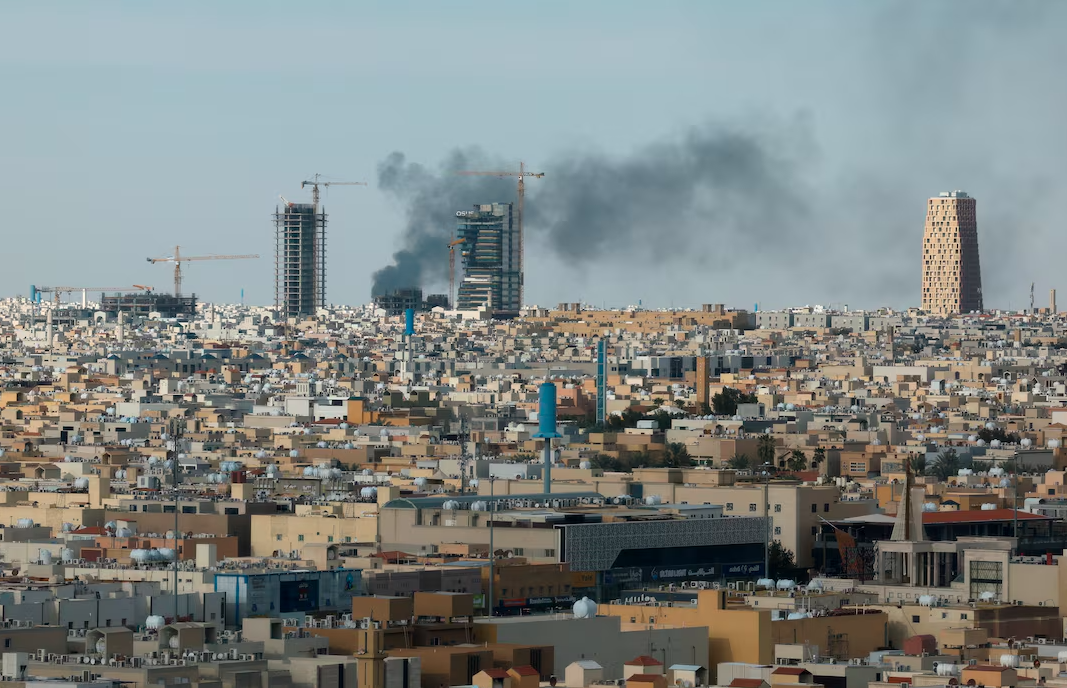
US strikes 90 targets in Iran as Tehran attacks Gulf nations
The United States launched a wave of airstrikes against Iran early Thursday, July 9, 2026, hitting approximately 90 military targets. Tehran responded by launching one-way attack drones at U.S. Military sites in Kuwait, Qatar, and Bahrain, an exchange that further jeopardized an interim deal intended to end the war in the Persian Gulf.
The U.S. Military’s Central Command announced the completion of the latest round of strikes, which targeted air defense systems, coastal surveillance assets, missile and drone storage sites, naval capabilities, and military logistics infrastructure. CENTCOM released black-and-white footage showing strikes on an airport runway and missile launchers.
President Donald Trump warned on Wednesday that the U.S. Was preparing for another night of strikes. Speaking at a NATO summit in Turkey, Trump declared that the interim memorandum of understanding—a ceasefire framework—was over
, though he noted that negotiations could continue. He characterized the strikes as retribution for Iranian attacks on commercial ships in the Strait of Hormuz, describing the current conflict not as a war but as a de-nuking of Iran
.
Iran’s Health Ministry reported that U.S. Strikes across five provinces since Wednesday have killed at least 14 people and wounded 78. Specific casualties include at least three people killed in Iran’s southwestern Khuzestan province and a firefighter at an airport in Iranshahr. Earlier strikes on Wednesday reportedly killed at least nine members of Iran’s armed forces.
Tehran’s military retaliated by targeting U.S.-linked sites. Iran's military claimed to have used a large number of various types of army kamikaze drones
to hit a Patriot missile interceptor system in Kuwait, an early warning system in Qatar, and fuel storage tanks in Bahrain. The Revolutionary Guard specifically identified attacks on Camp Arifjan and Ali Al Salem in Kuwait, as well as Juffair and Sheikh Isa in Bahrain. Sirens sounded in Bahrain and Kuwait.
The escalation coincided with the final stages of funeral proceedings for the late Supreme Leader Ayatollah Ali Khamenei, who was killed February 28. Following processions through Najaf and Karbala in Iraq, the coffin was moved toward Mashhad for burial on Thursday. The Revolutionary Guard alleged the U.S. Targeted two bridges on the route to Mashhad to disrupt the ceremonies. Iranian state media reported a strike on a railway bridge in Golestan province, leading the Islamic Republic of Iran Railways to suspend train services between Tehran and Mashhad.
Following Trump's comments that the ceasefire was over, U.S. Crude oil prices jumped as high as $76 per barrel, closing the day up 4.4% at $73.52. Brent crude rose to a peak of $80 before finishing at $78.02.
Iranian officials remained defiant. Parliament Speaker Mohammad Bagher Qalibaf, a lead negotiator, stated on X that the Strait of Hormuz would remain open only through Iranian arrangements
, not American threats. He warned that if the U.S. Strikes, you’ll get hit
. Meanwhile, Iranian Foreign Minister Abbas Araghchi responded to Trump calling Iranian leaders scum
by stating that Iran would not answer vulgarity with vulgarity, but with action
.
Trump suggested the U.S. Might reimpose a blockade on ships heading to Iranian ports and hinted at potential future strikes on civilian infrastructure, such as electric and desalinization plants, or the seizure of the oil-production hub Kharg Island.
Negotiations to reach a permanent peace deal, focusing on the reopening of the strait and rolling back Tehran’s nuclear program, were scheduled to begin after the funeral of Ayatollah Ali Khamenei.
How significant is this development?
Participate in our community survey on the trajectory and real-world impact of this news.


