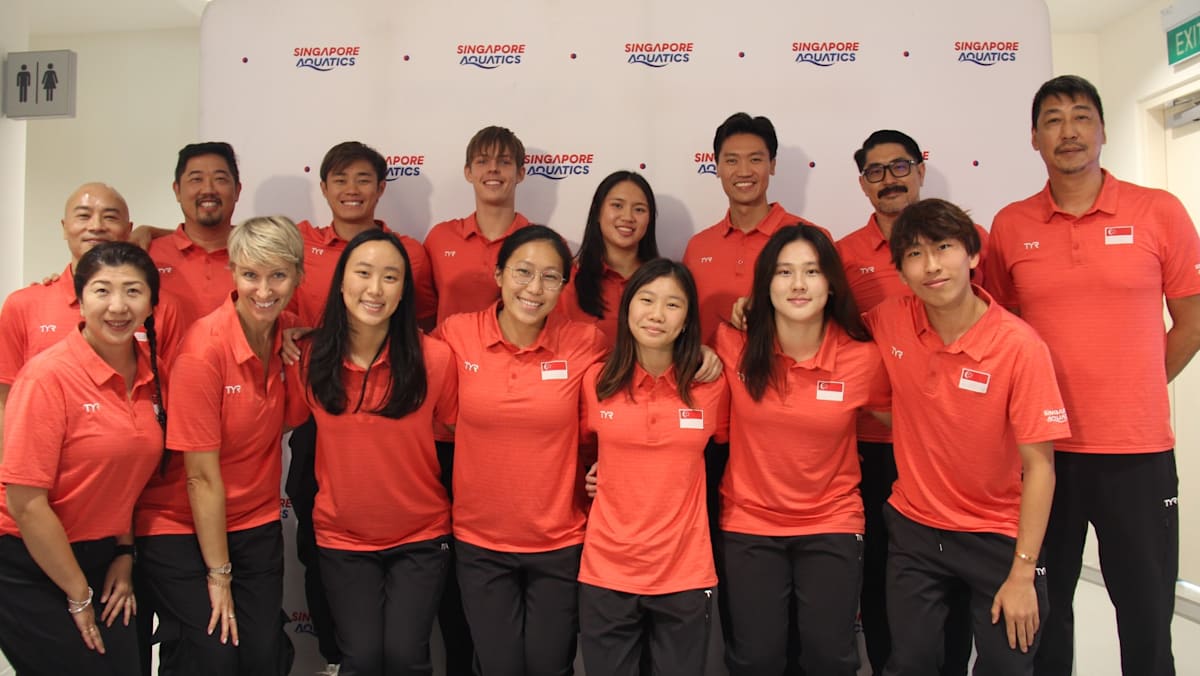
SINGAPORE — With the 33rd Southeast Asian (SEA) Games in Bangkok just one month away, Singapore Aquatics (SAQ) has confirmed a 71-athlete delegation aiming for no fewer than 20 gold medals across artistic swimming, diving, open water swimming, swimming, and water polo. The announcement, made by SAQ President Professor Kenneth Goh at a media event at the OCBC Aquatics Centre on Monday, positions aquatics as a cornerstone of Singapore’s multi-sport ambitions across the region.
Medal Aspirations and National Depth
Singapore’s aquatics program has been a dominant force at the SEA Games, especially in swimming, where its athletes contributed heavily to the national medal haul in 2023. In Cambodia last year, Team Singapore claimed 51 gold medals, with 23 coming from aquatics—22 by its swimmers and one by the men’s water polo team. “Our target of 20 golds is based on projections from our coaches and technical directors, but sport is always unpredictable,” said Prof. Goh, acknowledging that medals are just one benchmark in a broader development strategy.
SAQ’s selection criteria for 2025 are rigorous: athletes must hold Singapore citizenship, maintain SAQ membership, and meet specific performance standards at designated competitions throughout the season. These include the Singapore National Swimming Championships, SEA Age Group Championships, and, for overseas-based athletes, sanctioned meets that comply with World Aquatics standards. The qualifying window ran from February to September 2025, with a focus on both raw performance and personal bests[1].
A New Generation Takes the Stage
Significantly, 40 of Singapore’s 71 aquatics athletes are set for their SEA Games debut—an unusually high proportion that reflects both a youth movement and the scale of the national program’s development pipeline. Among them are 14-year-old divers Ainslee Kwang and Ryenne Chan, whose rapid rise through the ranks exemplifies SAQ’s investment in talent identification and long-term athlete development.
“We have a good mix of experienced athletes and promising newcomers,” said national head coach Gary Tan. “But we know other countries are preparing seriously too. The standard is rising, and nobody will concede race medals without a fight.”
There is also a unique narrative this year: Artistic swimming returns to the SEA Games for the first time since 2017, adding both pressure and opportunity for Singapore’s squad, which has been training intensively to capitalize on the event’s return to the program[3].
Beyond Medals: Measuring Success
While the medal count attracts headlines, SAQ’s leadership is focusing on a broader set of metrics, including the percentage of athletes hitting personal milestones and the depth of the talent pipeline. “If other nations perform poorly, and we get a windfall of medals, does that mean we’re succeeding?” asked Prof. Goh. “Our key indicator is how our athletes are tracking toward their individual bests and the next tier of international competition—the Asian Games and Olympics.”
This approach is consistent with performance-driven national programs worldwide, which increasingly use analytics and long-term athlete pathways rather than short-term results as their primary KPIs. For Singapore, the SEA Games serve as a mid-term assessment of progress toward loftier continental and global goals.
Competitive Context and Global Trends
The 2025 SEA Games—scheduled for December 7-19 in Bangkok, Chonburi, and Songkhla—will feature 43 sports, including the return of open water swimming and the debut of new disciplines like teqball[3]. In aquatics, Singapore faces resurgent opposition from Thailand, Vietnam, Indonesia, and the Philippines, all of whom have accelerated investment in their own programs since the last Games.
The inclusion of a wider range of aquatic sports at the regional level also mirrors growth in the global scene. At the World Aquatics Championships, held in Singapore earlier this year, more than 2,500 athletes competed across six aquatic disciplines, reflecting both rising global participation and a trend toward greater public engagement in the sport [2].
Roster Breakdown and Selection Rigor
Singapore’s swimming squad comprises 21 athletes—a blend of podium veterans and developing talent. The selection process, governed by both objective performance benchmarks and a review of athlete conduct, commitment, and potential, aims to ensure the most competitive and cohesive team possible[1].
In addition to time standards, selectors consider factors such as attitude, attendance, team spirit, and “potential for future development.” Extenuating circumstances, including injury or bereavement, are also weighed—an approach similar to that used by many Olympic committees to safeguard athlete welfare while maintaining competitive integrity.
What’s Next: The Road to Bangkok and Beyond
As the clock ticks down to the opening ceremony, Singapore’s swimmers and divers are in the final phase of preparation, with coaches fine-tuning race plans and athletes honing their mental and physical readiness for high-pressure competition. The expectation is clear: defend Singapore’s dominance in the pool, support athletes through personal milestones, and lay a foundation for the next Olympic cycle.
The SEA Games remain a unique proving ground—one that balances national pride, athlete development, and the strategic pursuit of international success. For Singapore Aquatics, the 2025 edition is both a target and a stepping stone, with eyes firmly on the horizon.
For more on global sports trends and major event coverage, visit Reuters Sports. For ongoing updates on Singapore’s road to the SEA Games, follow Globally Pulse.
