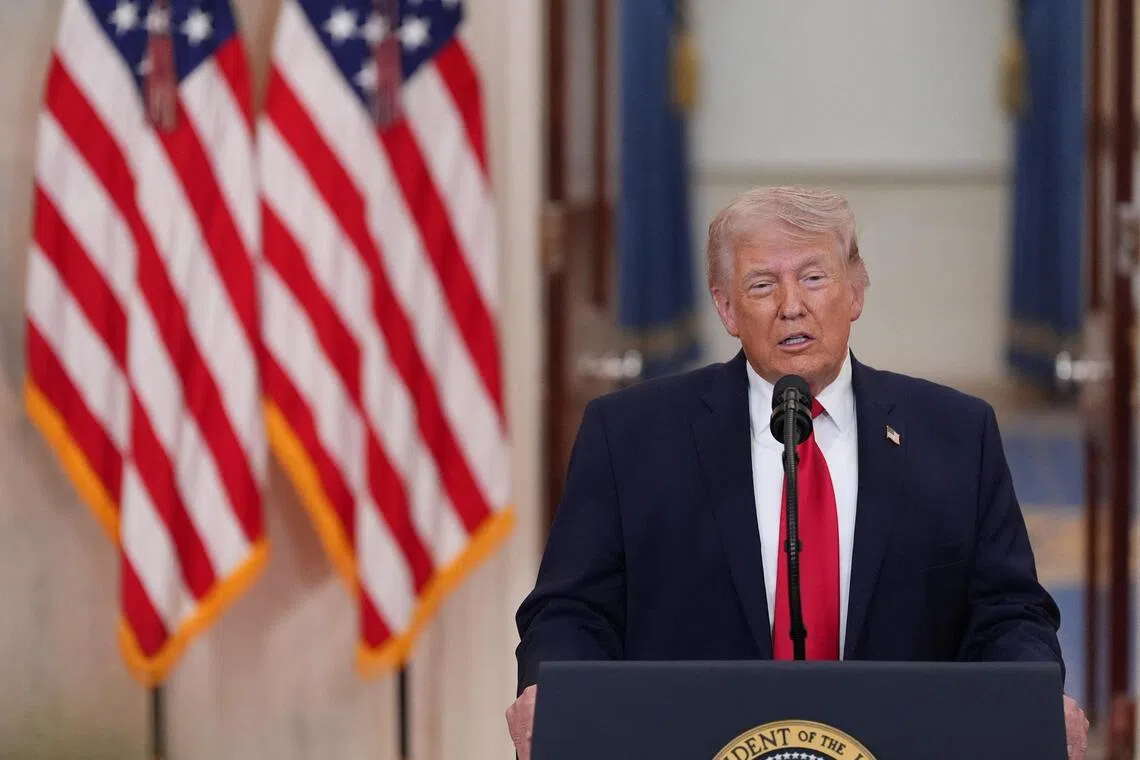
Trump Addresses Escalating Iran Conflict, Offers Limited Clarity
Washington D.C. – In a primetime address delivered from the White House on Wednesday, U.S. President Donald Trump reiterated his administration’s stance on the ongoing conflict with Iran, vowing continued military pressure while simultaneously suggesting a potential for a swift resolution. The speech, however, offered few concrete details regarding an endgame, leaving international observers and domestic audiences alike questioning the path forward. The conflict, now entering its fifth week, is significantly impacting global energy markets and raising concerns about wider regional instability.
Conflicting Signals on Military Escalation
Trump’s address largely echoed previous statements, asserting that the U.S. military campaign is nearing completion of its “core strategic objectives.” He again threatened “extremely hard” strikes on Iranian infrastructure, specifically targeting power plants, should negotiations falter. This rhetoric, however, was juxtaposed with optimistic pronouncements that the conflict could conclude “very shortly,” a timeframe of two to three weeks repeatedly cited by the administration. The conflicting signals have fueled uncertainty among allies and adversaries alike. According to Reuters, the disparity in messaging reflects internal divisions within the Trump administration regarding the optimal strategy for resolving the crisis.

Economic Impact and Strait of Hormuz Blockade
A central point of concern highlighted by Trump was the closure of the Strait of Hormuz, a critical waterway for global oil shipments. Iran has effectively blockaded the strait, disrupting maritime traffic and contributing to a surge in oil prices. Trump urged international partners to “show courage” and navigate the strait themselves, a statement interpreted by many as a call for collective action to counter Iran’s naval capabilities. Brent crude oil prices rose to $105 a barrel following the speech, demonstrating the market’s sensitivity to the ongoing disruption, as reported by the BBC. This blockade poses a significant threat to the global economy, potentially triggering a recession if prolonged.
Diplomatic Efforts and Contradictory Claims
While Trump emphasized the success of the military campaign, he offered limited insight into ongoing diplomatic efforts. He referenced discussions with Iranian leadership but provided no details on the substance of those talks. Notably, Trump also claimed that Iran had requested a ceasefire, a statement swiftly dismissed by Iranian officials as “false and baseless,” underscoring the deep mistrust between the two nations. The lack of transparency surrounding diplomatic initiatives raises doubts about the prospects for a negotiated settlement. Analysis from the Council on Foreign Relations suggests that the administration’s maximalist demands—including complete dismantling of Iran’s nuclear program and cessation of regional proxy activities—are unlikely to be met by Tehran.
Global Reactions and Statements
International reactions to Trump’s address were mixed. Several European allies expressed concern over the escalating rhetoric and urged restraint, emphasizing the need for de-escalation and a return to diplomatic negotiations. The United Nations Secretary-General António Guterres reiterated his call for all parties to exercise maximum restraint and prioritize dialogue. NATO officials, while reaffirming their commitment to collective defense, also stressed the importance of avoiding further escalation in the region. China, a major importer of Iranian oil, has called for a peaceful resolution to the conflict and warned against unilateral military action. The European Union has been attempting to mediate, but faces significant challenges given the deep-seated animosity between Washington and Tehran.
Background and Regional Impact
The current conflict stems from a series of escalating tensions between the U.S. and Iran, including the U.S. withdrawal from the Joint Comprehensive Plan of Action (JCPOA) in 2018, subsequent reimposition of sanctions, and a series of attacks on oil tankers and infrastructure in the Persian Gulf. The conflict has also drawn in regional actors, particularly Israel, which has conducted airstrikes against Iranian targets in Syria and Iraq. The potential for a wider regional war remains a significant concern, with the risk of drawing in Saudi Arabia, Yemen, and other countries already embroiled in proxy conflicts. The situation is further complicated by the presence of U.S. military forces and naval assets in the region.
Next Diplomatic Steps
Despite the lack of clarity from Trump’s address, diplomatic efforts are likely to continue. The ongoing mediation attempts by the European Union, coupled with potential backchannel communications through intermediaries like Oman and Switzerland, represent potential avenues for de-escalation. However, a breakthrough will require a willingness from both sides to compromise, a prospect that appears increasingly remote given the current climate of mistrust and maximalist demands. The coming weeks will be crucial in determining whether the conflict can be contained or will spiral into a wider regional war, with significant implications for global security and economic stability.
