
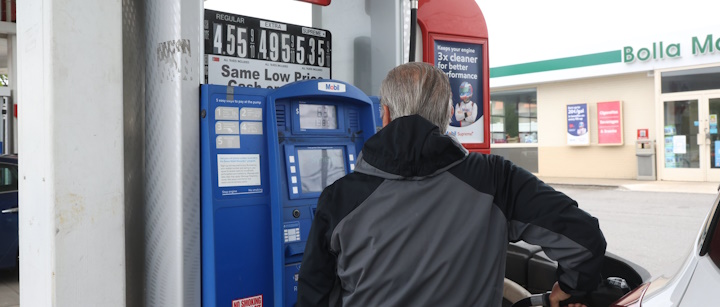
"The national average U.S. gasoline price hit $4.55 per gallon as of May 22, up $1.50 from pre-conflict levels, with energy experts warning that prices will not return to pre-war norms anytime soon even if the Iran war ends immediately, according to The Guardian and FactCheck.org."
The U.S. gasoline price surge, fueled by the ongoing conflict in the Middle East, has become a political flashpoint as President Donald Trump promises rapid relief. The national average reached $4.55 per gallon by May 22, a $1.50 increase from its pre-war level, according to The Guardian. Meanwhile, FactCheck.org notes the price was $4.50 as of May 11, up $1.56 from $2.94 in late February, marking a 53% rise since the U.S.-led airstrikes on Iran. Both sources agree that the war’s disruption of oil supply routes, particularly the Strait of Hormuz, has driven prices to multi-year highs.
War’s Impact on Supply Chains
The conflict has crippled global oil trade, with about 20 million barrels of oil daily—25% of the world’s seaborne crude—transiting the Strait of Hormuz, according to the International Energy Agency. Iran’s blockade of the strait after the February strikes halted most Persian Gulf oil exports, creating a supply crunch. "For retail prices to drop $1.50, I think we could kiss that number goodbye for 2026," said Denton Cinquegrana, chief oil analyst at Dow Jones Energy, citing the time needed to repair infrastructure and restart production.
Logistical Delays and Production Challenges
Even if the war ended immediately, experts say prices would take months to stabilize. David Ruisard of Argus Media explained that converting crude oil to fuel typically takes 30–60 days, but Gulf oilwells—reliant on traditional pumping methods—would require longer to restart than U.S. shale wells. "You’re basically riding a bicycle on water," Cinquegrana said, describing the slow pace of oil tankers returning to the region. The backlog of ships and damaged infrastructure could delay recovery for at least three to five weeks, he added.
Trump’s Optimistic Promises vs. Expert Realism
Trump has repeatedly claimed prices will "snap back" or "drop like a rock" once the war ends, but energy analysts caution against such optimism. Patrick De Haan of GasBuddy told FactCheck.org that pre-war prices "could take beyond a year" to return, depending on post-conflict conditions. "If something goes wrong anywhere, the price goes up everywhere," said Mark Finley of Rice University’s Baker Institute, highlighting the fragility of the global oil market.
Political Fallout and Public Frustration
The price spike has intensified public frustration, with drivers blaming inflation and the administration. Trump’s pledges of rapid relief have drawn skepticism, particularly as experts warn that even a peace deal would not immediately alleviate supply bottlenecks. "It’s going to come down lower than it was," Trump told reporters on May 1, but his assertions clash with the technical realities of oil market dynamics.
What Comes Next?
The path to lower prices hinges on the war’s resolution and the speed of infrastructure repairs. While a peace deal could trigger a "kneejerk" price drop, sustained relief may require months of stabilization. "When all of that stuff comes out," Cinquegrana said, "you’re going to see prices dropping on gasoline like you’ve never seen." Yet, with global markets intertwined, the timeline remains uncertain.
The Guardian and FactCheck.org both underscore the complexity of oil markets, where geopolitical shocks reverberate far beyond the battlefield. For now, U.S. drivers face a prolonged wait for relief.
