Comcast to split into two companies, spin off NBCUniversal and Sky
Comcast is separating into two independent, publicly traded companies by spinning off NBCUniversal and Sky. The remaining business will focus on wireless and internet services.
- Headline Dispatch: Comcast to split into two companies, spin off NBCUniversal and Sky
- Core Takeaway: Comcast is separating into two independent, publicly traded companies by spinning off NBCUniversal and Sky. The remaining business will focus on wireless and internet services.
- Source Synthesis: Continuous live monitoring aggregated across major news wires and independent bureaus.
Comcast to split into two companies, spin off NBCUniversal and Sky
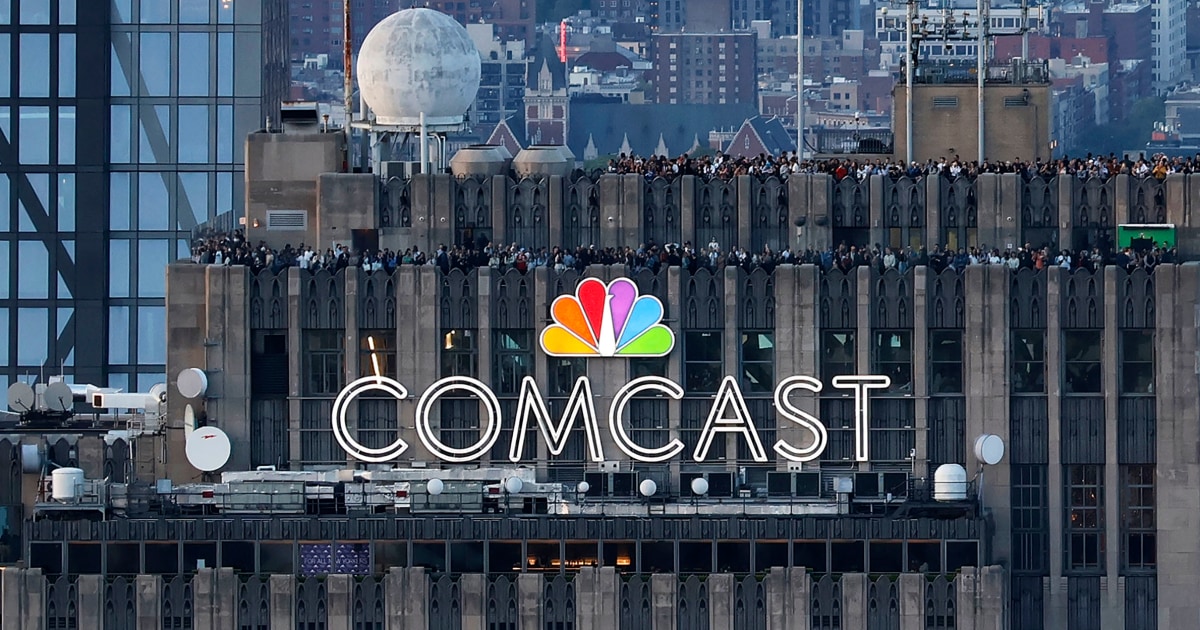
Comcast announced Monday its plan to separate into two independent, publicly traded companies through a tax-free spin-off of NBCUniversal and Sky. The strategic breakup intends to create two focused industry leaders by decoupling the conglomerate's media and entertainment assets from its connectivity services.
The new NBCUniversal entity will be a global media and entertainment company encompassing the Universal film and television studios, the NBC and Telemundo broadcast networks, NBC News, the Peacock streaming service, and the Bravo cable channel. It will also include a theme parks division and Sky, the British TV broadcaster Comcast acquired in 2018.
The remaining Comcast business, based in Philadelphia, will concentrate on providing wireless and internet services to residential and business customers. This shift reflects a broader trend among cable companies moving away from traditional cable toward home wireless, internet services, and streaming.
The announcement triggered an immediate market reaction, with Comcast stock surging more than 22% in premarket trading.
Leadership Transition
The separation will bring a significant change in executive leadership. Mike Cavanagh, current co-CEO of Comcast, will serve as the CEO of the new NBCUniversal. Michael Angelakis, a former chief financial officer, will return as the CEO of Comcast upon completion of the separation; he will serve as a strategic adviser in the interim.
Comcast Chairman and co-CEO Brian Roberts will remain actively involved in the leadership of both companies, working in partnership with both CEOs. In a note to staff, Roberts and Cavanagh wrote:
"For more than sixty years, our company has grown by embracing change and investing for the future. Today is another one of those moments."
Brian Roberts and Mike Cavanagh, Comcast co-CEOs, via internal note
Roberts further described the transaction as a way to unlock a more entrepreneurial management approach
and create new opportunities for each business.
Strategic Context and Industry Shifts
This move follows a previous divestiture in November 2024, when Comcast spun off a suite of cable channels—including CNBC, MSNBC (now MS NOW), USA, Oxygen, E!, SYFY, and Golf Channel—along with Rotten Tomatoes and Fandango into a separate company called Versant.
Analysts suggest the core businesses are no longer compatible. Rich Greenfield, a partner and analyst at LightShed Partners, told CNBC that the companies have better futures on their own
and that the days of their combined operation are over.
The split occurs amid volatile conditions for the American media industry, characterized by the decline of linear broadcasting and increased competition from digital platforms. The move mirrors recent industry consolidation, such as the Justice Department's recent approval of Paramount Skydance's 110 billion dollar acquisition of Warner Bros. Discovery, though that deal remains under investigation by the attorneys general of New York and California.
Financial Structure and Timeline
The separation is expected to be completed in about a year, pending final approval from the Comcast board and regulatory bodies. Current Comcast shareholders will own shares in both resulting companies, and both entities will utilize a dual-class share structure.
To assist with deleveraging, Comcast plans to retain an ownership stake of up to 19.9% in NBCUniversal for as much as one year after the spinoff is finalized.
The potential for future dealmaking remains a point of discussion. While some suggest a standalone NBCUniversal could become an acquisition target, Cavanagh stated during a Monday morning investor call that selling the company outright is definitely not our plan.
Instead, he emphasized that the company's strong balance sheet will allow it to explore adjacent businesses and keep pace with audience demands.
How significant is this development?
Participate in our community survey on the trajectory and real-world impact of this news.