Kia and Hyundai share interchangeable parts due to common ownership
Many Kia and Hyundai vehicles use identical engines and transmissions, allowing owners to potentially lower repair costs by sourcing interchangeable parts.
- Headline Dispatch: Kia and Hyundai share interchangeable parts due to common ownership
- Core Takeaway: Many Kia and Hyundai vehicles use identical engines and transmissions, allowing owners to potentially lower repair costs by sourcing interchangeable parts.
- Source Synthesis: Continuous live monitoring aggregated across major news wires and independent bureaus.
Kia and Hyundai share interchangeable parts due to common ownership
Automotive service technicians and industry observers are highlighting a significant cost-saving opportunity for vehicle owners: the high level of part interchangeability between Kia and Hyundai. Because both brands operate under the Hyundai Motor Group, many components are identical, meaning drivers may be paying a premium for a specific brand logo when a cheaper alternative from a sister company exists.
The connection is structural. Hyundai Motor Group has owned 100% of Kia Corporation since 1998, following an acquisition process triggered by a financial crisis Kia faced in 1997. While the two entities maintain distinct brand identities, marketing strategies, and design languages, they function as corporate siblings sharing engineering resources, production facilities, and key components.
The 'Logo Premium' in Repairs
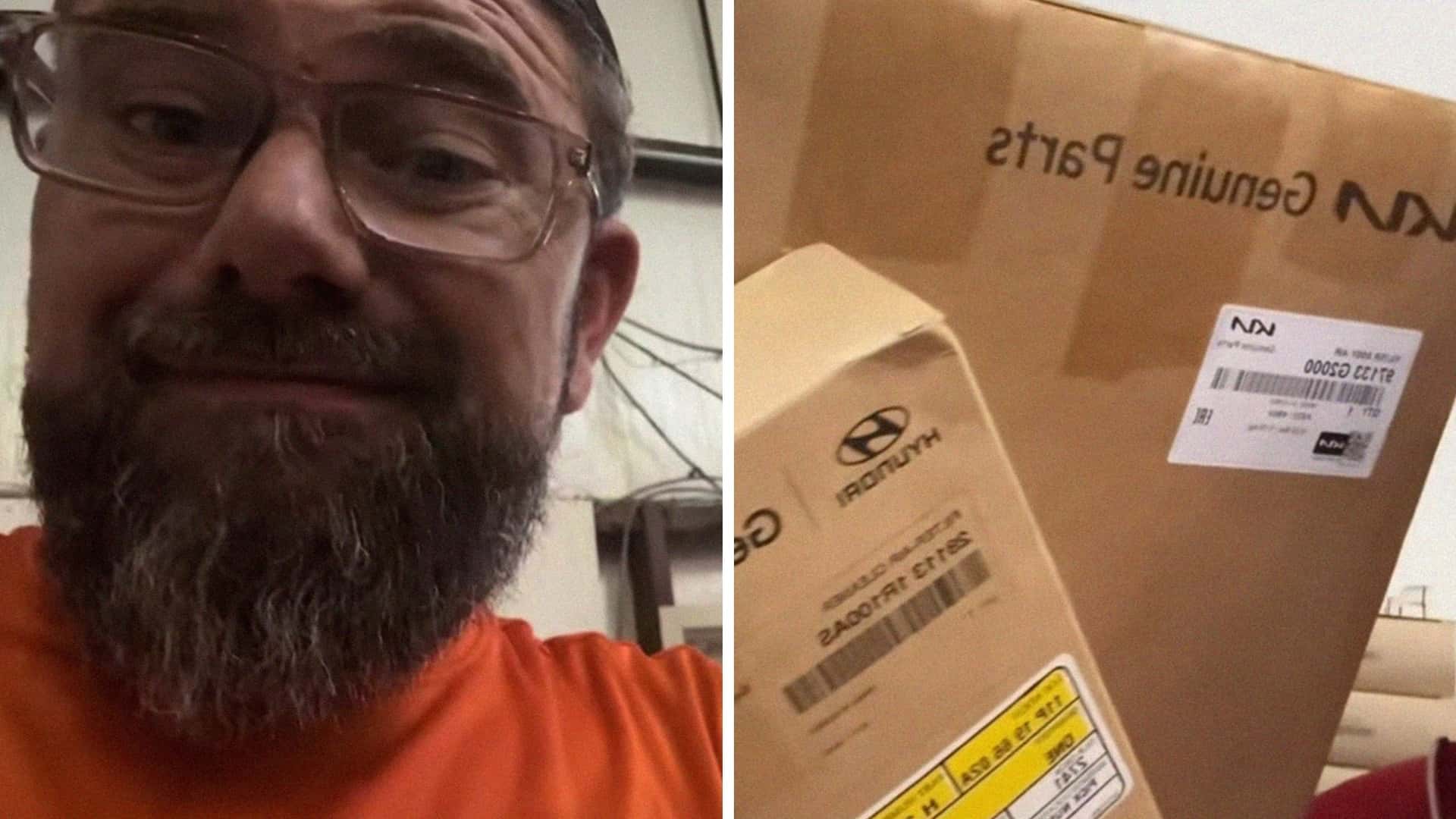
In a video shared via OEM Auto Parts Direct’s social media, an automotive service tech demonstrated this overlap by holding two identical parts—one branded as Hyundai and the other as Kia. The technician claimed there is nothing different about the contents of the boxes, stating, Kia and Hyundai are the exact same companies
, and asserting that consumers are just paying more for a premium Hyundai logo
.
This observation is supported by practical examples in the supply chain. For instance, the 2025 Kia Telluride and Hyundai Palisade utilize a transfer case with the same part number. Furthermore, both vehicles are produced at the same plants, such as the Hyundai facility in Montgomery, Alabama.
Mechanics frequently exploit this cross-compatibility to streamline repairs. Common shared powertrains include:
- Smartstream 2.5L turbo
- Theta II 2.4L GDI
- Nu 2.0L MPI
Beyond engines, 8-speed transmissions, brakes, suspensions, and infotainment modules are often interchangeable. Some mechanics report swapping a Hyundai 2.4L GDI engine from a Sonata into a Kia Optima without needing modifications beyond standard ECU flashing.
Strategic Divergence vs. Technical Convergence
Despite the shared DNA, the brands are not identical. Tomball Hyundai notes that while powertrain and platforms are often the same, the design, ride quality, cabin materials, dashboard layout
differ. This allows the group to target different market segments: Hyundai typically leans upscale and family-friendly, while Kia emphasizes bold styling and value.
Technical differences also exist in tuning. A Kia Sportage may feel more responsive than a Hyundai Tucson because Kia often applies sportier tuning and stiffer suspension calibrations to shared platforms. In the electric vehicle sector, the Kia EV6 and Hyundai IONIQ 5 use the same platform family but maintain distinct characters.
Industry-Wide Patterns
The Hyundai-Kia relationship mirrors a broader trend in the automotive industry where parent companies streamline production through shared platforms. According to BMSDFW, this approach provides the benefit of streamlined production and manufacturing
.
Other notable examples include:
- Volkswagen Group: The umbrella covers Audi, Porsche, Bentley, Lamborghini, SEAT, Skoda, CUPRA, and Volkswagen. For example, the Volkswagen Atlas and Audi Q7 use very similar engines, though Audi variants are tuned for higher power.
- Toyota and Lexus: Many Lexus models borrow Toyota platforms, engines, and supplier networks.
Consumer Advice and Risks
To avoid dealership upcharges, experts suggest cross-referencing part numbers using VINs or tools like RockAuto. However, the process requires caution. Jalopnik warns that the difference between a smart shortcut and a wasted return label
depends on confirming the OEM part number. There is also a risk that mismatched software could trigger a limp mode
, requiring a GDS tool for reprogramming.
Reliability trends also overlap. Both brands experienced similar issues with early Theta II engine failures in 2011-2014 models due to poor machining tolerances. Since 2015, however, both have seen comparable reliability improvements. They also offer identical 5yr/60k basic and 10yr/100k powertrain warranties due to their shared ownership.
Future Integration
The integration of the two brands is extending into future mobility. In March 2026, Hyundai Motor Group announced an expanded partnership with NVIDIA to develop autonomous driving and software-defined vehicles.
How significant is this development?
Participate in our community survey on the trajectory and real-world impact of this news.