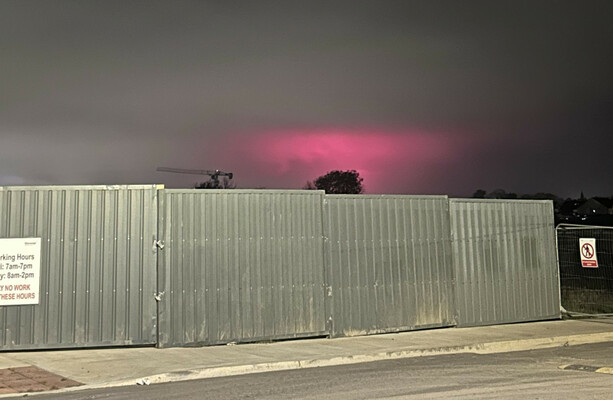
Clarifying the Dublin Airport Sky Glow Phenomenon: Not the Northern Lights
On the evening of October 9, 2025, a mysterious glow was observed over Dublin Airport, sparking speculation and social media buzz about an appearance of the Northern Lights (aurora borealis) far south of their usual geographic range. However, authoritative sources have confirmed that the phenomenon was not related to auroral activity, which is rare at this latitude and largely confined to high-latitude polar regions.
Understanding Aurora Borealis and Its Geographic Limitations
The Northern Lights occur due to charged particles from the solar wind interacting with Earth’s magnetic field and upper atmosphere, creating visible light displays primarily near geomagnetic poles. Typical sightings are common in northern Scandinavia, Alaska, Canada, and parts of Russia but exceedingly rare as far south as Ireland.
Space weather monitoring agencies such as the National Oceanic and Atmospheric Administration (NOAA) and the European Space Agency (ESA) continuously track solar activity and auroral forecasts. In this case, they reported no significant geomagnetic storm activity sufficient to produce auroras visible over Dublin on this date.
Alternative Explanations: Artificial Light Sources and Atmospheric Effects
Experts from Ireland’s aviation and meteorological services provided insight that the glow most likely originated from artificial sources related to airport operations combined with specific atmospheric conditions. This could include powerful runway or flood lighting, light reflection or refraction through clouds or mist, and possibly airborne particles enhancing the illumination.
Such phenomena, known as light pollution or skyglow, can create striking visual effects that resemble natural luminescence but result entirely from human-made sources. Given Dublin Airport’s complex lighting infrastructure and variable weather conditions, these combined factors plausibly explain the glowing sky observed.
Technology and Infrastructure Behind the Glow
Dublin Airport is equipped with advanced LED and halogen runway lighting systems designed for optimal visibility and safety during night operations. These lights are often exceptionally bright and, in certain meteorological settings, their beams can scatter, creating diffuse glows or halos visible kilometers away.
Modern airports also employ navigational aids and external advertising or security lights, contributing to overall ambient brightness. In the case of atmospheric moisture or particulate matter, these elements intensify light scattering, leading to unusual visual phenomena.
Broader Context: Urban Light Pollution and Its Impact
This incident highlights broader concerns about urban light pollution, which affects night sky visibility for residents, interferes with astronomical observations, and has ecological consequences for wildlife. Efforts to control and reduce light pollution emphasize smarter lighting designs and policies balancing safety with environmental stewardship.
Related Technological Trends in Environmental Monitoring
Emerging technologies, including AI-powered environmental monitoring platforms and satellite data analytics, enable real-time tracking of atmospheric and light pollution levels globally. These tools aid cities and infrastructure managers in mitigating unintended luminous impacts while optimizing operational efficiency.
For instance, machine learning models help differentiate natural atmospheric phenomena from anthropogenic effects, refining alerts related to space weather or environmental conditions relevant for aviation, energy, and urban planning sectors.
Conclusion: Science Over Speculation
The glow witnessed over Dublin Airport was a complex interaction of human technology and natural atmospheric conditions—not the Northern Lights. This serves as a reminder of the importance of technical literacy and verified scientific data when interpreting unusual phenomena.
Read more on Globally Pulse Technology for in-depth analysis of emerging science and innovation trends shaping our understanding of natural and artificial environmental effects.
According to Reuters Technology, the clarification reinforces a pattern of urban skyglow confounding popular perception and underlines the need for continued investment in environmental sensing technologies.
