Chicago air quality hits hazardous levels from Canadian wildfire smoke
Toxic smoke from over 100 Canadian wildfires has pushed Chicago's air quality into the hazardous category, leading to flight delays and the cancellation of major public events.
- Headline Dispatch: Chicago air quality hits hazardous levels from Canadian wildfire smoke
- Core Takeaway: Toxic smoke from over 100 Canadian wildfires has pushed Chicago's air quality into the hazardous category, leading to flight delays and the cancellation of major public events.
- Source Synthesis: Continuous live monitoring aggregated across major news wires and independent bureaus.
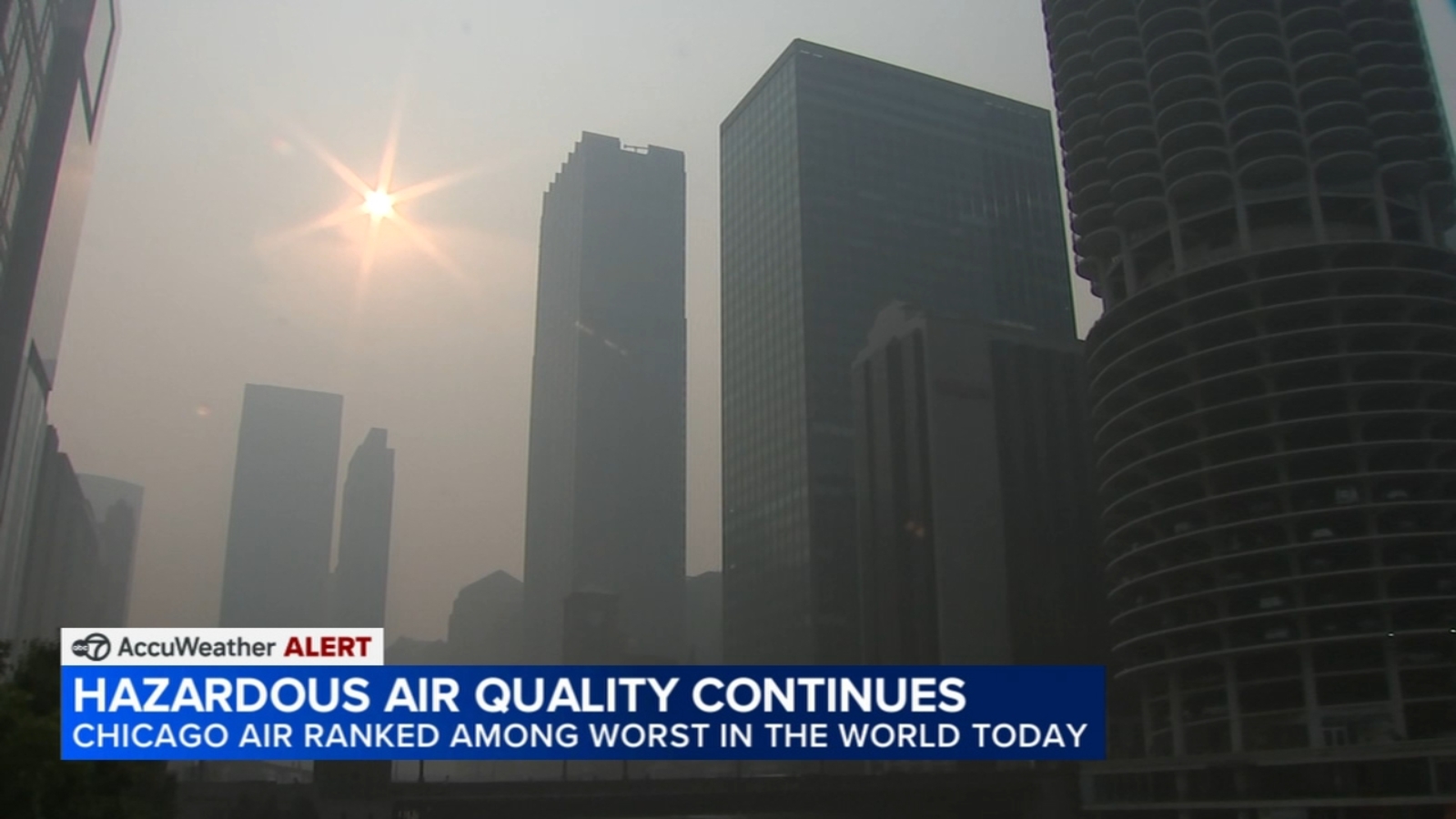
Chicago air quality hits hazardous levels from Canadian wildfire smoke
A blanket of toxic smoke from more than 100 Canadian wildfires and additional blazes in northern Minnesota has pushed air quality in the Chicago area into the hazardous category. An Air Quality Alert remained in effect through Friday, as the city and other major U.S. Hubs struggled with severe pollution.
The impact on Chicago was stark, with data ranking the city as having the worst air quality for major cities worldwide on Thursday. Early Friday, Chicago, Detroit, and Washington, D.C. Were all ranked among the world's most polluted major cities. In Chicago, the U.S. Environmental Protection Agency reported that the North Side and northern suburbs experienced extremely unhealthy levels by 5 p.m. Thursday, while very unhealthy levels were recorded near the Wisconsin border and into southern Wisconsin.
The pollution has disrupted travel and city operations. The FAA reported delays at O'Hare Airport on Thursday evening due to low visibility caused by the haze. Local government and recreational services also scaled back; the city of Evanston paused non-essential work on Thursday, leaving beaches unstaffed and swimming prohibited.
Major public events were forced to reschedule. A performance in the Millennium Park summer music series was postponed, and the Chicago Fire soccer team rescheduled its match against Vancouver Whitecaps FC at Soldier Field to Tuesday, Oct. 6. The Chicago Park District closed all outdoor pools and beaches, canceled outdoor programming such as movies in the park, and moved all-day camps inside. Additionally, the Osaka Garden and the Lincoln Park and Garfield Park Conservatories closed for the day.
Health experts warn that the fine particulate matter in the air is dangerous for everyone, particularly children and those with heart or lung conditions. The National Weather Service noted that pollutants can cause chest pains, asthma attacks, difficulty breathing, fatigue, irritated eyes and sinuses, and headaches.
"If you can see it, and you can smell it, you're breathing it in...so recommendations right now: if you don't have to go out, then stay home,"
Dr. Juanita Mora, American Lung Association, via abc7chicago.com
Medical professionals are urging residents to stay hydrated to support the respiratory system. For those who must go outside, Dr. Alexander Azan, an assistant professor of population health and medicine at NYU Langone Health, suggests wearing N95 or KN95-grade masks. He noted that long-term exposure to this particulate matter is a leading cause of premature death.
The crisis extends far beyond Illinois. Air quality alerts stretched from Minnesota to the East Coast. Pennsylvania upgraded its alert to Code Purple on Friday, while Washington, D.C. Remained under a Code Red alert. In the Northeast, the Massachusetts Department of Environmental Protection issued alerts as smoke turned Boston's skies an ominous brown-yellow. Similar hazes descended over Maine, New Hampshire, and Vermont.
Meteorologists attribute the severity of the fires to a combination of heat and severe drought in Canada and the U.S. Dan Westervelt, an associate professor at Columbia University's Climate School, described the situation as a perfect storm
of dry conditions. He added that warming temperatures from burning coal, oil, and gas are increasing the intensity and frequency of such fires.
The danger of the fires was illustrated by a video from Armstrong, Ontario, showing a freight train crew surrounded by a wall of burning trees. While the Canadian National Railway suspended operations in that area, officials confirmed all crew members were safe.
Looking ahead, AccuWeather Meteorologist Tracy Butler stated that while air quality should improve on Saturday, smoky skies may return on Sunday. There is a possibility that rain and storms forecast for Friday afternoon and evening could mix with the smoke to create a sludge.
How significant is this development?
Participate in our community survey on the trajectory and real-world impact of this news.