Apes and humans have been sharing a laugh for 15 million years
A University of Warwick study reveals that the rhythmic structure of laughter is conserved across primate species, challenging theories on how human speech evolved.
- Headline Dispatch: Apes and humans have been sharing a laugh for 15 million years
- Core Takeaway: A University of Warwick study reveals that the rhythmic structure of laughter is conserved across primate species, challenging theories on how human speech evolved.
- Source Synthesis: Continuous live monitoring aggregated across major news wires and independent bureaus.
Apes and humans have been sharing a laugh for 15 million years
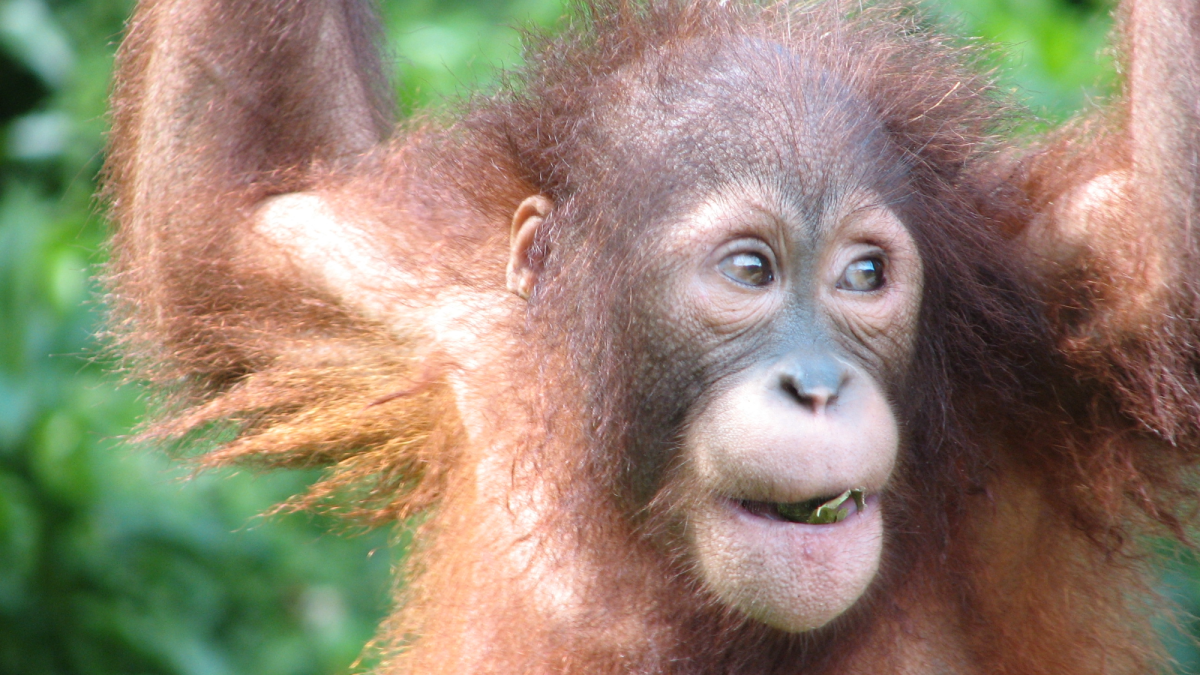
Humans and great apes have shared a similar way of giggling since they first branched off the evolutionary tree. According to a study published Thursday in the journal Communications Biology, the rhythmic structure of laughter has remained remarkably conserved for at least 15 million years.
Researchers from the University of Warwick analyzed acoustic recordings of spontaneous laughter from four orangutans, two gorillas, three bonobos, four chimpanzees, and four humans. The human subjects ranged in age from six months to seven years. The team measured 140 individual laughter sequences, focusing on the timing intervals between successive bursts of sound rather than intensity or pitch.
The analysis revealed an identical structural signature across all species: evenly spaced rhythmic intervals between successive sounds. This suggests the basic rhythmic machinery for vocalization existed in a shared common ancestor 15 million years ago and has persisted in all living great apes.
Because spoken language leaves no fossil record, scientists have struggled to determine how the ability to speak evolved. Laughter, being evolutionarily older, serves as a biological proxy to trace these transformations.
"How did humans evolve the remarkable ability to speak? Speech leaves no fossils, and complex language exists only in our own species. But we've found a 15-million-year-old clue in an unexpected place: our laughter."
Dr. Chiara De Gregorio, primatologist at the University of Warwick, via University of Warwick
While the underlying rhythm is a uniting thread, human laughter has diverged in speed and complexity. Modern human laughter is faster and more variable than that of other great apes. Most notably, humans have developed a sophisticated, context-dependent control over their laughter that other primates lack.
While an orangutan laughs almost entirely as an involuntary response to physical stimulation like play or tickling, humans can consciously alter their laughter to communicate different emotions or social intentions. This includes the distinction between an uncontrollable laugh caused by tickling, a polite chuckle in a professional meeting, a nervous giggle after a mistake, or infectious laughter among friends.
The study argues that this gradual development of vocal timing and control represents a fundamental building block of speech. These findings challenge the theory that the first humans suddenly acquired advanced vocal capacities through a rapid genetic mutation.
"Contrary to the classic notion that the first humans suddenly acquired vocal control capacities remarkably different from their predecessors, laughter evolution tells us that humans lay on a continuum, a prolongation of vocal control capacities that were already being cumulatively honed in for 15 million years."
Dr. Adriano Lameria, Associate Professor at the University of Warwick, via University of Warwick
The data was gathered from recordings of apes in their home environments during playful interactions with familiar humans, utilizing both play and tickle-induced vocalizations. For context, researchers noted that while other animals can laugh, they do not follow these patterns; for instance, rats respond to tickling with ultrasonic squeaks.
Brittany Florkiewicz, a researcher of animal communication at Lyon College who was not involved in the study, stated that the findings make sense and suggest a need for further investigation. She expressed interest in hearing comparable recordings from other animals with playful facial expressions, such as cats, horses, and dogs, to further define what is uniquely human versus what is shared across species.
How significant is this development?
Participate in our community survey on the trajectory and real-world impact of this news.