Google Android alerts warn Venezuelans seconds before deadly earthquakes
Android smartphones acted as a distributed seismograph network to warn Venezuelans of powerful earthquakes, though the disaster resulted in almost 600 dead.
- Headline Dispatch: Google Android alerts warn Venezuelans seconds before deadly earthquakes
- Core Takeaway: Android smartphones acted as a distributed seismograph network to warn Venezuelans of powerful earthquakes, though the disaster resulted in almost 600 dead.
- Source Synthesis: Continuous live monitoring aggregated across major news wires and independent bureaus.
Google Android alerts warn Venezuelans seconds before deadly earthquakes
Android smartphones provided critical early warnings to users in Venezuela on Wednesday, June 24, 2026, seconds before two powerful earthquakes struck the northern part of the country, including the capital city of Caracas. The seismic events, measuring 7.1 and 7.5 in magnitude, are described as some of the strongest to hit the country in recent decades and the most powerful in a century.
Many residents took to X to report that alerts arrived approximately three to five seconds before the shaking was felt. Some users shared unverified videos of prompts urging people to leave buildings, while others noted the warnings provided vital seconds to find shelter or move away from unsafe locations. In Macaracuay, east of Caracas, some residents were among the least affected after managing to escape in time.
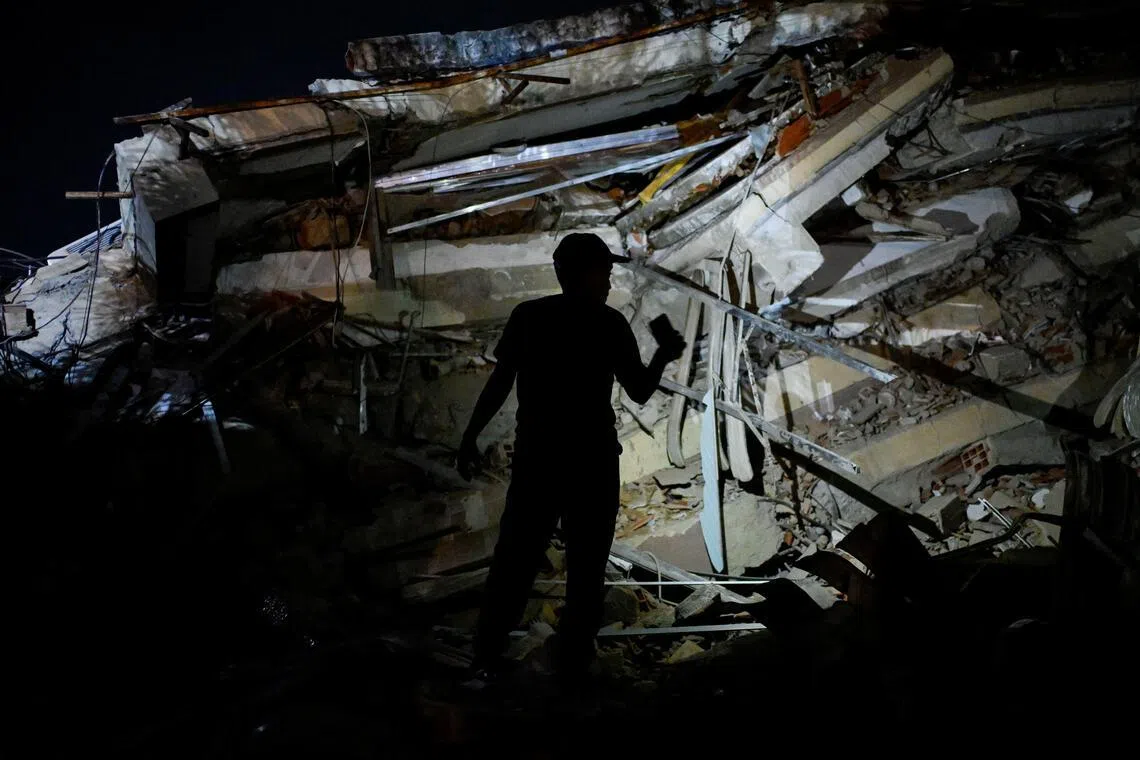
The disaster resulted in almost 600 confirmed dead and widespread building damage, including destruction in La Guaira state.
How the distributed detection system works
The alerts were generated by Google’s Android Earthquake Alerts System, which transforms millions of smartphones into a distributed seismograph network. The system relies on accelerometers — sensors typically used for tasks like rotating a screen — which can also detect unusual ground vibrations linked to seismic activity.
When a device detects motion indicative of an earthquake, it sends a signal and its approximate location to Google servers. The system then cross-references reports from multiple phones in the same area to confirm an earthquake is occurring and estimate its magnitude and location. According to Google, the process is a race between the speed of light and the speed of an earthquake
, as digital signals travel faster than seismic waves.
The system specifically targets the different waves produced by earthquakes:
- P-waves: These primary waves travel fast, around six kilometres per second, but are relatively weak. Smartphones detect these first.
- S-waves: These secondary waves are slower, moving at three to four kilometres per second, but are far more destructive.
By detecting the fast-moving P-waves and transmitting data instantly, Google can issue warnings before the slower, more damaging S-waves reach the users.
Alert levels and technical limitations
Google employs two distinct types of notifications based on the severity of the tremor. A Be Aware
alert warns of weaker or light shaking. For moderate to heavy tremors, a Take Action
alert takes over the screen and plays a loud sound, even if the device is set to silent or "do not disturb" mode, advising users to take immediate safety precautions.
The system does not predict earthquakes but detects them as they begin. In Venezuela, some initial alerts reported a magnitude of 6.1 or 6.2, though the actual intensity was later found to be higher. Google has cautioned that the system is not a seismic system in itself, is not always precise, and may occasionally activate before or after a tremor.
The technology is operational in 98 countries, including India since 2023. It works on devices running Android 5 and above, provided the user has an active internet connection. Google stated in 2025 that its systems had sent 790 million alerts regarding over 2,000 potentially dangerous earthquakes detected since April 2021.
Comparison with other platforms
While both Google and Apple provide options for government emergency alerts, their approaches to detection differ. Neither Apple nor the iPhone giant has enlisted its users' phones for a distributed detection system similar to Google's. However, Apple states that users in Taiwan and the US can receive alerts from other alert originators
.
Apple devices possess the ability to forward received alerts to nearby Apple devices that lack a WiFi connection or mobile reception, which may assist in delivering life-saving warnings.
Reliability and future challenges
The system has faced previous technical difficulties. Android phones failed to provide warnings before the February 2023 earthquakes in Turkey and Syria, which killed almost 60,000 people. Google stated in 2025 that it updated its algorithms to prevent a recurrence. Additionally, the company apologised in February 2025 for a false alarm sent to users in Brazil.
Despite these hurdles, the events in Venezuela highlight the potential for consumer technology to supplement public-safety infrastructure. Experts suggest the next step involves integrating these private phone alerts with official emergency systems, public drills, and local-language instructions to ensure screen warnings translate into safer actions on the ground.
How significant is this development?
Participate in our community survey on the trajectory and real-world impact of this news.