Strawberry Moon 2026 to reach peak fullness on June 29
The 2026 Strawberry Moon will be the lowest full Moon of the year, creating a dramatic visual illusion and unique golden coloring.
- Headline Dispatch: Strawberry Moon 2026 to reach peak fullness on June 29
- Core Takeaway: The 2026 Strawberry Moon will be the lowest full Moon of the year, creating a dramatic visual illusion and unique golden coloring.
- Source Synthesis: Continuous live monitoring aggregated across major news wires and independent bureaus.
Strawberry Moon 2026 to reach peak fullness on June 29
The first full Moon of the astronomical summer will reach its peak fullness on June 29, 2026, at 23:57 UTC. For observers in the UK, this timing places the peak just after midnight at 00:57 BST on June 30. According to the Royal Observatory Greenwich, the Moon will rise on Monday, June 29, and appear convincingly full across the evenings of June 28, 29, and 30.
This celestial event is the seventh full Moon of the year, following a May that included two full Moons. In 2026, the Strawberry Moon will shine in the constellation Sagittarius, though astrologers associate it with the sign of Capricorn.
A Low-Hanging Spectacle
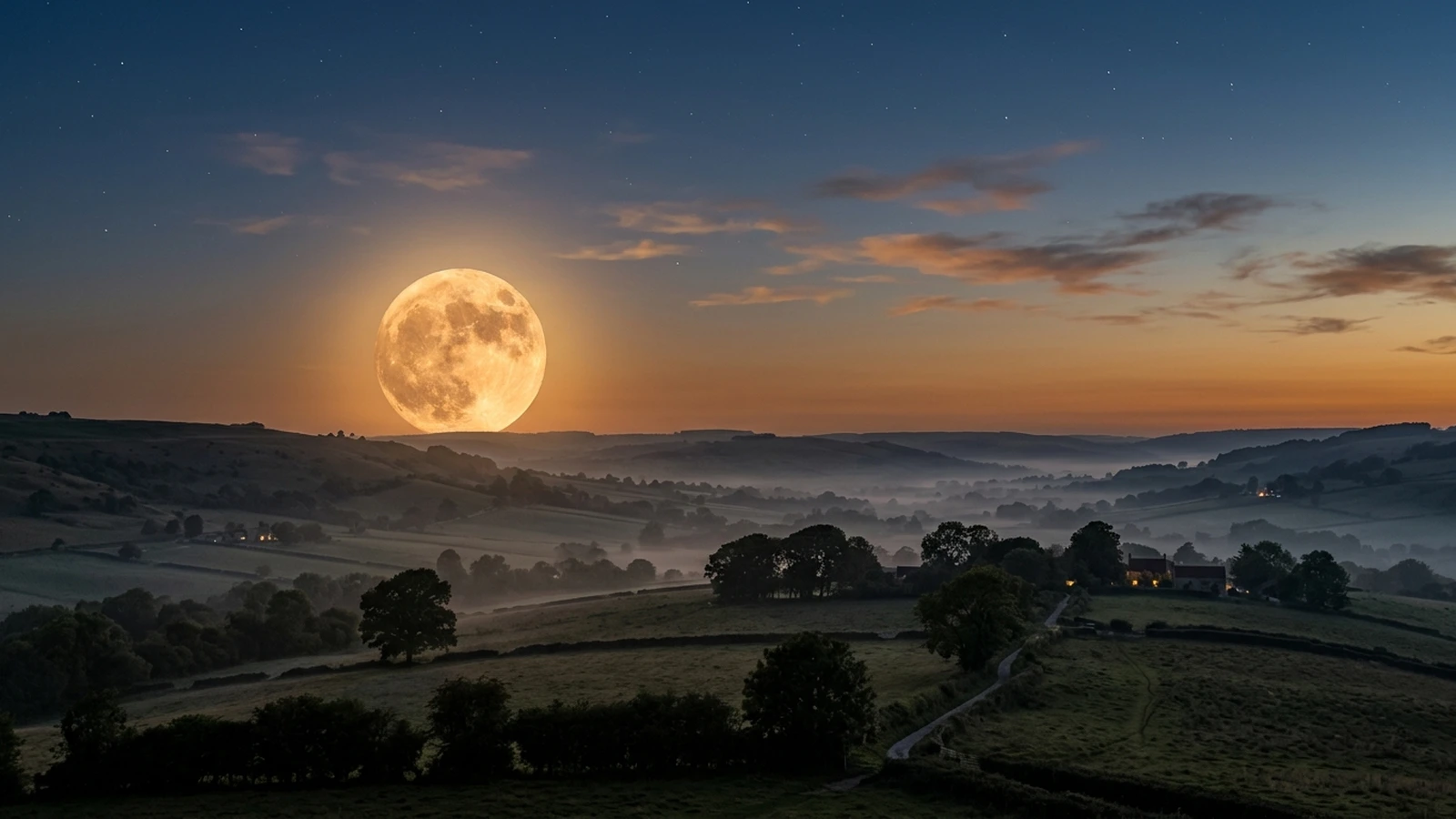
In the Northern Hemisphere, this particular Moon is the lowest full Moon of the year. This is due to the celestial geometry following the summer solstice on June 21; because a full Moon always sits directly opposite the Sun, the towering height of the summer Sun forces the Moon to trace the shortest, flattest arc of 2026.
The effect is most pronounced at northern latitudes. In southern England, the Moon may reach only 10–15° above the horizon at its highest point, with an even lower path observed from Scotland. This low altitude creates the "Moon illusion," where the brain perceives the Moon as enormous when viewed next to terrestrial landmarks like rooftops, hills, and trees.
The low path also influences the Moon's appearance. Because the light must travel through a thicker slice of Earth's atmosphere, shorter blue wavelengths are scattered, allowing longer reds, oranges, and golds to pass through. This can give the Moon a honey-gold or amber tint for hours, rather than just at moonrise.
Micromoon Characteristics
The June 2026 event is classified as a micromoon, the second and final one of the year. This means the Moon is near its farthest point from Earth in its orbit (apogee), making it appear slightly smaller and less bright than usual.
While the Moon itself is a naked-eye sight, experts suggest binoculars to better observe the bright cratered highlands and dark maria. For photographers, locking exposure on smartphones or using a starting point of ISO 100, f/8, and 1/250s on DSLRs is recommended to prevent the bright disc from appearing as a white blob.
Folklore and Cultural Names
The name "Strawberry Moon" is rooted in North American Indigenous traditions, specifically attributed to the Algonquin peoples, and marks the window when wild strawberries ripen. However, the Moon is known by many other names across different cultures:
- European Traditions: It is referred to as the Rose Moon, Honey Moon, or Mead Moon. The latter is a nod to the Anglo-Saxon tradition of mowing the meads, or meadows. Some suggest the term "honeymoon" originates from the June tradition of marrying during this Moon.
- Native American/Celtic: Other names include the "hot moon," "green corn moon," "berries ripen moon," "horse moon," and "dyan moon."
- Modern/Scientific: NASA employees sometimes call it the "LRO Moon" in honor of the Lunar Reconnaissance Orbiter launched in June 2009.
In Sri Lanka, the June full Moon aligns with the national festival Poson Poya, commemorating the introduction of Buddhism to the island. In Hindu tradition, the day is marked by the festival Vat Purnima, where married women pray for their husbands' well-being.
Viewing Conditions and Outlook
Observers are advised to find a spot with an open southern view, as hedges or buildings can easily hide a Moon that stays so low on the horizon. In the UK, weather forecasts suggest that while southern England, Wales, and the Midlands may have clear skies, an area of low pressure may bring thicker cloud and rain to northern England, Northern Ireland, and Scotland on Monday night.
The lunar cycle will continue with the "Buck Moon" — named for the time male deer grow new antlers — appearing on July 29. Further observations for the summer include the "Sturgeon Moon" on August 28. The next Strawberry Moon will occur on June 19, 2027.
How significant is this development?
Participate in our community survey on the trajectory and real-world impact of this news.