Houthis and Iran attack Saudi tankers as US strikes Iran for 12th night
The Middle East conflict intensifies as Houthi attacks on Saudi tankers coincide with a prolonged US bombing campaign against Iranian military targets.
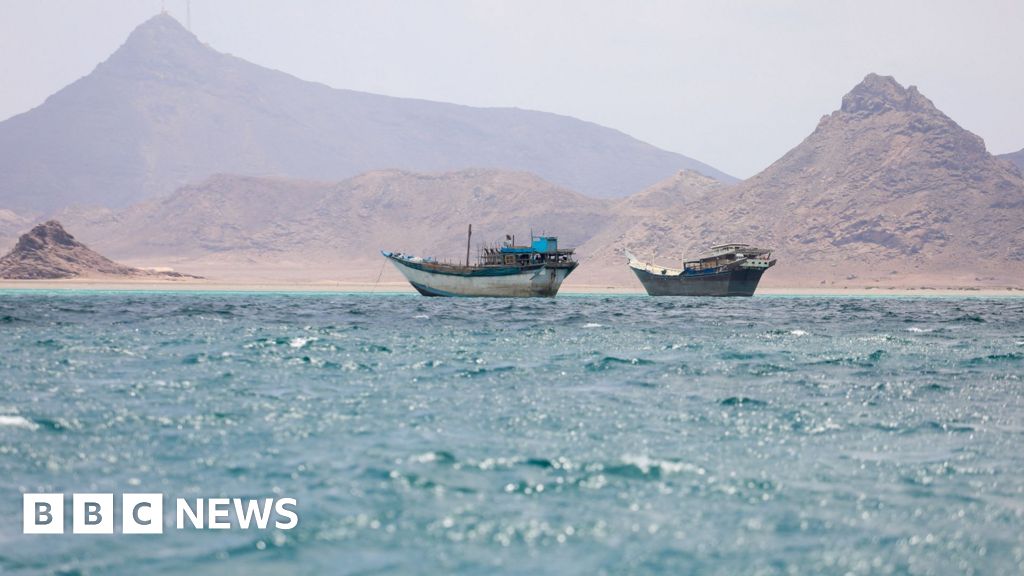
Houthis and Iran attack Saudi tankers as US strikes Iran for 12th night
The Middle East conflict has entered a volatile new phase as Yemen's Iranian-backed Houthi movement launched attacks on Saudi oil tankers in the Red Sea, coinciding with a 12th consecutive night of United States bombing campaigns against Iran. The escalation threatens to create a second global shipping choke point at the Bab al-Mandab Strait, compounding the existing crisis in the Strait of Hormuz.
Houthi military spokesman Yahya Sarea announced that the group targeted two Saudi-flagged tankers, the Encelia and Layla, with missiles and drones. Sarea stated the vessels had violated
a blockade of Saudi ports and vowed that the group would persist in enforcing the 'siege for a siege' equation
in retaliation for a Saudi blockade of Houthi-controlled territories and a recent air strike on Sanaa airport.
The Saudi Press Agency and the UK Maritime Trade Operations agency confirmed that the Encelia was struck late Wednesday, resulting in a fire at the bow of the vessel. Data from MarineTraffic indicated the ship had departed Yanbu on Monday and was sailing toward the Bab al-Mandab Strait before coming to a stop near the Farasan Islands. While the Encelia's crew was reported safe, there has been no official confirmation of an attack on the Layla, which last broadcast its location on Friday.
Simultaneously, the US military's Central Command (Centcom) completed a 12th night of strikes against Iranian military targets. These operations targeted missile and drone storage, coastal surveillance sites, maritime capabilities, and air defense assets. Centcom stated the strikes aim to degrade Iran's ability to threaten commercial mariners in the Strait of Hormuz
Iranian state media reported that two people were killed in a US missile strike at the Shalamcheh border crossing with Iraq. Additional targets were hit in the southern province of Bushehr. In response, Iran's Islamic Revolutionary Guard Corps (IRGC) targeted US military facilities in Jordan and Kuwait.
The instability has triggered a surge in global energy markets. Brent crude hit $100 a barrel on Thursday, the highest level since late May. Prices had previously peaked at $126 in April before falling as low as $71 at the start of July.
US President Donald Trump has responded with threats of further escalation. In a post on Truth Social, Trump warned that if the Houthis attack again, the US will inflict major military punishment
on both the group and Iran, labeling the Houthis as a Surrogate and/or Proxy of Iran
. In an interview with Axios, Trump stated he is close
to a decision on a massive attack
against Iran that could be bigger than ever before
.
Trump also renewed threats to strike the Pickaxe Mountain facility in Iran.
Diplomatic efforts appear strained. While Oman and Pakistan are attempting to mediate between the Houthis and Saudi Arabia or resuscitate a collapsed interim deal between the US and Iran, US Secretary of State Marco Rubio stated that the price will continue to get higher every single night
until Iranian negotiators become serious.
The conflict has also drawn in international allies. New UK Prime Minister Andy Burnham approved the continued use of UK bases, including RAF Fairford, for US defensive operations. In response, the IRGC warned that any base used to attack Iran is a legitimate target
. Meanwhile, the UK government has temporarily withdrawn all remaining diplomatic staff from Iran.
The financial strain of the war is becoming evident in Washington. War Secretary Pete Hegseth and Joint Chiefs Chairman Dan Caine appeared before the Senate Appropriations Committee to request a supplemental budget of nearly $90 billion, which includes $21 billion specifically to replace strike weapons and air defense interceptors already expended.
As the crisis persists, the US House of Representatives passed a symbolic resolution (214-208) directing President Trump to halt military action against Iran unless authorized by Congress. The Senate is expected to vote on a similar resolution.


