Trump envoy Kushner meets Netanyahu after Hamas talks on peace plan
Trump envoy Jared Kushner met with Prime Minister Netanyahu in Jerusalem following talks with Hamas leaders to revive a stalled roadmap for Gaza.
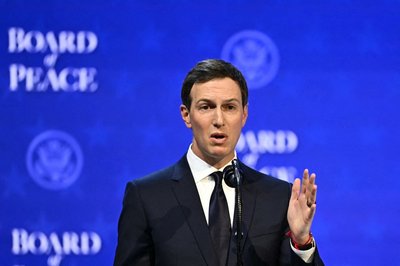
Trump envoy Kushner meets Netanyahu after Hamas talks on peace plan
President Donald Trump's envoy Jared Kushner met with Israeli Prime Minister Benjamin Netanyahu in Jerusalem on Monday, in an effort to revive a stalled Gaza peace plan. The meeting followed rare discussions held Sunday in Egypt between Kushner and a delegation led by Hamas's new leader, Khalil al-Hayya.
The diplomatic push centers on a 15-point roadmap developed by Trump's "Board of Peace," an international organization led by the U.S. President. The plan calls for the complete disarmament of Hamas and other armed groups in Gaza, the withdrawal of Israeli troops, and the reconstruction of the territory under a new civilian Palestinian administration.
While Hamas endorsed the latest stage of the plan two weeks ago, Netanyahu has refused to support it. The prime minister insisted last week that the Israel Defense Forces will not carry out any withdrawal until Hamas is genuinely disarmed
.
During the Sunday talks in El-Alamein, Kushner reportedly demanded that Hamas verify the surrender of its weapons and renounce any future role in governing the Palestinian territory. Sources familiar with the discussions told CBS News that the talks also touched upon transferring governing responsibilities to the National Committee for the Administration of Gaza and the deployment of an international stabilizing force.
The meeting in Jerusalem included Nickolay Mladenov, the Board of Peace high representative for Gaza, and reportedly former UK prime minister Tony Blair, a senior official with the organization. Mladenov had previously attempted to ease Netanyahu's concerns by assuring him that Israel would not need to withdraw troops until full disarmament was achieved, a reversal of the Board of Peace's earlier calls for a phased withdrawal.
Netanyahu faces significant internal pressure to maintain a harder line. National Security Minister Itamar Ben Gvir dismissed the peace draft as not acceptable
and recently called for nightly targeted eliminations
of 30 to 40 people in Gaza, stating some residents shouldn't be alive
.
International pressure is also mounting. On Sunday, eight Muslim-majority countries—including Saudi Arabia, Egypt, the United Arab Emirates, Qatar, Jordan, Turkey, Pakistan, and Indonesia—issued a joint statement condemning Israel's rejection of the peace plan. The inclusion of the UAE is considered notable given its normalized relations with Israel.
The diplomatic friction occurs as Netanyahu prepares for tight elections in October. He has also shown dissatisfaction with President Trump's decision to halt a U.S.-Israeli war on Iran launched in late February in favor of a settlement with Tehran.
Violence in the region persists despite a ceasefire that came into effect on October 10 last year. Gaza's health ministry, which the UN considers reliable, reports at least 1,265 Palestinians killed since that ceasefire. The Israeli army has reported five deaths in its ranks over the same period. The broader conflict, triggered by the October 7, 2023 attack that killed about 1,200 people and saw 251 taken hostage, has left approximately 1.9 million people displaced in Gaza, according to UN estimates.
Separately, the U.S. Administration is managing a volatile relationship with Iran. A 60-day Memorandum of Understanding (MoU) signed June 18 aimed at a permanent ceasefire expired on Monday. While Iranian officials announced an understanding regarding transit routes through the Strait of Hormuz with Oman, President Trump threatened to bomb the shit out of
Oman if the ally interfered with direct U.S. Talks with Iran.
The current diplomatic efforts rely heavily on a small circle of special envoys. While Kushner has a history of brokering deals, including the USMCA and the Abraham Accords, critics and the U.S. Foreign Service's labor union (AFSA) have raised concerns about the weakening of traditional diplomacy. AFSA reported that as of August 10, almost half of senior U.S. Diplomatic positions abroad remain vacant, including a lack of dedicated ambassadors to Russia, Ukraine, and Iran.