French President Emmanuel Macron safe after bomb blasts near his hotel in Damascus
President Emmanuel Macron continued his official visit to Syria after improvised explosive devices detonated near his hotel, injuring 18 people.
- Headline Dispatch: French President Emmanuel Macron safe after bomb blasts near his hotel in Damascus
- Core Takeaway: President Emmanuel Macron continued his official visit to Syria after improvised explosive devices detonated near his hotel, injuring 18 people.
- Source Synthesis: Continuous live monitoring aggregated across major news wires and independent bureaus.
French President Emmanuel Macron safe after bomb blasts near his hotel in Damascus
French President Emmanuel Macron escaped potential assassination Tuesday during a landmark visit to Damascus, where two improvised explosive devices detonated near the hotel where he had spent the night. The French presidential palace, the Elysee, confirmed Macron was safe and that he did not hear the explosions, as he had already departed the hotel for a meeting with Syrian President Ahmed al-Sharaa at the presidential palace.
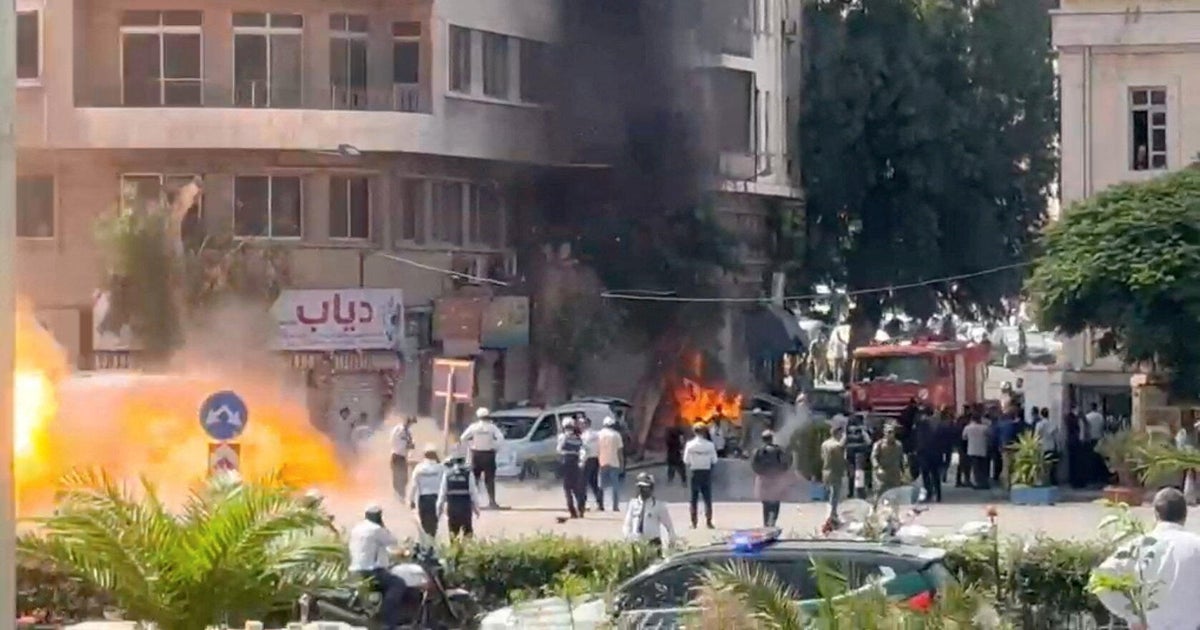
The blasts occurred near the Four Seasons hotel, a highly guarded facility that also hosts foreign diplomats and UN staff. According to the Syrian interior ministry, security forces detected two devices—one placed in a garbage bin and another in a parked car—which exploded as specialists attempted to defuse them. A spokesman for the interior ministry, Nour al-Din al-Baba, stated the devices were planted minutes before the blasts just outside the designated security perimeter for Macron's accommodation.
Syrian authorities reported that 18 people were wounded, including four police officers. Video shared on social media showed a motorcycle and a van on fire, with bloodstains on a busy street near the Damascus National Museum and the headquarters of the Tourism Ministry. BBC Verify analysis placed the explosions approximately 125m (410ft) from the Four Seasons hotel. An eyewitness told BBC Arabic's Middle East Daily that the first blast caused material damage, while the second, occurring about 20m from the first, injured members of the traffic police and public security forces.
While no group has immediately claimed responsibility, a spokesman for the interior ministry said an initial lead pointing to those who are responsible
has been discovered. The attack follows a similar incident last Thursday, when a bomb at a cafe near the Justice Palace killed at least 10 people and wounded more than 20.
The security breach occurred as Macron became the first major Western leader to visit Syria since the 2024 ouster of longtime dictator Bashar al-Assad. President al-Sharaa, a former al-Qaeda-linked commander who led the rebel offensive to topple Assad, has spent the last year forging ties with Europe and the U.S. And vowing to lead Syria toward democracy. His government continues to battle remnants of the Islamic State (IS), which has claimed several recent attacks.
Despite the blasts, Macron proceeded with his agenda, which included meetings with civil society groups and an economic forum. He later told a joint news conference that people must continue to be uncompromising on security… but not let ourselves be destabilised
while standing with the injured.
Writing on X, Macron stated:
"Nothing can smother the aspiration of Syrian women and men to live in a fully sovereign, safe, pluralistic, and united Syria. This morning I met Syria in all its diversity. I saw dignity, courage, and determination. My visit continues."
Emmanuel Macron, President of France, via X
The visit focused heavily on Syria's reconstruction and the restoration of diplomatic ties. Macron and al-Sharaa announced they will reappoint ambassadors, ending a diplomatic freeze that began in 2012. Macron had previously been a leading voice for the removal of Western sanctions, most of which were lifted last year.
Accompanying the president were French business leaders, including the CEOs of TotalEnergies and CMA CGM. More than a dozen bilateral agreements were signed, covering:
- The rebuilding of electricity and water infrastructure in Homs.
- Technical assistance for the Syrian Central Bank's financial reforms.
- Capacity building for cargo infrastructure at the Damascus airport.
- The return of illicit assets belonging to Rifaat Assad, the late uncle of Bashar al-Assad, valued at 51 million euros (approximately £43.6m).
The trip also addressed regional security. A French presidential official noted that Macron explicitly told al-Sharaa that Syria should not send forces into Lebanon, a point al-Sharaa agreed to regardless of outside pressure. This comes amid discussions regarding Syrian forces potentially combating the Iran-backed Hezbollah.
The explosions highlight the precarious nature of al-Sharaa's transition. While Damascus had been largely peaceful until recently, the new government has struggled with violence against religious and ethnic minority groups, resulting in hundreds of deaths last year. Furthermore, 90% of the population lives in poverty, with critical infrastructure in ruins after a 14-year conflict.
Following his departure from Damascus, Macron is scheduled to travel to Ankara, Turkey, for a NATO summit that President al-Sharaa is also expected to attend.
How significant is this development?
Participate in our community survey on the trajectory and real-world impact of this news.