India activist ends hunger strike after 26 days
Sonam Wangchuk has concluded his fast in support of the Cockroach Janta Party, as Prime Minister Modi promises tougher laws to prevent exam paper leaks.
India activist ends hunger strike after 26 days
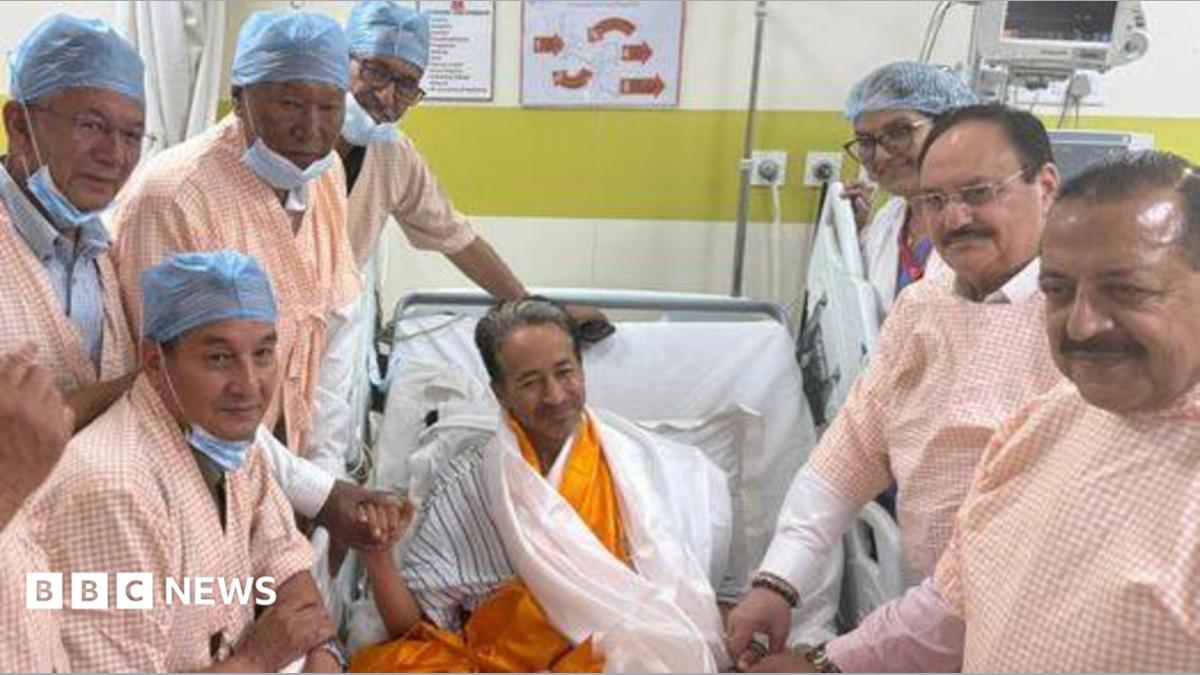
Indian activist Sonam Wangchuk has ended his 26-day hunger strike, which he began in support of the youth-led Cockroach Janta Party (CJP) and its demands for education reforms. The decision to end the strike came after a long negotiation on various conditions and concerns about possible violence in the country.
Wangchuk, 59, had been on hunger strike since June 28, and his condition had been a subject of concern. He was forcibly removed from a protest venue in Delhi and taken to hospital, where he continued his fast. The activist had lost around 11 kg during his hunger strike, but his condition remained stable.
The CJP, which emerged as an online satirical movement in May, has been demanding the resignation of Education Minister Dharmendra Pradhan over a paper leak in a key entrance exam for aspiring doctors. The party's members, who call themselves "cockroaches," have been protesting for a month, with some also going on hunger strike.
Wangchuk's decision to end his hunger strike was welcomed by CJP founder Abhijeet Dipke, who expressed relief and gratitude. However, Dipke reiterated that the party's peaceful protest at Jantar Mantar would continue until Pradhan resigns. The protest has been one of the biggest public displays of dissent against the government of Prime Minister Narendra Modi, which has been in power since 2014.
Prime Minister Modi released a video address on Thursday, announcing that the government would bring in tougher laws to check paper leaks and ensure speedy trials and stricter punishments for those involved. The Union Cabinet is expected to discuss the proposed legislation on Friday, with the aim of introducing it in Parliament during the ongoing Monsoon Session.
The government's move comes amid widespread protests in Delhi and other cities, with thousands of students and activists demanding Pradhan's resignation. The protests have been marked by clashes between demonstrators and police, with scores of people injured. Rights groups have condemned the Indian government over the "excessive use of force" by the police and the suspension of mobile internet services at Jantar Mantar.
As the protests continue, the government has been reaching out to the CJP for talks. Union Health Minister JP Nadda invited CJP leaders for discussions, but the party rejected the offer, insisting that any dialogue should be held at a neutral venue. The government has said that it is willing to discuss all issues raised by the student outfit and has sent formal proposals for talks.
Meanwhile, veteran social activist Anna Hazare began a silent protest in Maharashtra's Ahilyanagar in support of the students protesting in Delhi. Hazare's protest is seen as a show of solidarity with the CJP and its demands for education reforms.