Trump declares US-Iran ceasefire over as oil prices surge
Global oil prices surged and stock markets fluctuated after President Trump declared the ceasefire with Iran over following reciprocal military strikes.
- Headline Dispatch: Trump declares US-Iran ceasefire over as oil prices surge
- Core Takeaway: Global oil prices surged and stock markets fluctuated after President Trump declared the ceasefire with Iran over following reciprocal military strikes.
- Source Synthesis: Continuous live monitoring aggregated across major news wires and independent bureaus.
Trump declares US-Iran ceasefire over as oil prices surge
President Donald Trump announced on Wednesday from the NATO summit in Ankara, Turkey, that the ceasefire agreement with Iran is over
, describing further negotiations as a waste of time
. The declaration followed a series of reciprocal military strikes and attacks on commercial shipping in the Strait of Hormuz, triggering an immediate surge in global oil prices and volatility in international stock markets.
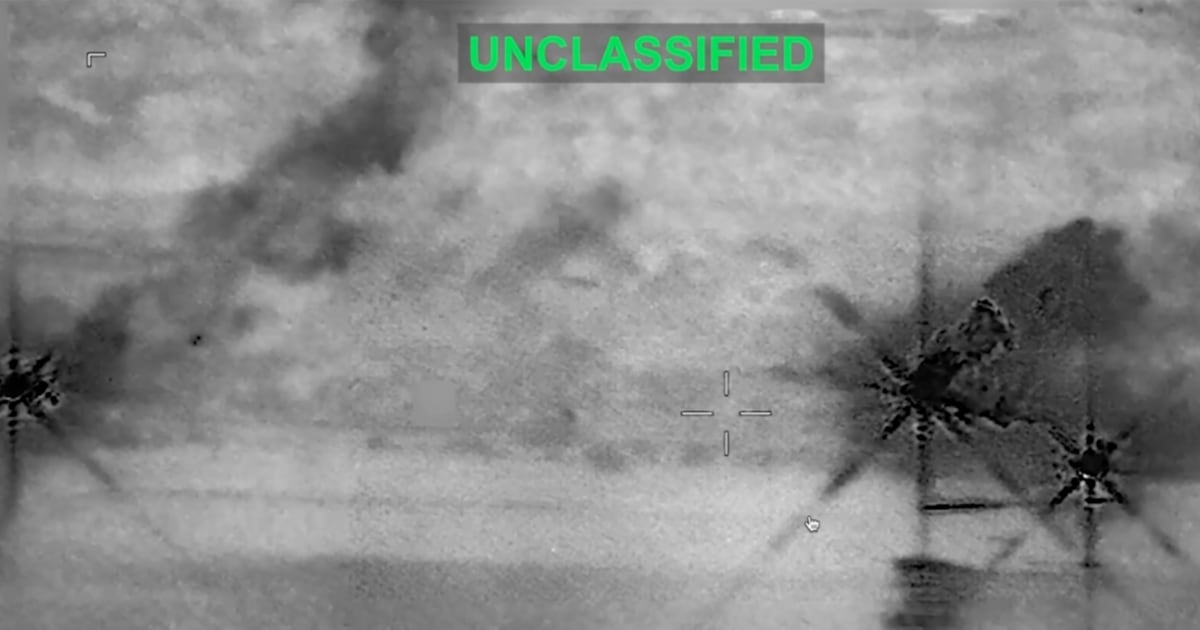
The escalation began after Iran reportedly attacked three commercial vessels in the Strait of Hormuz on Tuesday. In response, U.S. Central Command conducted air strikes against more than 80 Iranian targets, including coastal surveillance assets, air defense systems, naval capabilities, and missile and drone storage sites. U.S. Military strikes killed a guard at an airport in Iranshahr. Additional strikes hit the cities of Bandar Abbas, Sirik, Chabahar, and Konarak. Videos verified by NBC News showed explosions and a ruined maritime traffic control tower in Chabahar, where Iranian state media reported widespread power outages.
Iran retaliated by striking U.S. Military sites in Bahrain and Kuwait. The Iranian Revolutionary Guard identified the targeted bases as Arifjan and Ali Al Salem in Kuwait, and Juffair and Sheikh Isa in Bahrain. The Revolutionary Guard warned that crushing responses
would expand to other American bases if U.S. Aggression continues. In Bahrain, the Interior Ministry reported that sirens warning of possible attacks sounded in the early hours of Thursday.
The geopolitical tension caused a sharp spike in energy markets. Brent crude jumped as high as $80 per barrel before finishing the day at $78.02, while U.S. Crude oil hit $76 per barrel before closing at $73.52. Rystad data indicates that vessel crossings dropped from approximately 20 on Monday to 11 on Tuesday, halting completely on Wednesday.
On Wall Street, the S&P 500 fell 21.14 points to 7,482.71, and the Dow Jones Industrial Average dropped 576.76 points to 52,348.39. Housing stocks and companies with high fuel costs, such as American Airlines and Carnival, saw significant losses. However, the Nasdaq composite rose 51.96 points to 25,870.65, supported by gains in AI stocks like Nvidia and Broadcom.
The military conflict coincides with a tightening economic squeeze on Tehran. The U.S. Treasury Department's Office of Foreign Asset Control rescinded a sanctions waiver that had allowed Iran to sell crude oil on the global market. This move targets a primary funding source for the Iranian regime, which experts estimate derives more than 80% of its funding from oil sales.
President Trump characterized the military actions not as a war, but as a de-nuking of Iran
, stating that preventing Iran from obtaining nuclear weapons is the primary objective. He also suggested the U.S. May reimpose a naval blockade on ships heading to Iranian ports and mentioned that the White House is revisiting the idea of forcibly seizing Kharg Island, Iran's main crude oil export terminal.
While Trump called Iranian leaders scum
and sick people
during the summit, he noted that U.S. Representatives could still continue negotiations. Iranian Foreign Minister Abbas Araghchi responded on X, stating the nation would not respond to vulgarity with vulgarity
but instead with action
.
Amid the conflict, Trump met with Syrian President Ahmad al-Sharaa. A document signed by Trump, shared by the Syrian minister of foreign affairs, indicated a decision to rescind Syria's designation as a state sponsor of terrorism, a status it has held since 1979. Congress has 45 days to review this decision.
The humanitarian cost of the conflict continues to rise. Arsenio Dominguez, secretary-general of the International Maritime Organization, reported that about 6,000 seafarers remain trapped around the Strait of Hormuz. He condemned the latest attacks for placing innocent workers in grave danger
.
Looking ahead, the U.S. May conduct further strikes, as President Trump signaled that additional hits might occur as early as Thursday night.
How significant is this development?
Participate in our community survey on the trajectory and real-world impact of this news.


