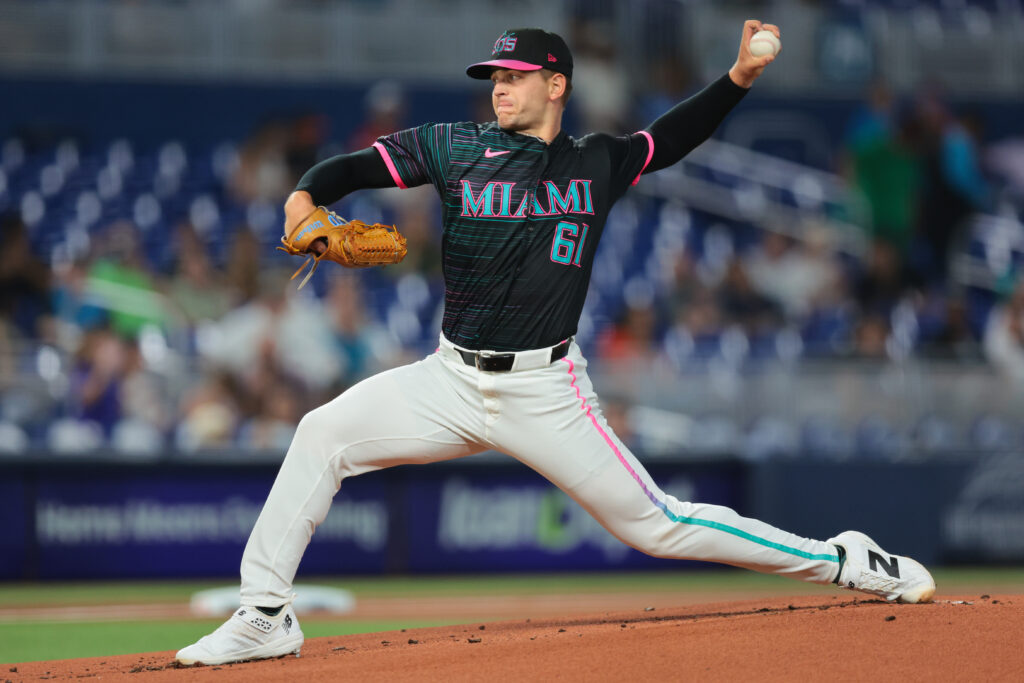
A 22-year-old Miami Marlins prospect, Robby Snelling, will undergo Tommy John surgery on Friday after a sprained ulnar collateral ligament (UCL) in his left elbow ended his season after just one major league start. The team announced Thursday that Snelling, their No. 2 prospect, will miss the rest of 2026 and likely return no earlier than the 2027 All-Star break, reshaping the Marlins’ rotation plans and raising questions about the future of their pitching depth.
Why Snelling’s Injury Is a Double Blow for the Marlins
Snelling’s injury is particularly painful for the Marlins on two fronts. First, it arrives at the worst possible time for a prospect: just after his call-up to the majors on May 8. In his debut against the Washington Nationals, he allowed three runs in five innings, but the real issue emerged afterward when he reported elbow discomfort. An MRI confirmed the UCL sprain, forcing his placement on the 15-day injured list before being moved to the 60-day IL to make room for outfielder Rece Hinds in a trade with the Reds. As MLBTraderumors reported, Snelling’s injury occurred just days before he could have earned a full year of service time—a critical milestone for the Marlins’ control over his future.
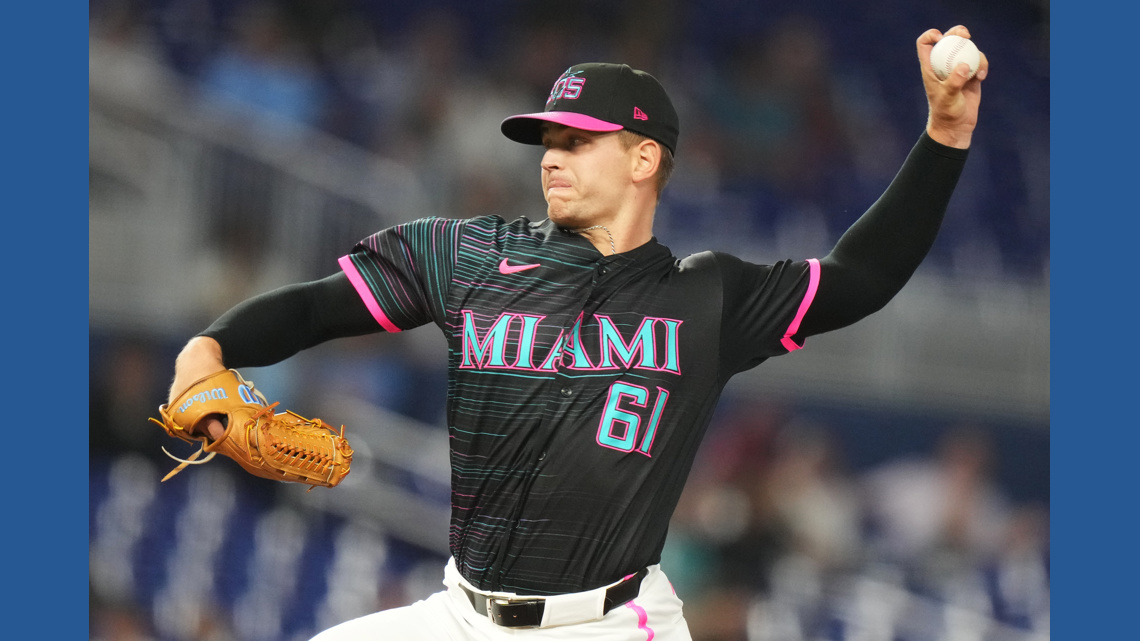
The second blow? Snelling was the Marlins’ most dominant minor-league pitcher entering the season. Before his call-up, he posted a 1.86 ERA, a 0.90 WHIP, and 44 strikeouts in six starts for Triple-A Jacksonville, earning International League Pitcher of the Week honors after tossing five no-hit frames in a row. His performance had already earned him a spot in the Marlins’ rotation, replacing Chris Paddack, who was designated for assignment earlier this month. With Snelling now sidelined for 14–18 months, the Marlins’ once-deep pitching pipeline has evaporated overnight.
The Rotation Rebuild Begins—Who Steps Up?
The Marlins’ rotation depth was already thinning before Snelling’s injury. They had traded away Edward Cabrera and Ryan Weathers in the offseason, leaving them with Sandy Alcantara, Eury Pérez, Max Meyer, Chris Paddack, and Janson Junk as starters. Snelling’s call-up was supposed to solidify their fifth spot, but now the team must scramble. As manager Clayton McCullough told reporters, “We have some others in Jacksonville that have thrown the ball well and could potentially get that opportunity.”
Braxton Garrett, a veteran lefty recalled to replace Snelling, was optioned back to Triple-A after two poor starts (14.54 ERA). Tyler Phillips, a 28-year-old righty with a 1.20 ERA in 15 relief appearances this season, is the most intriguing candidate. Phillips has starter experience—he made seven starts for the Phillies in 2024 and opened for the Marlins last September—and McCullough hinted at a possible conversion. “We know we haven’t ruled that out,” McCullough said. “I think that’s a real possibility.”
Phillips’ pitch count would need to expand by 15–20 pitches per outing to handle starter workloads, but his recent success in relief—including a strong outing in Wednesday’s 9–1 loss—suggests he could adapt. The Marlins also have Thomas White, their No. 1 prospect, but he’s currently on the seven-day IL with an unspecified injury. Without Snelling, the Marlins will likely test Phillips first, with Garrett or White as backup options.
The Long Road Back: Snelling’s Recovery and the Marlins’ Future
Tommy John surgery is a career-altering setback, but Snelling’s age (22) and the Marlins’ cautious approach to rehab could work in his favor. While most pitchers return in 12–18 months, Snelling’s recovery timeline remains uncertain. As Sports Illustrated noted, he could realistically miss the entire 2027 season, with a possible return in 2028 if his rehab is aggressive.
For Snelling, the silver lining is that he’ll collect major-league pay and service time while recovering—a financial and developmental advantage he wouldn’t have had if the injury occurred in the minors. But for the Marlins, the loss of Snelling’s prime years of control is a major setback. He was slated to be a rotation mainstay for at least seven seasons, and his absence from the rotation for two years could force Miami to rely on unproven arms or trade for help sooner than expected.
McCullough framed the injury as part of baseball’s unpredictable nature: “That’s an unfortunate part of our industry. Guys go down. We just keep going, and Robby will come back from this a stronger person.” Yet the Marlins’ rotation is already stretched thin, and Snelling’s absence could push them toward a more aggressive trade strategy for the 2026–27 offseason.
What’s Next for the Marlins’ Pitching Staff?
The Marlins’ rotation is now a patchwork of veterans and untested prospects.
- Starters: Sandy Alcantara, Eury Pérez, Max Meyer, Janson Junk, and an unknown (likely Phillips or Garrett).
- Bullpen Depth: Adam Mazur (who also underwent elbow surgery earlier this year) and a mix of relievers.
- Prospects on the Rise: Thomas White (if healthy) and Braxton Garrett (if recalled again).
- Potential Trade Targets: The Marlins may need to add a veteran arm in the offseason to replace Snelling’s long-term upside.
The Marlins’ front office will now face a critical decision: Do they invest in short-term fixes (trading for a proven starter) or double down on development (letting Phillips or Garrett prove themselves)? With Snelling’s return likely delayed until 2027 or 2028, the choice could define Miami’s playoff aspirations for the next two seasons.
The Broader Implications: A Cautionary Tale for Prospects
Snelling’s injury is a stark reminder of how quickly a pitching career can derail. Even the most dominant prospects—like Snelling, who was MLB Pipeline’s No. 28 overall prospect—are vulnerable to UCL sprains, which often require surgery. The Marlins, who once had a surplus of pitching depth, now find themselves in a familiar position: scrambling to fill a hole left by injury.
For Snelling, the road to recovery is long, but his youth and the Marlins’ resources give him a fighting chance. For the team, the challenge is managing expectations. They’ll need to balance patience with pragmatism—giving Phillips and Garrett opportunities while preparing for the possibility that Snelling’s return could be pushed back even further.
One thing is certain: The Marlins’ 2026 season just got harder. Without Snelling, their rotation is thinner, their trade options more limited, and their path to contention less certain. But as McCullough noted, baseball doesn’t stop for setbacks. The question now is whether the Marlins can adapt—and whether Snelling can return stronger than ever.
