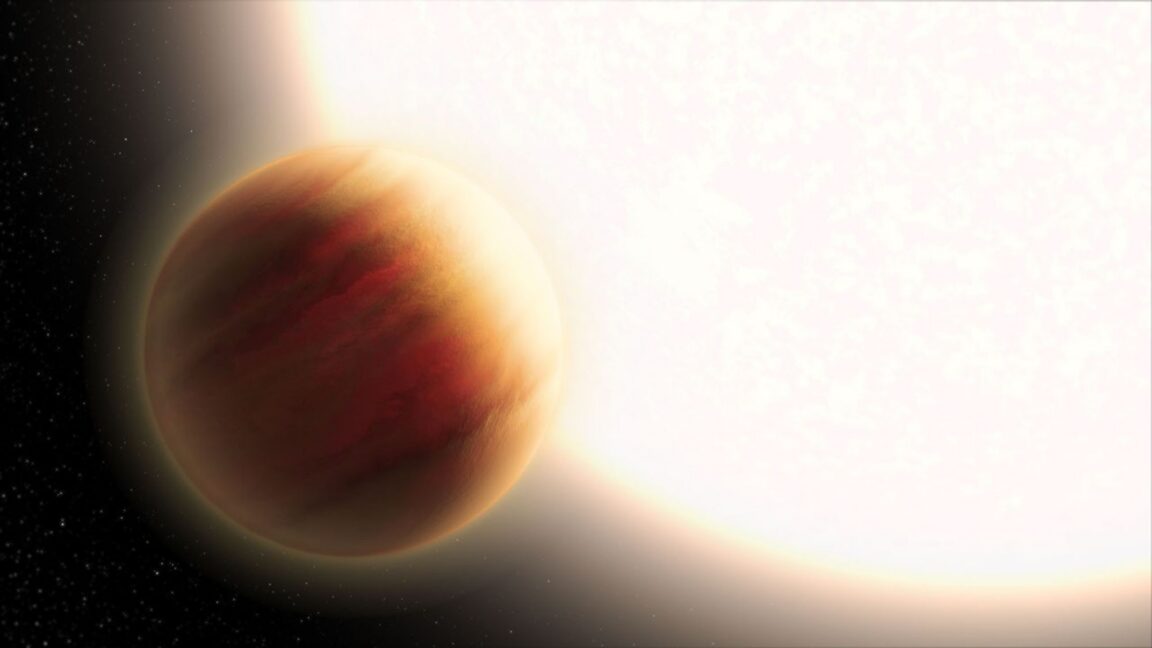
Astronomers using the James Webb Space Telescope have mapped a daily weather cycle on the hot Jupiter exoplanet WASP-94A b, located approximately 690 light-years from Earth. Published May 21, 2026, in the journal Science, the findings reveal that mornings on the tidally locked gas giant are overcast with mineral clouds, while evenings are clear.
A Weather Forecast for WASP-94A b
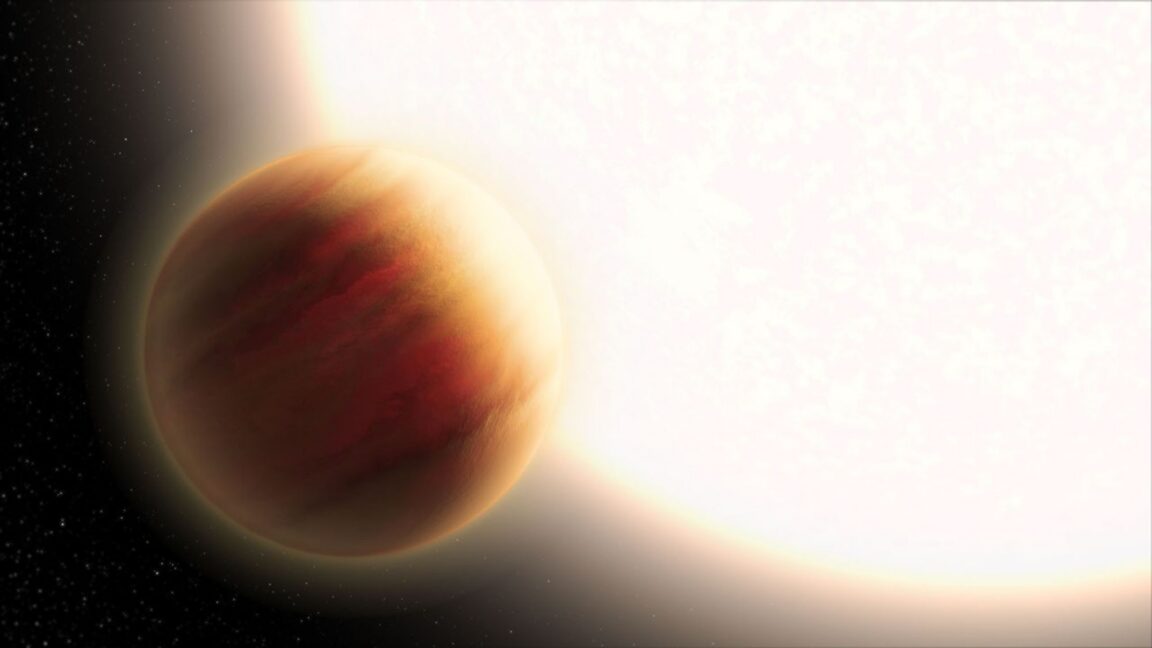
WASP-94A b has long been a subject of interest for planetary scientists, but its extreme environment—characterized by temperatures exceeding 2,200 degrees Fahrenheit (1,200 degrees Celsius)—made traditional observation difficult. As a hot Jupiter, the planet is tidally locked, meaning one side permanently faces its host star in a state of eternal day, while the other remains in darkness.

Researchers led by the Johns Hopkins University team utilized the telescope’s Near Infrared Imager and Slitless Spectrograph (NIRISS) to monitor the planet as it transited its star. By isolating the light passing through the leading “morning” limb and the trailing “evening” limb, the team observed a stark asymmetry in cloud coverage. The morning side is shrouded in clouds composed of vaporized magnesium silicate—essentially, giant airborne sandstorms—which dissipate as they circulate toward the hotter dayside.
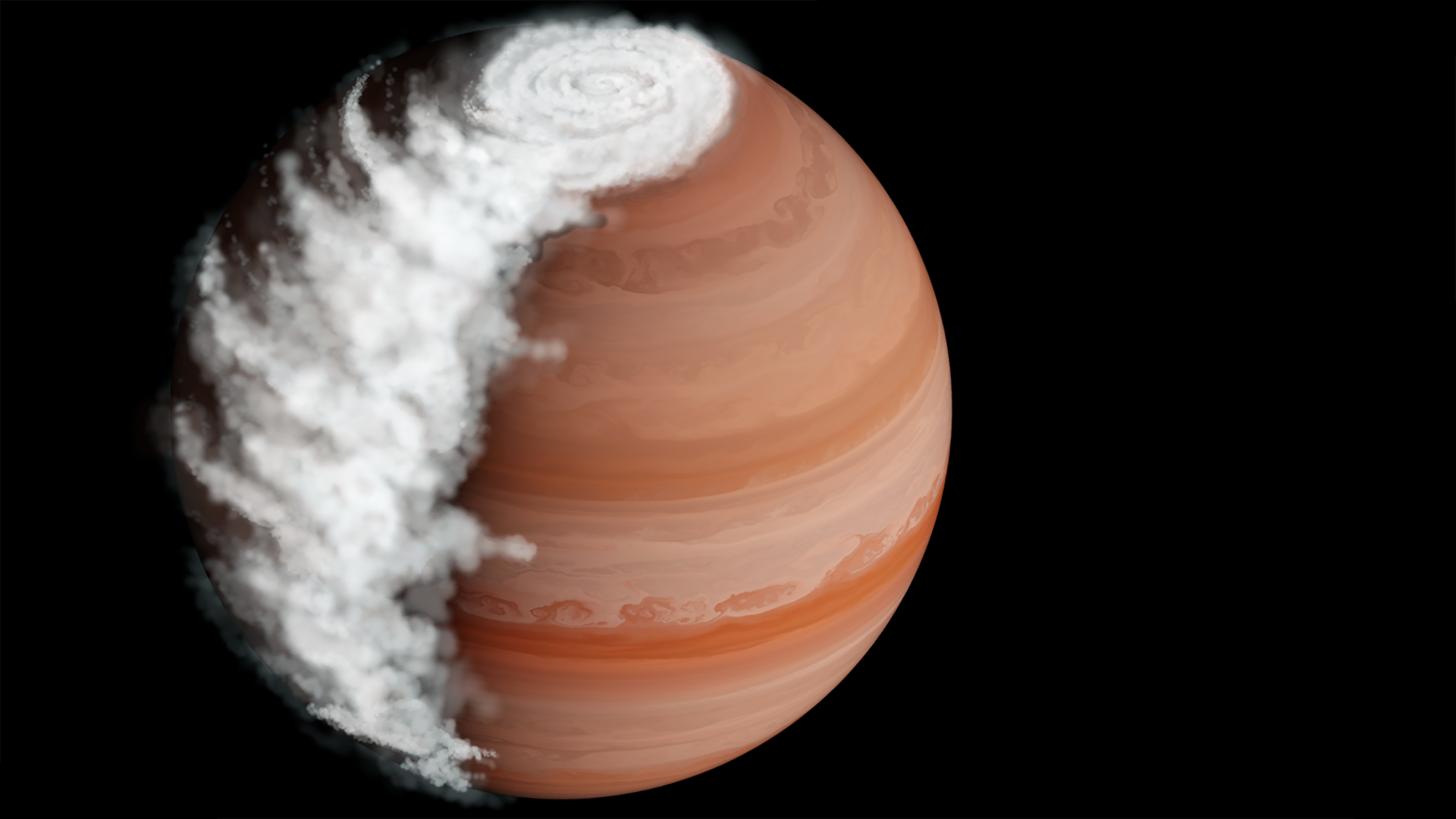
The observation technique, known as time-resolved spectroscopy, allowed the team to slice the transit data into specific segments. By capturing the light from the planet’s atmosphere as it appeared on the eastern and western limbs during the transit, the researchers effectively created a longitudinal map of the planet’s cloud distribution. This method relies on the precision of the NIRISS instrument, which is capable of detecting subtle variations in the infrared spectrum that correlate to the presence of mineral grains in the upper atmosphere.
Resolving Atmospheric Composition Bias
Previous attempts to analyze the composition of hot Jupiters were often compromised by the pervasive cloudiness of these worlds. Because earlier instruments like the Hubble Space Telescope could not distinguish between the morning and evening limbs, researchers were forced to rely on averaged spectral data. This practice led to significant errors in estimating the metallicity of exoplanets.
“I’ve been looking at exoplanets for 20 years, and general cloudiness has been a thorn in our side. We’ve known for quite a while that clouds are pervasive on Hot Jupiter planets, which is annoying because it’s like trying to look at the planet through a foggy window.” David Sing, Bloomberg Distinguished Professor of Earth and Planetary Sciences at Johns Hopkins University, via Johns Hopkins University
The recent study highlights that when these morning and evening limbs are not resolved, the resulting models can produce misleading data. For WASP-94A b, averaging the spectrum suggested an oxygen enrichment 100 times higher than that of the Sun. When researchers separated the limbs, however, they found an enrichment level only three to five times higher—a figure far more consistent with current theories of gas giant formation.
The discrepancy in these figures underscores the necessity of distinguishing between the two limbs. By combining the data, the researchers discovered that the “morning” clouds effectively blocked a significant portion of the light, skewing the chemical signatures interpreted by models. By isolating these limbs, the team was able to remove the cloud-induced bias, providing a more accurate assessment of the planet’s elemental abundance. This refinement is critical for understanding the formation history of WASP-94A b, as high metallicity estimates often suggest a planet formed through different accretion processes than those indicated by lower, solar-consistent levels.
Implications for Future Exoplanet Research
The discovery of these cloud cycles suggests that the “foggy window” problem is not insurmountable. By developing more sophisticated theoretical models, scientists may be able to mitigate composition bias even when they lack the telescope resolution to perfectly disentangle morning and evening limbs on smaller worlds like sub-Neptunes or super-Earths.
“We can finally pin down what the clouds are made out of and how they’re condensing and evaporating as they move around the planet.” David Sing, Bloomberg Distinguished Professor of Earth and Planetary Sciences at Johns Hopkins University, via Johns Hopkins University
As Scientific American reported, this work provides a new template for how researchers might interpret atmospheric data from other distant worlds. The ability to track mineral clouds as they form on the cooler nightside and vaporize under the intense heat of the dayside offers a clearer picture of the dynamic, extreme weather systems common to hot Jupiters. While the researchers note that more work is required to refine these techniques for smaller planets, the findings published in Science represent a significant shift in how astronomers “de-fog” the atmospheres of distant solar systems.
The research team emphasized that the success of these observations relies on the stability of the James Webb Space Telescope’s orbit and its specialized infrared capabilities. Future studies are expected to apply these limb-separation techniques to a broader sample of exoplanets, aiming to build a comprehensive catalog of weather patterns across different types of gas giants. By observing how clouds vary across the terminators of these worlds, astronomers hope to better characterize the global circulation patterns and thermal structures that define these extreme planetary environments, ultimately refining our understanding of the diversity of planetary atmospheres in the galaxy.
