The Sound Transit board approved a $194.7 billion light rail expansion plan on Thursday night, prioritizing projects like West Seattle and Everett while deferring Ballard’s full extension due to a $34 billion funding gap. The 16-2 vote—with Seattle Councilmember Dan Strauss and King County Councilmember Claudia Balducci dissenting—marks the culmination of a yearlong effort to reconcile voter-approved transit projects with soaring construction costs, inflation, and labor shortages. Ballard’s northernmost stations now face an uncertain timeline, despite 90% voter approval in some precincts.
Ballard’s Unfinished Business: Why the Most Popular Line Got Shortchanged
cluster (priority): Seattle Transit Blog
Ballard’s light rail extension was supposed to be the crown jewel of Sound Transit’s ST3 expansion, with projections of 148,000 daily riders—three times the estimated ridership of East Link. Yet the board’s plan leaves the segment connecting Seattle Center to Market Street unfunded, a decision that has left local leaders fuming. “Ballard Link Extension is expected to be the highest ridership project in this program’s history,” Seattle Mayor Katie Wilson said in a statement. “So, the fact that Ballard Link Extension is the only major project that is not receiving that stamp of full funding today is extremely, extremely upsetting.”
The board’s rationale? Cost. The $34 billion shortfall forced tough choices, and Ballard’s extension—already the most expensive deferred project—couldn’t compete with other priorities like Everett’s $9.5 billion Link Extension, which remains on track for completion by 2041. But the deferral isn’t just about money; it’s about political will. Ballard precincts passed ST3 with near-unanimous support, and the board’s decision to exclude the northern segment risks alienating a key constituency. As one frustrated advocate told reporters, “This isn’t just about transit—it’s about trust.”
The board did approve a compromise: a fixed-date requirement for Ballard’s remaining stations (Smith Cove, Interbay, and Market Street) by August 1, 2026. But without a clear funding path, that deadline may be little more than a placeholder. Meanwhile, Everett’s expansion—including a downtown station by 2041—proceeds unscathed, a decision that has drawn criticism from Ballard residents who see it as a misplaced priority. “Nothing in this proposal represents a decision to permanently eliminate the voter-approved vision,” Sound Transit Board Chair Dave Somers insisted, but the optics are undeniable: Ballard’s extension is the only major project left in limbo.
The $34 Billion Gap: How Sound Transit Went From Vision to Reality Check
cluster (priority): FOX 13 Seattle
The $34 billion shortfall isn’t just a number—it’s the result of a perfect storm: inflation that has pushed construction costs through the roof, labor shortages that delay timelines, and revenue projections that fell short of expectations. In 2016, voters approved ST3 with a $54 billion price tag; today, the agency is staring at a $194.7 billion bill, a 260% increase in less than a decade. The board’s solution? A mix of cost-cutting, phased projects, and deferred investments.
Key adjustments include:
Fully funded projects: Tacoma Dome Link, West Seattle Extension (without Avalon Station), Everett Link (both phases), and the initial Ballard segment to Seattle Center.
Partially funded (planning/design only): Ballard’s final design, Boeing Access Road station, and additional Sounder South trips.
Deferred indefinitely: Ballard’s Market Street extension, Tacoma Dome parking, and Stride bus rapid transit.
The agency now needs to find an additional $9.3 billion to $11.3 billion to keep the remaining projects on track—or risk further delays. “Our work as a board is far from over,” King County Executive Girmay Zahilay said after the vote. “I remain committed to delivering the full ST3 system that King County voters approved.” But with inflation showing no signs of easing, that commitment may hinge on securing new revenue streams—or convincing taxpayers to foot the bill for yet another round of increases.
Graham Street Station: A Microcosm of the Bigger Fight Over Priorities
Sound Transit board approves plan to address funding gap, extension promises
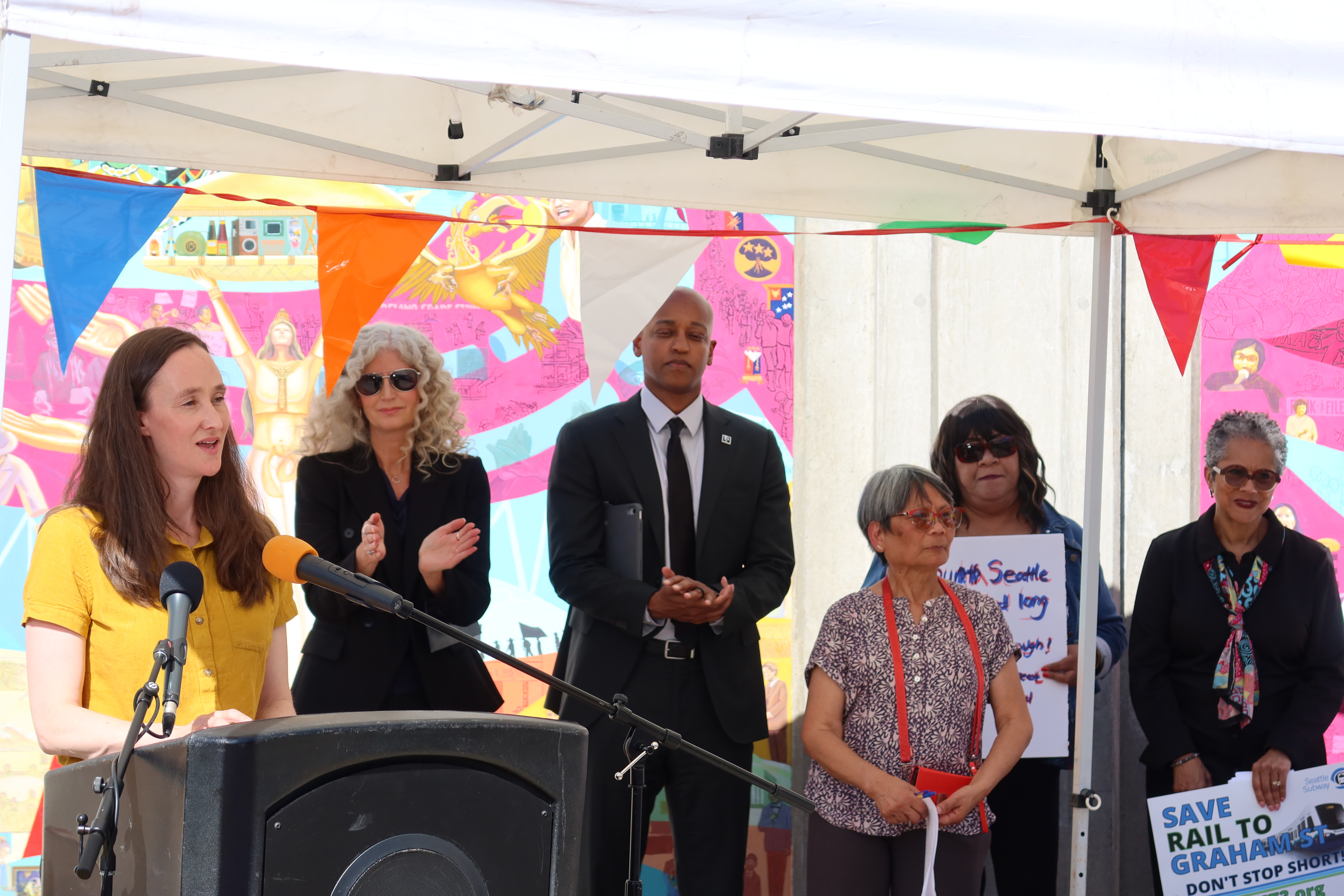
While Ballard’s extension dominates headlines, another battle is brewing over the Graham Street station—a $30 million at-grade stop on MLK Way that Mayor Wilson, King County Executive Zahilay, and Councilmember Teresa Mosqueda are fighting to save. The station, originally planned for 2031, was slated to be deferred under the initial realignment plan. But in a rare show of unity, the three officials proposed an amendment to secure $25 million in federal grants, expedite permitting, and allocate cost savings from Pinehurst Station to Graham Street.
The stakes are high: Graham Street isn’t just a transit stop—it’s a symbol of equity. Located in a historically underserved neighborhood, the station would provide direct access to jobs, healthcare, and education. “This isn’t just about transit—it’s about closing gaps in opportunity,” Wilson said at a press conference outside the Filipino Community Center. The amendment, if adopted, would require Sound Transit to provide a cost-saving plan by June 1, 2027. But with the agency already stretched thin, the question remains: Will Graham Street get the green light, or will it join Ballard’s extension in the deferred graveyard?
What’s Next: The Road Ahead for Sound Transit
cluster (priority): The Urbanist
The board’s vote is just the beginning. Over the next 25 years, Sound Transit will face three critical challenges:
Funding the Gap: The agency must secure $9.3 billion to $11.3 billion to avoid further deferrals. Options include federal grants, local contributions, or—most likely—a combination of both. The Graham Street amendment offers a template, but scaling that approach to Ballard’s extension will require political will and creative financing.
Rebuilding Trust: Deferring Ballard’s extension and Graham Street station risks eroding public confidence. The board’s insistence that “nothing is permanently eliminated” may not be enough if riders see their priorities sidelined. Transparency—like the August 2026 deadline for Ballard’s timeline—could help, but accountability will depend on follow-through.
Balancing Priorities: Everett’s expansion, while costly, aligns with regional economic growth. Ballard’s extension, meanwhile, serves a densely populated but politically vocal community. The board’s decision reflects a tough calculus: Can Sound Transit deliver on all promises, or must it accept that some projects will take longer?
One thing is clear: The agency’s future hinges on its ability to adapt. “We’re not canceling anything,” Zahilay said, but the reality is that without new funding, the $34 billion gap will force more hard choices. For now, Ballard’s riders will have to wait—unless the board can find a way to turn deferral into a temporary setback, not a permanent loss.
For now, the focus shifts to the next steps: securing federal grants, finalizing cost-saving measures, and—perhaps most importantly—keeping the public engaged. The ST3 vision may still be alive, but its survival depends on whether Sound Transit can bridge the funding chasm without breaking the promises it made to voters.