
Russia launched its largest-ever nuclear forces drills on May 18, 2026, simulating practice launches of ballistic and cruise missiles as Ukraine escalates drone attacks, according to Kremlin-backed reports and military statements.
Drills Signal Escalation Amid Ukraine War
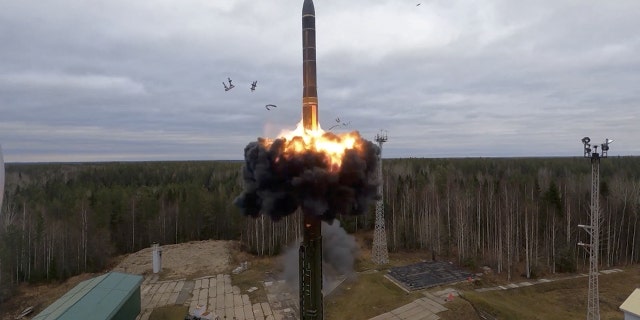
Russia’s military began large-scale drills of its nuclear forces on May 18, featuring simulated launches of nuclear-capable ballistic and cruise missiles. The exercises—confirmed by the Russian Ministry of Defense and reported by AP News—come as Ukraine intensifies drone strikes against Russian military and energy infrastructure. Belarus also announced joint nuclear drills with Russia earlier this week, further heightening regional tensions.
The drills follow a pattern of heightened military posturing by Moscow, which has repeatedly emphasized its nuclear deterrence capabilities since the invasion of Ukraine began in 2022. While Russian officials have framed the exercises as routine training, Western analysts interpret them as a warning to NATO and Ukraine amid stalled negotiations and escalating battlefield losses for Russia.
Nuclear Posturing in a Stalled War
The timing of the drills coincides with a surge in Ukrainian long-range drone attacks targeting Russian military bases and energy facilities. According to Reuters, Moscow has responded with retaliatory airstrikes, including a barrage on Ukrainian cities over the past 48 hours. The Russian military’s Southern Military District and Western Military District are reportedly leading the nuclear drills, with participation from strategic missile forces and naval units.

Russia’s nuclear saber-rattling is not new, but the scale of these exercises—described as the largest since the Cold War—marks a significant escalation. In a statement, the Russian Ministry of Defense emphasized that the drills were conducted in accordance with international obligations and were designed to ensure the readiness of nuclear forces. However, the inclusion of simulated missile launches has raised alarms in Western capitals, where officials are monitoring the situation closely.
President Vladimir Putin, during a visit to China this week, reiterated the strength of Russia-China ties, stating that relations had reached a “truly unprecedented level”—a context some analysts suggest may embolden Moscow’s defiance of Western pressure. Meanwhile, U.S. and European officials have avoided direct criticism of the drills, instead urging de-escalation through diplomatic channels.
Belarus Joins Nuclear Drills with Russia
Adding to the regional tensions, Belarus announced on May 17 that it would conduct joint nuclear drills with Russia, practicing the use of tactical nuclear weapons. The exercises, set to take place in the coming weeks, involve Belarusian and Russian military units and are framed as a response to NATO’s expansion and perceived threats to Belarusian sovereignty.
Belarusian President Alexander Lukashenko has previously threatened to deploy Russian nuclear weapons on its territory, though no such deployment has occurred. The drills, however, signal a deepening military integration between the two allies, further isolating Belarus from Western partners. The European Union and NATO have condemned the move, with EU foreign policy chief Josep Borrell calling it a “provocative escalation” that undermines regional stability.
Western Response: Caution Amid Escalation
Western governments have adopted a measured response to the drills, emphasizing the need for restraint while avoiding direct confrontation. The U.S. State Department issued a statement urging all parties to “avoid actions that increase tensions,” while NATO Secretary-General Jens Stoltenberg called for dialogue to prevent miscalculation.
Analysts at Chatham House, a London-based think tank, warn that the drills could signal a shift in Russia’s nuclear strategy, moving beyond deterrence to more overt coercive threats. “The risk of miscommunication or accidental escalation is real,” said a Chatham House report released this week, noting that Russia’s nuclear rhetoric has grown more aggressive as its conventional military campaign in Ukraine stalls.
Meanwhile, Ukraine’s military command has not directly commented on the nuclear drills but has continued its drone campaign, targeting Russian air defenses and command centers. Ukrainian President Volodymyr Zelenskyy has repeatedly warned that Russia’s nuclear threats are designed to intimidate, but his administration has focused on sustaining military pressure rather than engaging in direct nuclear rhetoric.
What Comes Next?
The nuclear drills are unlikely to immediately trigger a broader conflict, but they underscore the deepening crisis in Eastern Europe. Russia’s military posturing—combined with its economic resilience and diplomatic alliances with China and Iran—has complicated Western efforts to isolate Moscow. The coming weeks will be critical, as both sides assess the impact of the drills on global perceptions and potential responses.
For now, the focus remains on avoiding direct confrontation. However, the drills serve as a stark reminder of the fragility of the nuclear non-proliferation regime and the dangers of a prolonged war in Europe. As The Guardian noted this week, the exercises “test the limits of what the world will tolerate” in an era of resurgent great-power competition.
One certainty is that the situation will continue to evolve. The question is whether the drills will lead to further de-escalation—or whether they mark the beginning of a more dangerous phase in the conflict.
