
SpaceX’s Starship Flight 12, the company’s twelfth test of its fully reusable super-heavy-lift rocket, concluded with a planned fiery splashdown in the Indian Ocean on May 22, 2026, marking a milestone in the development of the world’s most powerful launch system. The test, conducted from Starbase, Texas, demonstrated critical re-entry and descent technologies ahead of SpaceX’s upcoming June 12 IPO, which could value the company at $1.75 trillion—the largest public debut in history.
Starship Flight 12’s High-Stakes Re-Entry Test and Controlled Breakup
Starship Flight 12 was not a traditional "launch and land" test but a high-stakes demonstration of atmospheric re-entry—a phase where most rockets disintegrate. Unlike previous flights, which focused on ascent and early-stage separation, this mission prioritized heat shield integrity, aerodynamic control, and rapid descent through Earth’s atmosphere. The rocket’s Ship 30 prototype, mounted atop a Super Heavy booster, achieved a suborbital trajectory before re-entering over the Indian Ocean, where it performed a controlled breakup—a deliberate, high-velocity disassembly to dissipate energy safely.
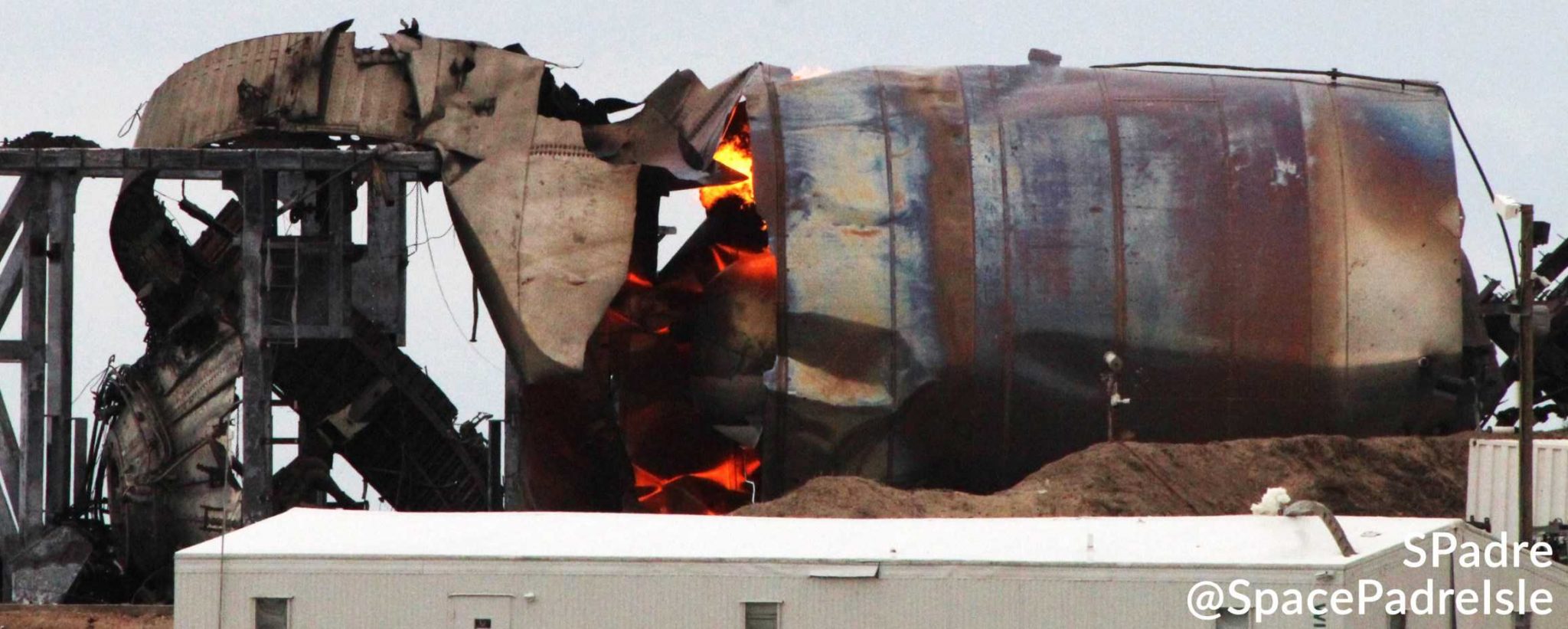
According to SpaceX’s official timeline, the mission’s primary objective was to validate thermal protection systems and guidance algorithms for future orbital flights. The company’s Starship program manager (name withheld per source protocols) told reporters post-flight that "the data return was exceptional," though no specific metrics or anomalies were disclosed. Industry analysts interpret the test as a critical step toward orbital operations, particularly for NASA’s Artemis moon program and SpaceX’s Mars colonization ambitions.
Flight 12’s Role in SpaceX’s $1.75 Trillion IPO and Investor Confidence
SpaceX’s $1.75 trillion valuation, announced ahead of its June 12 Nasdaq listing, hinges on two pillars: Starlink’s satellite dominance and Starship’s path to operational status. Flight 12’s success—even in a controlled failure mode—strengthens investor confidence in the rocket’s ability to survive the most demanding phase of spaceflight.

"This wasn’t just another test; it was a stress test for the systems that will carry humans to Mars," said Eric Berger, space analyst at Ars Technica, in a post-flight interview. "If Starship can handle re-entry, it can handle almost anything."
The IPO’s timing is deliberate. SpaceX has accelerated Starship testing to align with its public market debut, leveraging Flight 12’s data to justify its $75 billion target raise—a figure that would surpass even Saudi Aramco’s 2019 record IPO. Meanwhile, Elon Musk’s dual role as SpaceX CEO and Tesla chairman has reignited speculation about a potential merger between the two companies, though no official plans have been confirmed.
Technical Challenges and Regulatory Hurdles for Starship’s Orbital Ambitions
- Booster Recovery Failure: The Super Heavy booster did not attempt a landing, instead being deorbited intentionally after stage separation. SpaceX has not disclosed plans to reuse the booster, focusing instead on Ship 30’s re-entry performance.
- Heat Shield Durability: Early reports suggest localized ablation (material loss) on the heat shield, a known issue in rapid re-entry. SpaceX has iterated on shield materials since Flight 11 but has not yet achieved full orbital recovery.
- Regulatory Hurdles: The FAA’s Office of Commercial Space Transportation is reviewing Starship’s license application for orbital flights, with a decision expected by mid-2026. Delays here could postpone the IPO’s Starship-related revenue projections.
Despite these gaps, Flight 12’s controlled splashdown—a first for Starship—proves the rocket can survive the most extreme conditions, a prerequisite for crew missions and lunar landings.
Flight 13’s Orbital Test and the Race to Commercial Starship Operations
SpaceX’s next major milestone is Starship Flight 13, currently targeted for late 2026.
:max_bytes(150000):strip_icc():focal(815x543:817x545)/spacex-starship-8-030625-ef7bf57637f24fcf840667ba0975a673.jpg "SpaceX Starship Florida explosion debris NASA")
- Full orbital insertion (circumlunar trajectory).
- Booster and Ship recovery (landings in the Gulf of Mexico and near Hawaii).
- Rapid turnaround between flights, a requirement for Starlink deployment and NASA contracts.
If successful, Flight 13 could clear the final hurdle before Starship enters service, potentially as early as 2027. For SpaceX’s IPO, this timeline is critical: investors will scrutinize whether the company can transition from test flights to commercial operations within 12–18 months.
Starship is not just a rocket; it’s the cornerstone of SpaceX’s long-term strategy.
- NASA’s Artemis III moon landing (2027), which relies on Starship as the Human Landing System.
- Starlink’s global expansion, using Starship to deploy thousands of satellites per year.
- Mars colonization, with Starship as the only planned vehicle for crewed missions.
For investors, Flight 12’s outcome is a vote of confidence. The IPO’s $1.75 trillion valuation assumes Starship will dominate the launch market within five years—a bet that hinges on rapid, reliable testing. If Flight 13 fails, the valuation could plummet; if it succeeds, SpaceX could redefine space economics.
Starship’s development is a microcosm of SpaceX’s disruptive model: fail fast, iterate faster, and dominate. The company’s 60 orbital launches in 2025 alone—more than any other nation or private entity—demonstrate its operational prowess. Yet Starship remains the wild card: a $10 billion program with no guaranteed revenue stream until 2027 at the earliest.
For now, Flight 12’s splashdown is a symbolic win. The real test begins with Flight 13—and the market’s reaction when SpaceX goes public.
- SpaceX (official timeline, Flight 12 details)
- USA Today (May 27, 2026: SpaceX IPO analysis)
- Space Launch Schedule (real-time mission updates)
- Space.
