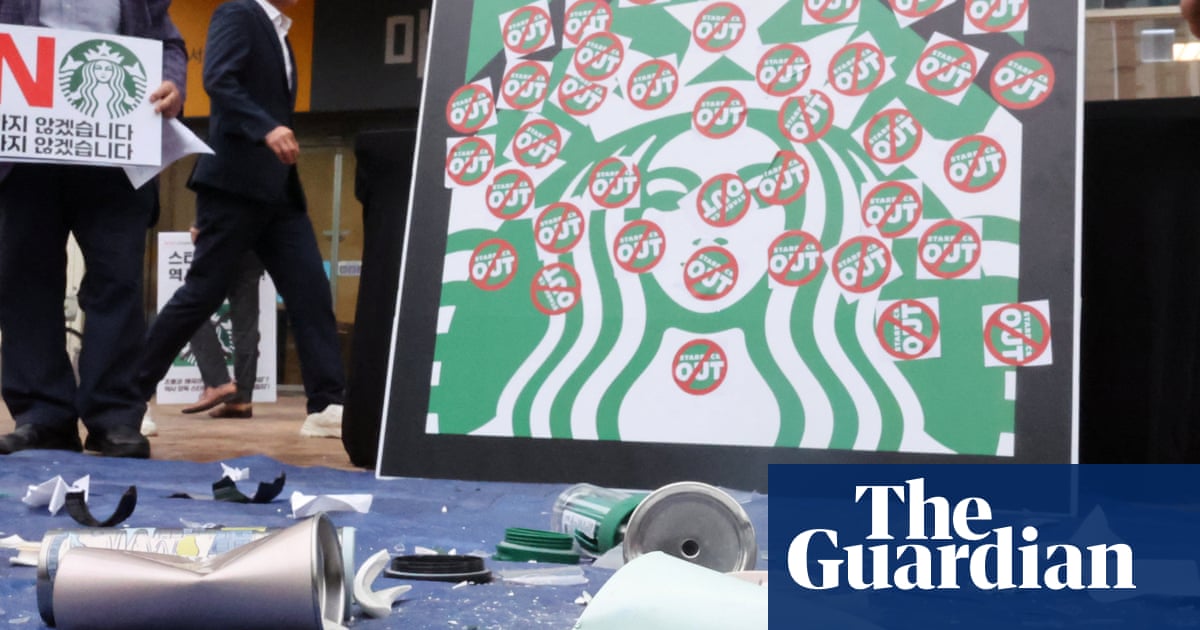
Starbucks Korea will shutter all of its domestic locations at 3 p.m. on June 22 for mandatory history and sensitivity training following a promotional campaign that sparked widespread public backlash. The move follows a disastrous “Tank Day” discount event that referenced a 1980 military massacre and a 1987 police torture incident.
The Marketing Crisis Behind the Shutdown
The controversy began on May 18, the anniversary of the 1980 Gwangju Uprising, when Starbucks Korea launched a promotion for steel “Tank” tumblers. The company marketed the date as “Tank Day” and utilized the slogan “thwack on the desk,” a phrase linked to the 1987 death of student activist Park Jong-chul. Authorities at the time falsely claimed the student had died after an officer hit a desk during questioning, according to The Guardian.
The Gwangju Uprising, a democratic movement brutally suppressed by military forces, remains a foundational event in modern South Korean democracy. By inadvertently referencing the state-sanctioned violence that characterized the era of authoritarian rule, the marketing materials touched upon deep-seated national trauma. The campaign triggered an immediate public outcry, leading to protests outside stores and videos of customers destroying the tumblers. Shinsegae Group, the parent company operating Starbucks under license, admitted that marketers used an AI tool to generate the slogan and that some managers approved the materials without reviewing the attachments.
Financial Impact and Corporate Accountability
The fallout has caused significant financial and reputational damage to the brand in South Korea, its third-largest market. Market data firm IGAWorks estimates the half-day store closures will result in a loss of 2.1 billion won, or approximately $1.4 million in sales.
According to Morning Brew, payment volumes at Starbucks Korea locations plummeted 26% in the week following the promotion. While payment volumes showed a partial recovery of 12.8% in early June, they remain roughly 25% below pre-controversy levels. The company’s response has been swift:

- The chief executive was terminated on the day the campaign was pulled.
- Chung Yong-jin, the billionaire chair of Shinsegae Group, issued a televised apology and bowed three times to the public.
- Police have registered Chung and the former CEO as criminal suspects, investigating potential insults toward the victims of the 1980 massacre.
In South Korea, corporate entities operating under license from international parent companies face unique scrutiny regarding local cultural alignment. The involvement of the police as criminal investigators reflects the legal gravity of “defamation of the deceased” or “insulting historical trauma” under local statutes. Such investigations often serve to test the boundaries of corporate responsibility when automated systems, such as the AI tools cited by Shinsegae, produce content that violates local social norms.
Mandatory Training for Staff and Executives
To address the internal cultural failure, Starbucks Korea plans to require its entire workforce to view recorded lectures on contemporary Korean history. The curriculum aims to provide context on the Gwangju Uprising and educate staff on how to account for social sensitivities in future marketing.
“We are deeply sorry for an unacceptable marketing incident,” Starbucks Corporation said.
Beyond the store-level training, the company’s leadership will participate in the curriculum on June 24. While Starbucks Corporation in Seattle does not hold equity in the Korean operation, it has intervened by sending a direct apology to the May 18 Foundation, a primary organization representing Gwangju victims. An internal company investigation concluded that there was no deliberate intent to offend, though the ongoing police inquiry into the incident creates a persistent legal risk for the firm.
The Road Ahead for Starbucks Korea
The brand now faces the difficult task of repairing its image in a market where the Gwangju Uprising remains a sensitive historical fault line. With the exception of a few airport locations, the company intends to keep its doors closed on June 22 to ensure full staff participation. The success of this corrective measure will be measured not only by the internal training results but by whether the brand can recover the quarter of its sales volume that vanished following the incident. Recovering consumer trust in a market as competitive as Seoul—where coffee culture is highly saturated—requires both symbolic restitution and long-term changes to internal oversight mechanisms.
Find more reporting in our Business section.
