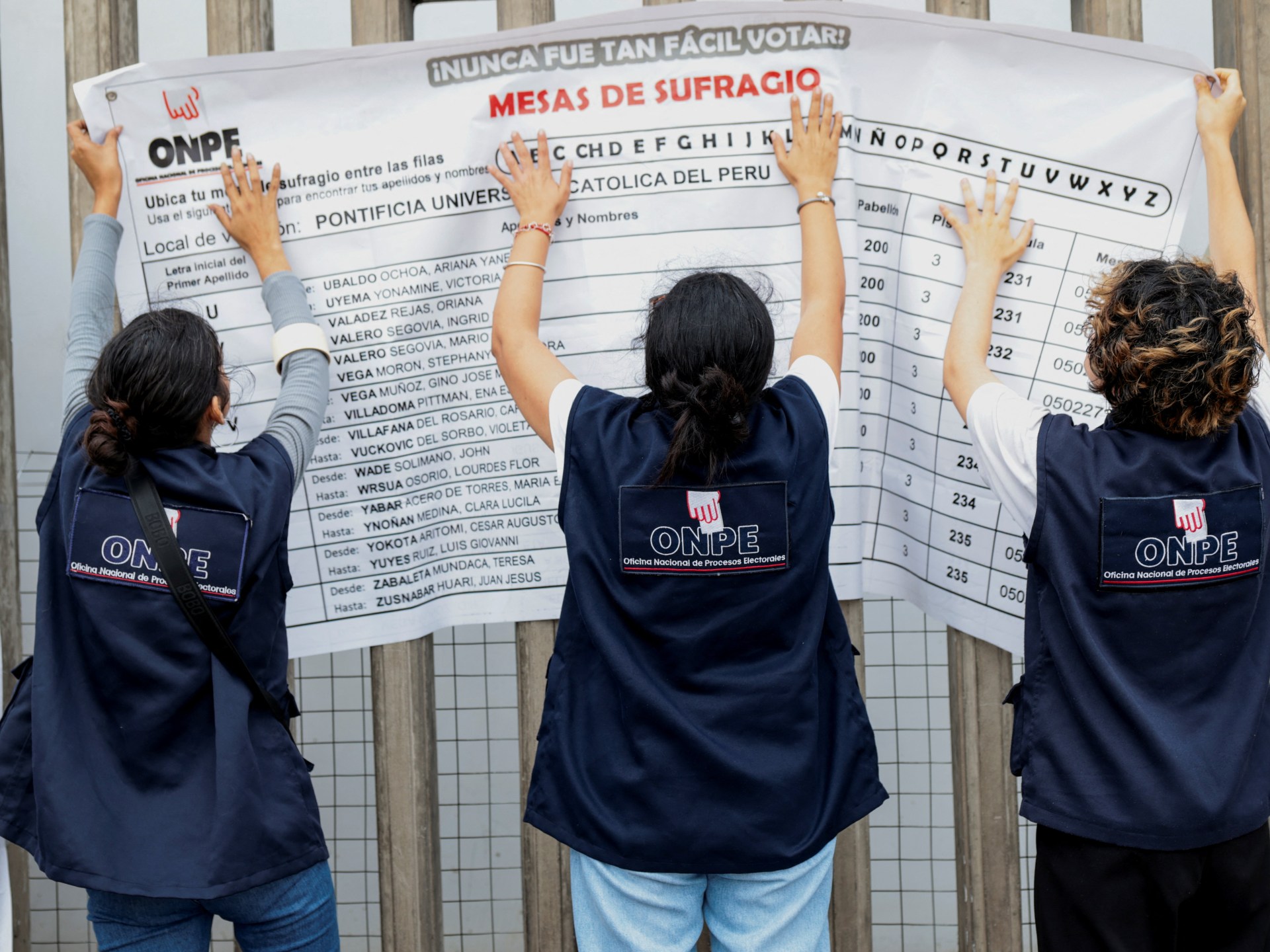
Peru’s voters cast their ballots Sunday in a high-stakes runoff that could determine whether the country lurches further right under Keiko Fujimori or turns left with Roberto Sánchez, both vying for the presidency amid record political instability and voter disillusionment. With 27 million Peruvians eligible to vote, the election reflects a nation at a crossroads: a choice between Fujimori’s tough-on-crime platform and Sánchez’s promise to rewrite Peru’s constitution through “collective dialogue,” all while grappling with a legacy of corruption that has left trust in institutions at historic lows.
A runoff shaped by disillusionment — and a record abstention rate
The runoff itself is the product of a fractured first round in April, where neither candidate secured a majority. Fujimori, the daughter of the authoritarian former president Alberto Fujimori, won 17% of the vote, while Sánchez, a former minister under ousted leftist president Pedro Castillo, took 12%. The third-place finisher, far-right mayor Rafael López Aliaga, has since alleged fraud — claims election monitors have dismissed. Yet the real story lies in what wasn’t on the ballot: a staggering 7.16 million Peruvians skipped the first round entirely, despite voting being mandatory. Another 3 million spoiled their ballots in protest, according to The Guardian.
The abstention rate underscores a deeper crisis. “If voting weren’t mandatory in Peru, the abstention rate would be much higher,” said Santiago Pedraglio, a sociologist at Lima’s Pontifical Catholic University, to The Guardian. Pedraglio’s assessment aligns with voter sentiment: in a country where eight presidents have come and gone since 2016 — only three of them elected — trust in politicians has collapsed. “Politicians have lost a lot of credibility, and very few people trust them anymore,” he added.
The runoff’s tightness — polls show Fujimori and Sánchez nearly tied at 43.8% and 43.2%, respectively — reflects a nation exhausted by instability. Since Castillo’s ouster in December 2022, Peru has cycled through two interim presidents, the latest of whom, José María Balcázar, is best known for his controversial support for child marriage. The current runoff is the fourth for Fujimori, who has spent decades defending her father’s legacy despite its dark chapters, including forced sterilizations and extrajudicial killings.
Fujimori vs. Sánchez: Two visions for Peru’s future
Fujimori’s campaign centers on security and order. She has vowed to impose a 60-day state of emergency, framing her bid as a “war against terrorism” amid rising crime. Her platform resonates in a country where 57% of Peruvians say insecurity is their top concern, according to recent polling cited by Al Jazeera. Yet her candidacy has also reignited protests, with critics accusing her of seeking to restore her family’s authoritarian past.
Sánchez, by contrast, has positioned himself as Castillo’s political heir. Like his predecessor, he wears the traditional Chota hat of Peru’s rural north, a symbol of his appeal to Indigenous and poor voters. His promises include police reform, reparations for victims of Fujimori-era abuses, and a new constitution “built collectively, through dialogue and citizen participation.” Yet his path to the runoff was anything but smooth: he entered the race late, after Castillo’s arrest and impeachment in 2022, and his 12% in the first round was a testament to both Castillo’s lingering support and Peru’s fragmented political landscape.

The contrast between the two candidates is stark. Fujimori represents continuity with Peru’s rightward shift — a trend seen across Latin America, from Brazil’s Bolsonaro to Colombia’s Uribe. Sánchez, meanwhile, offers a return to the leftist populism of Castillo, whose presidency ended in chaos. “There is a lot of disorder and corruption, and we’re going to vote, as always, for the ‘lesser evil,’” said Hugo Vasquez, a Lima craft seller, to Al Jazeera. Vasquez’s remark captures the dilemma: in a system where neither major party inspires confidence, voters are left choosing between two imperfect options.
The Fujimori legacy: Human rights, protests, and a divided nation
Fujimori’s candidacy is inseparable from her father’s legacy. Alberto Fujimori ruled Peru from 1990 to 2000, a period marked by economic growth but also by severe human rights abuses. His government oversaw the forced sterilization of thousands of Indigenous women and the operations of death squads that killed hundreds. Keiko Fujimori, now 51, has spent decades defending her father’s record, even as international courts have convicted him of crimes against humanity.
The elder Fujimori’s authoritarianism left a lasting mark on Peru’s political DNA. His 1992 self-coup, where he dissolved Congress and suspended the constitution, remains a flashpoint. Keiko Fujimori’s own political career began in 1994, when she was named first lady at age 19 — a move that cemented her family’s dominance in Peruvian politics. Today, her candidacy has sparked fresh protests, with activists demanding accountability for past abuses. “We cannot forget the victims,” said Evelyn Pazos, a voter in Lima, to Al Jazeera. “I hope the entire process is carried out transparently, that the people’s vote is respected.”
Fujimori’s tough-on-crime stance has resonated in a country where kidnappings and robberies have surged. Yet her opponents argue that her focus on security comes at the cost of democratic freedoms. Sánchez, for his part, has framed his campaign as a rejection of Fujimori’s authoritarian tendencies. “We need a government that listens to the people, not one that imposes its will,” he told supporters in Lima, according to The Guardian.
What’s at stake: A constitution, corruption, and the future of Peru’s democracy
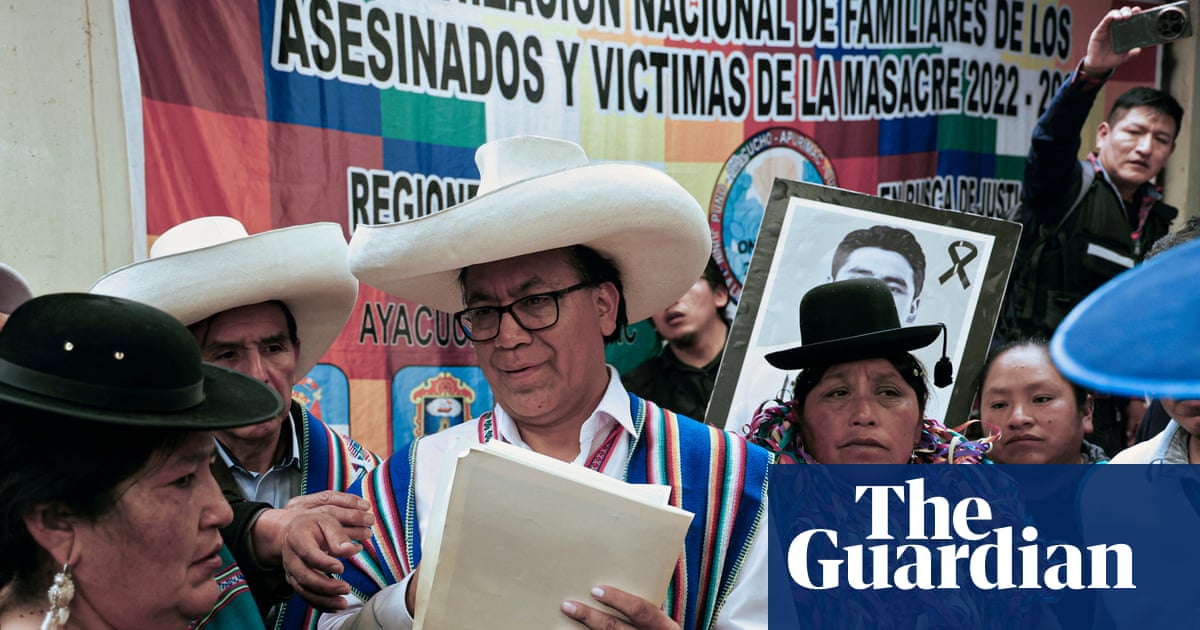
Beyond the personalities, the runoff hinges on three critical issues: constitutional reform, corruption, and the role of the military. Sánchez’s promise to rewrite Peru’s constitution — a document widely seen as outdated and elitist — has energized rural voters. His calls for a new charter “built through dialogue” echo Castillo’s failed attempt to dissolve Congress, but Sánchez has framed his approach as more inclusive. “This constitution was written by the powerful for the powerful,” he said in a recent rally. “We need one that reflects the will of the people.”
Fujimori, meanwhile, has dismissed constitutional reform as unnecessary, instead focusing on economic growth and security. Her platform includes privatizing state-run companies and loosening labor laws — policies that could appeal to business elites but risk deepening inequality. Meanwhile, both candidates have faced scrutiny over corruption. Fujimori’s Popular Force party has long been accused of shielding lawmakers from accountability, while Sánchez’s ties to Castillo’s government — which collapsed amid allegations of graft — remain a liability.
The military’s role is another wild card. Under Alberto Fujimori, the armed forces were granted broad powers to combat terrorism, a legacy that has left them with significant influence. Fujimori has pledged to maintain close ties with the military, while Sánchez has called for police reform and an end to impunity for security forces. The outcome could determine whether Peru’s military remains a check on democracy or a tool of authoritarian control.
The regional context: Peru as a bellwether for Latin America
Peru’s runoff is more than a local election — it’s a referendum on Latin America’s political trajectory. Over the past decade, the region has swung between leftist populism and right-wing nationalism, with Brazil, Colombia, and Argentina all experiencing shifts toward the right. Fujimori’s potential victory would reinforce this trend, while Sánchez’s win could signal a resurgence of leftist movements in the Andes.
The stakes are particularly high given Peru’s history of political instability. Since 2016, the country has had nine presidents in a decade — a pace unseen in modern Latin American history. The current runoff is the latest chapter in a cycle of crises, from Castillo’s impeachment to the recent ouster of President José Jerí on corruption charges. “The level of popular discontent and mistrust was already high 20 years ago; now it’s through the roof,” said Steven Levitsky, a political scientist at Harvard University, in a 2024 analysis. “Peru is at a crossroads: it can either stabilize and reform, or continue its spiral of instability.”
The outcome will also test Peru’s ability to conduct free and fair elections. Logistical issues in the first round — including delayed vote counts and allegations of fraud — have eroded public trust. If the runoff is perceived as flawed, it could further radicalize Peru’s political landscape. “There is a lot of disorder and corruption, and we’re going to vote, as always, for the ‘lesser evil,’” said Hugo Vasquez, reflecting the grim calculus many Peruvians face.
What happens next: Three scenarios for Peru’s future
Regardless of the outcome, Peru’s next president will inherit a country in crisis.
- A Fujimori victory: A return to right-wing governance, with a focus on security and economic liberalization. However, her presidency would likely face protests over human rights abuses and constitutional concerns. The military’s influence would remain strong, and corruption scandals could resurface.
- A Sánchez victory: A shift toward leftist policies, including constitutional reform and police overhaul. But his lack of a clear majority in Congress could lead to gridlock, and his ties to Castillo’s legacy may limit his ability to govern effectively. Rural support could solidify his base, but urban skepticism may persist.
- A contested result: If either candidate alleges fraud — as López Aliaga did in the first round — protests could erupt, risking further instability. International observers will play a key role in legitimizing the outcome, but Peru’s history of political turmoil suggests tensions will run high.
One thing is certain: Peru’s voters are exhausted. With 27 million eligible to cast ballots, the runoff is a test not just of their preferences, but of their faith in the system. If trust in elections continues to erode, the cycle of instability may persist — leaving Peru’s future as uncertain as ever.
For now, the country watches as ballots are counted. The results, expected within days, will determine whether Peru moves closer to stability — or deeper into chaos.
