
Global oil markets shifted sharply this week after the United States and Iran announced a preliminary peace agreement, leading major financial institutions to slash their crude price forecasts. Brent crude fell more than 4.5 percent to below $84 a barrel following the news, which promises to reopen the vital Strait of Hormuz for international shipping.
Financial Institutions Revise Oil Price Projections
The market reaction was immediate, with prominent banks recalibrating their outlooks as the geopolitical risk premium that had inflated prices began to dissipate. According to Oilprice.com, Morgan Stanley adjusted its expectations for Brent crude to $80 per barrel for the final quarter of 2026, down from previous forecasts that had reached as high as $100 per barrel for the third quarter.

Goldman Sachs similarly lowered its expectations, cutting its fourth-quarter price forecast to $80 per barrel from $90. The bank also reduced its 2027 average forecast for Brent crude to $75 per barrel, down from $80. Citi analysts adopted an even more bearish stance, projecting an average of $65 per barrel for 2027, a significant drop from their earlier $80 estimate. These adjustments reflect a broader consensus among market strategists that the removal of a major geopolitical “risk floor” necessitates a return to pricing models based strictly on global production capacity and demand recovery.
Strategic Implications for Gulf Cooperation Council States
The easing of the crisis in the Strait of Hormuz is viewed by analysts as a fundamental shift in regional economic stability. Asharq Al-Awsat reports that the World Bank anticipates this development will support regional GDP growth, projecting it to reach 4.2 percent in 2027. This recovery follows a contractionary period where countries heavily dependent on the strait faced acute financing gaps.

The economic impact of the prior disruption was uneven. While Saudi Arabia successfully redirected more than 60 percent of its oil exports through the Red Sea using the East-West Pipeline, other nations faced greater challenges. Kuwait and Iraq lacked alternative maritime routes, and Qatar dealt with increased insurance costs and logistical hurdles for its liquefied natural gas shipments. For these nations, the Strait of Hormuz is not merely a transit route but the primary artery for fiscal solvency, as the majority of their national budgets are pegged to the export of hydrocarbons through this narrow waterway.
For more on this story, see Crude Oil Prices Drop 5% as US and Iran Near Strait of Hormuz Peace Deal.
The Strait of Hormuz and Global Energy Security
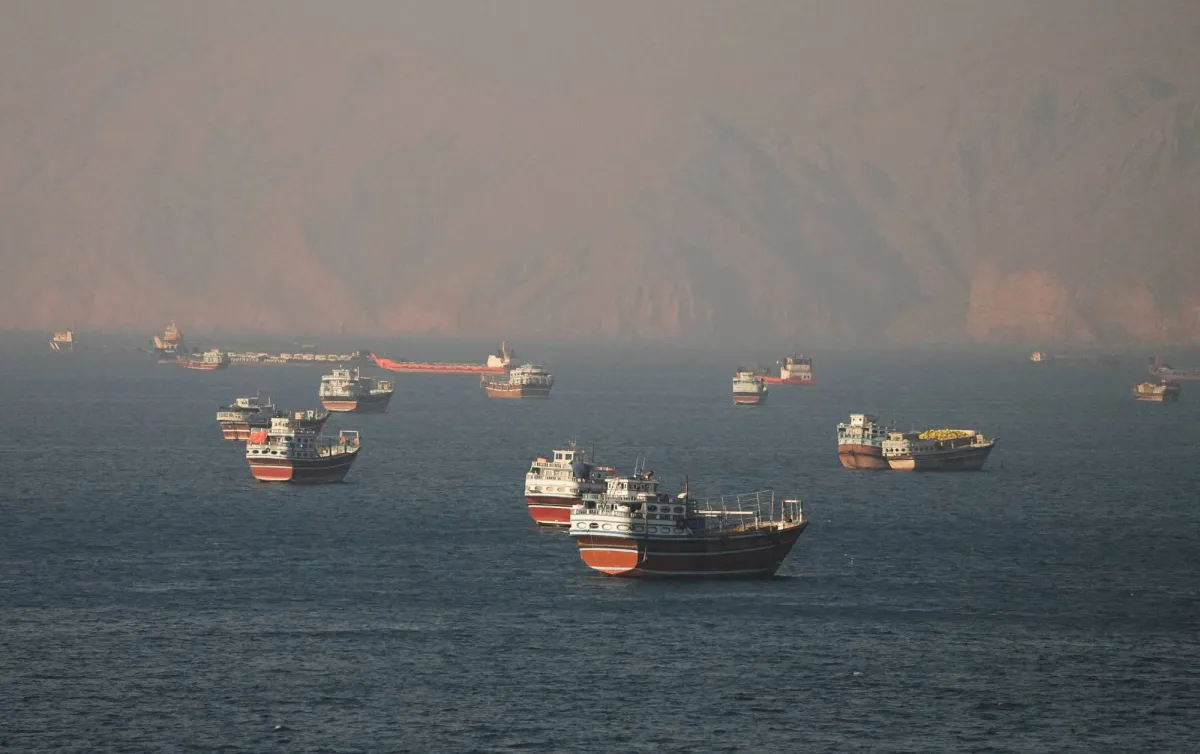
The Strait of Hormuz remains the world’s most significant chokepoint for energy transit. As noted by TradeEdgePro, the U.S. Energy Information Administration estimates that approximately 20% of global petroleum liquids consumption passes through the waterway. The peace deal, set to be formalized in Switzerland this Friday, includes provisions for Iran to reopen the strait within 30 days. This timeline is critical, as it aligns with the seasonal uptick in global energy demand, providing a buffer against potential supply tightness.
“The deal with the Islamic Republic of Iran is now complete. Ships of the world, start your engines. Let the oil flow.”
The removal of the threat of military confrontation has allowed traders to unwind positions built on conflict expectations. This shift from speculative risk to supply-and-demand fundamentals is the primary driver behind the current downward momentum in energy prices. Historically, geopolitical tensions in this region have triggered “war risk premiums” in the futures market, where traders bid up the price of Brent and WTI contracts to hedge against the possibility of total blockade. The current unwinding of these positions suggests that the market now views the diplomatic track as more credible than the previous military-posturing track.
This follows our earlier report, US, Iran Close in on Peace Deal, Oil Prices Plummet.
Central Bank Policy and Inflationary Pressures
While the oil price drop eases some inflationary concerns, central banks remain cautious. CNBC reports that former Treasury Secretary Janet Yellen noted the ongoing conflict environment has made the Federal Reserve more reluctant to cut interest rates than previously anticipated. The European Central Bank faces a similar dilemma, balancing weak growth against the risk of energy-driven inflation.
“The ongoing Iran conflict solidifies the case for many central banks to hold rates steady for now,” Nomura economists stated in a recent note. The European Central Bank’s Pierre Wunsch added, “If it lasts longer, if the increase in energy prices is higher, then we will have to run our models and see what happens.”
Read also: Oil Prices Jump to $89.50 as Red Sea Tanker Attack and Iran Tensions Escalate.
The interplay between energy prices and interest rates is a well-established mechanism in global finance. High energy costs serve as a “tax” on consumers, dampening discretionary spending and slowing economic activity. Conversely, the sudden decline in crude prices, if sustained, acts as a stimulus. However, central bankers are wary of “false dawns”—periods where energy prices drop only to spike again due to unforeseen supply shocks. Consequently, institutions like the Federal Reserve and the European Central Bank continue to prioritize core inflation metrics, which exclude volatile energy and food prices, to determine the trajectory of monetary policy.
As of this week, market participants are watching for the formal signing of the treaty, which is expected to normalize maritime traffic by the end of July. While the immediate price drop provides relief, policymakers continue to monitor whether the de-escalation will be sustained or if further geopolitical volatility could disrupt the recovery in tanker flows. The focus for investors now shifts to the next OPEC+ ministerial meeting, where members will decide whether to maintain current production quotas or increase supply now that the primary transit route is slated to reopen.
Find more reporting in our Business section.
