China’s economy grows at one of lowest rates in decades
China's GDP grew 4.3% in the second quarter, reflecting a contrast between surging exports and struggling domestic consumption and investment.
- Headline Dispatch: China’s economy grows at one of lowest rates in decades
- Core Takeaway: China's GDP grew 4.3% in the second quarter, reflecting a contrast between surging exports and struggling domestic consumption and investment.
- Source Synthesis: Continuous live monitoring aggregated across major news wires and independent bureaus.
China’s economy grows at one of lowest rates in decades
China reported an economic expansion of 4.3% for the three months ending in June, one of the lowest quarterly readings since the government began reporting official GDP figures in the early 1990s. The figure, released Wednesday by the National Bureau of Statistics of China, fell short of forecasts and came in below the government’s annual growth target of 4.5% to 5%.
This represents a sharp deceleration from the 5% growth pace recorded in the January-March quarter. According to Lynn Song, chief economist for Greater China at ING Bank, this was the slowest growth in any quarter since the fourth quarter of 2022, which was impacted by lockdowns during the country's three-year period of Covid-19 restrictions.
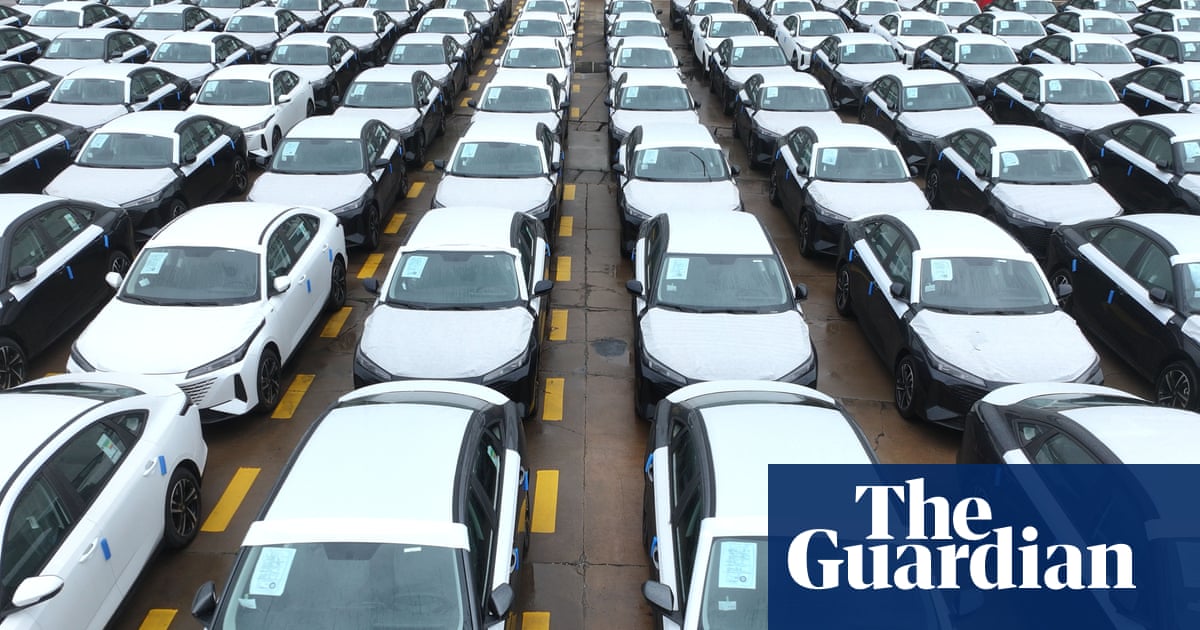
The data reveals a stark contrast between China's external success and internal struggles. Outbound shipments surged by 27% in June, and monthly car exports topped 1m for the first time. These gains were driven by an artificial intelligence boom and robust global demand for semiconductors and electric vehicles. However, domestic vehicle sales plummeted by more than 16% in the same period.
A Lopsided Economic Model
Analysts suggest China is becoming increasingly dependent on selling goods abroad while failing to stimulate consumer demand and investment at home. Exports currently account for about 20% of gross domestic product. Last year, China ran a record global trade surplus of $1.2 trillion (€1.05tr), leading to complaints from other countries that heavy state subsidies have created an oversupply of manufactured goods.
Domestic consumption shows fragmented signs of recovery. Retail sales rose 1.0% in June from a year earlier, rebounding from a 0.6% decrease in May. While sales of cosmetics and communication equipment were strong, big-ticket items remained weak. Excluding cars, retail sales increased by 3% last month.
Eswar Prasad, a professor of economics and trade policy at Cornell University, said the growth model has become "increasingly imbalanced." He added that increasing domestic demand will be difficult because confidence remains weak.
Investment Bottlenecks and Property Slumps
The economy continues to be hampered by a long-running slump in the property market, with new home prices contracting again in June, though the 0.1% fall was slower than the previous month.
Li Daokui, a professor of economics at Tsinghua University and adviser to Beijing’s senior leadership, stated that local governments have shifted from being engines of growth to bottlenecks. He noted that fixed-asset investment in infrastructure, such as roads and bridges, declined by more than 4% between January and May. Li described the intensity of this cumulative negative growth as "unprecedented," noting that similar contractions have occurred only twice since the founding of the People’s Republic of China, in 1961 and 1967.
Li warned that if this decline in investment and unemployment are not addressed, "all of China’s economic goals and tasks will face difficulties."
External Pressures and Geopolitical Risks
The second quarter was the first full period of GDP data since the start of the Iran war on 28 February. While China has weathered the immediate shock due to diversified energy sources and large stockpiles, the conflict has pushed up global inflation and energy prices. Fabien Yip, a market analyst at IG, said Chinese businesses are absorbing higher raw materials and energy costs because demand "at the till is too weak to bear it."
Beijing also faces uncertainty regarding the US-China trade war. While currently in a detente phase, there are concerns that a resumption of tariffs when the truce expires in November could damage manufacturers and exporters.
The Path Forward
Despite the quarterly slowdown, overall growth for the first half of the year was 4.7%, keeping Beijing within its target range. This may reduce the immediate pressure for large-scale state intervention. Some analysts, including Julian Evans-Pritchard of Capital Economics, suggest the figures may reflect a greater willingness by authorities to acknowledge pre-existing weaknesses after cutting the growth target in March.
Mao Shengyong, deputy head of the National Bureau of Statistics, told reporters that the imbalance between strong supply and weak demand "remains acute." He stated that the government will work to support employment and build a robust domestic market as China pursues "higher-quality economic growth."
The International Monetary Fund has raised its annual growth forecast for China by 0.2 percentage points to 4.6%, though it expects growth to slow further to 4.1% in 2027. Analysts are now looking toward a gathering of top Chinese Communist party officials later this month for any indications of new stimulus measures.
How significant is this development?
Participate in our community survey on the trajectory and real-world impact of this news.