Black hair care pioneer George E. Johnson Sr. dies at 99
George E. Johnson Sr., founder of Johnson Products Company and the Afro Sheen line, has passed away at 99. He was an entrepreneur who broke corporate ceilings in finance, media, and beauty.
- Headline Dispatch: Black hair care pioneer George E. Johnson Sr. dies at 99
- Core Takeaway: George E. Johnson Sr., founder of Johnson Products Company and the Afro Sheen line, has passed away at 99. He was an entrepreneur who broke corporate ceilings in finance, media, and beauty.
- Source Synthesis: Continuous live monitoring aggregated across major news wires and independent bureaus.
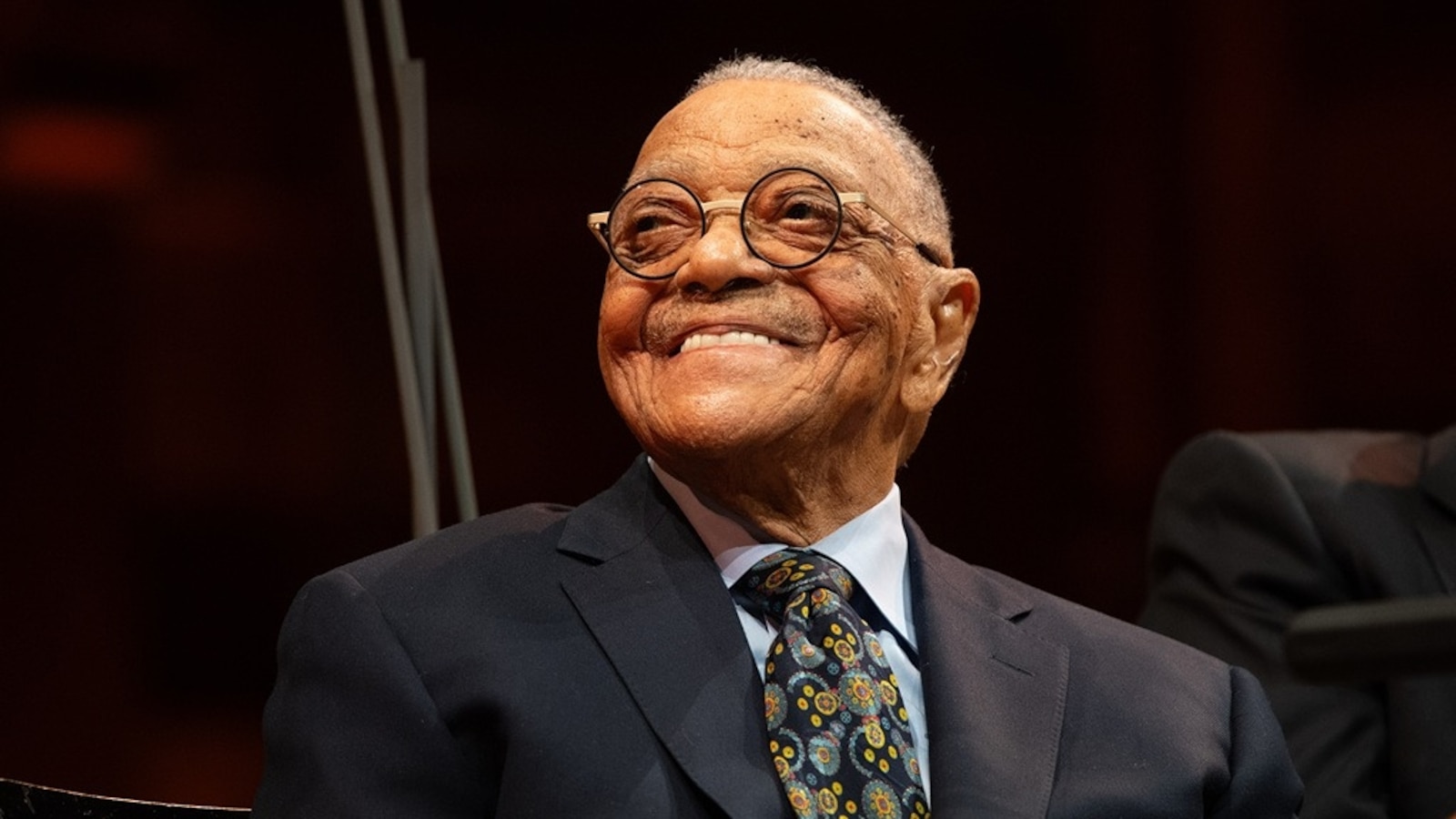
Black hair care pioneer George E. Johnson Sr. Dies at 99
George E. Johnson Sr., the entrepreneur who built a multimillion-dollar hair care empire and led the first Black-owned company to be listed on the American Stock Exchange, has died at age 99. His family confirmed he passed away on Monday, at his home in downtown Chicago.
The New York Times, citing his second wife, Madeline Murphy Rabb, reported that Johnson died of a respiratory illness. No other cause of death was released.
Johnson founded Johnson Products Company (JPC) in 1954 on Chicago’s South Side alongside his late wife and high school sweetheart, Joan. The business began with a loan of $250. According to his 2025 memoir, "Afro Sheen: How I Revolutionized an Industry with the Golden Rule, from Soul Train to Wall Street," Johnson secured that bank loan by telling a white officer the money was for a family vacation. He wrote that this request avoided challenging stereotypes of Black men as subservient or unintelligent.
The company grew to command nearly 80% of the Black hair care market by 1960. JPC developed brands tailored to the evolving styles of Black consumers, including Ultra Wave for men and the 1957 introduction of Ultra Sheen, a home-use hair straightener for women. Later, the company released Classy Curl to help consumers achieve the "Jheri curl" perm.
By the late 1960s, the company pivoted to align with the "Black is Beautiful" movement and Black Power consciousness, which favored natural hair textures. This shift led to the release of the Afro Sheen Blow Out kit and the iconic Afro Sheen line. These brands became associated with racial pride and were promoted through commercials featuring the Watu Wazuri
(Beautiful People
) jingle.
Johnson’s business influence extended into media and finance:
- Media: Johnson Products was a national sponsor of the music-and-dance show "Soul Train," a partnership that helped the program grow from a local broadcast into a national hit. The company once owned the show.
- Wall Street: In 1971, JPC became the first Black-owned business listed and traded on the American Stock Exchange (now NYSE American).
- Banking: In 1964, he co-founded Independence Bank, the first Black-owned financial institution to operate in Chicago in over 30 years following the Great Depression.
Beyond his own firm, Johnson broke corporate ceilings as the first Black person to serve on the board of directors for the Illinois electric utility Commonwealth Edison. He also held board positions at Northwestern University, MetLife, and the Chicago Urban League. Through the George E. Johnson Educational Fund, he awarded more than 1,000 college scholarships.
Born in 1927 in a sharecropper’s shack in Richton, Mississippi, Johnson moved to Chicago as a child during the First Great Migration. His mother, Priscilla Dean Johnson, left her husband at age 18 to find work at a local hospital. To support the family, Johnson shined shoes, cleared tables, and set up pins in a bowling alley. He also collected aluminum linings from cigarette packages to sell for junk.
Before starting his own company, Johnson worked as a door-to-door cosmetics salesman and a production chemist for S.B. Fuller’s cosmetics firm in 1944. He helped revamp a barber's hair-straightening formula that had previously burned the scalp, a process that eventually led to the creation of Johnson Products.
Johnson Products Company was sold to a pharmaceutical firm in 1993 for more than $60 million. The company later changed ownership several times before a majority African American investment firm acquired it from Procter & Gamble in 2009.
The entrepreneurial legacy continues through his descendants. His eldest son, Eric George Johnson, served as CEO of Johnson Products Company before leaving in 1992. Eric Johnson purchased Baldwin Ice Cream in 1997 and recently retired from Baldwin Richardson Foods on May 9, transitioning ownership to his daughters, Cara Hughes and Erin Tolefree.
Johnson is survived by his second wife, Madeline Murphy Rabb, as well as children, grandchildren, and great-grandchildren.
How significant is this development?
Participate in our community survey on the trajectory and real-world impact of this news.