There's no treatment designed for the Ebola strain ravaging DRC. But now there's hope
With no licensed vaccines for the rare Bundibugyo strain of Ebola, researchers are testing repurposed antiviral drugs and monoclonal antibodies in the DRC.
- Headline Dispatch: There's no treatment designed for the Ebola strain ravaging DRC. But now there's hope
- Core Takeaway: With no licensed vaccines for the rare Bundibugyo strain of Ebola, researchers are testing repurposed antiviral drugs and monoclonal antibodies in the DRC.
- Source Synthesis: Continuous live monitoring aggregated across major news wires and independent bureaus.

There's no treatment designed for the Ebola strain ravaging DRC. But now there's hope
Health officials are racing to contain a fast-expanding outbreak of the rare Bundibugyo species of Ebola virus in the Democratic Republic of Congo (DRC) and Uganda. Because the virus is a rarer species than the well-researched Zaire strain, there are currently no licensed vaccines or specialized treatments designed specifically for it.
The outbreak has already sickened more than 1,560 people and killed over 500, according to reported figures. Some experts suggest this could become the largest Ebola outbreak ever. The virus is spreading through high-traffic commercial hubs, such as the mining town of Mongbwalu in Ituri Province, and has reached major Congolese cities including Bunia and Goma. By May 15, 2026, two imported cases were confirmed in Kampala, the capital of Uganda.
The World Health Organization (WHO) first received an alert regarding an "unknown illness with high mortality" on May 5, 2026. It took ten days to confirm the cause because the virus differs from Zaire or Sudan species, often causing standard rapid field tests to miss it. On May 17, 2026, WHO Director-General Tedros Adhanom Ghebreyesus declared the situation a public health emergency of international concern.
Clinical Trials and Repurposed Drugs
In an effort to turn the tide, researchers have begun clinical trials to test existing drugs that can be repurposed for Bundibugyo.
- Remdesivir: An antiviral manufactured by Gilead Sciences. While it proved relatively ineffective against the Zaire species during a 2018 outbreak in the DRC, it was developed to target a broad range of viruses.
- MBP-134: A monoclonal antibody cocktail developed by Mapp Biopharmaceutical. It mimics natural immune defenses and was isolated from a survivor of the 2014-2016 West African outbreak.
These drugs are being tested alone and in combination against the current standard of care, which consists of supportive therapy to manage pain and replace lost fluids. Currently, only one clinic in the DRC is involved, though plans exist to expand in the coming weeks. Vasee Moorthy, the WHO research and development lead for the outbreak, noted that a definitive answer on whether these drugs boost survival could take months or even extend into next year, potentially requiring over 1,000 enrolled patients.
A third trial is slated to begin sometime this week. This study will test whether obeldesivir, an antiviral pill also made by Gilead Sciences, can prevent close contacts of patients from contracting the disease through post-exposure prophylaxis. This method relies on contact tracers identifying exposed individuals and delivering the drug twice daily.
The Search for a Vaccine
While vaccines exist for the Zaire species—such as Merck’s rVSV-ZEBOV and Johnson & Johnson’s Zabdeno/Mvabea—they are not automatically effective against Bundibugyo due to differences in genetic material and surface proteins. Sania Nishtar, CEO of Gavi, noted that approximately 2,000 doses of Ebola vaccine are already in the DRC and could be used in a trial setting if WHO experts decide there is a case for doing so.
Other vaccine candidates are under review by the Africa CDC, including mRNA candidates from Moderna and the University of Oxford, as well as the live non-mRNA vaccine Ervebo. Nicole Lurie, executive director for preparedness and response at CEPI, stated that while no Bundibugyo-specific vaccines are in phase 1 clinical trials, several are in preclinical development.
Barriers to Containment
Containment efforts are hindered by severe logistical and social challenges. In the Ituri Province, ongoing armed conflict restricts the movement of surveillance teams and the transport of laboratory samples. The region is home to 1.9 million people in need of humanitarian assistance and more than 270,000 displaced persons.
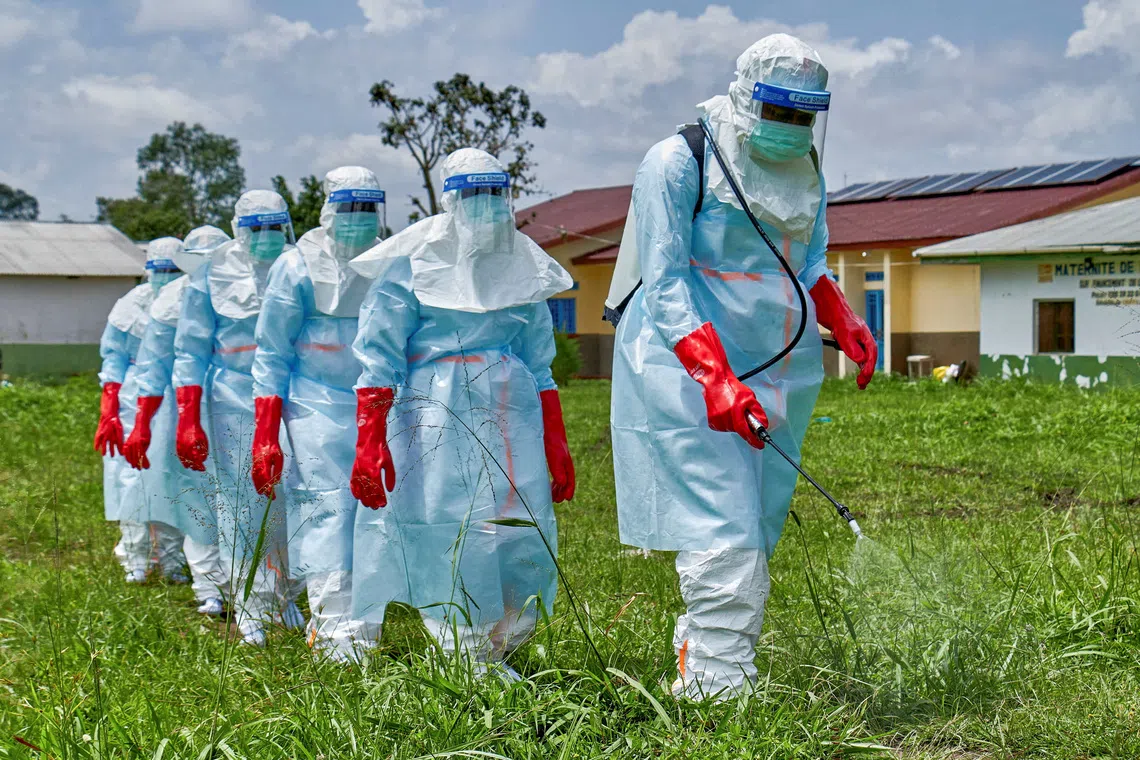
Mistrust has also led to violence against health centers. Rumors that aid groups are withholding care or murdering people have made some community members wary of workers in protective gear. To protect clinicians, WHO officials declined to disclose the exact location of the clinic currently enrolling patients for treatment trials.
Until a vaccine or treatment is proven effective, the response remains reliant on classical public health measures: rapid case detection, isolation, safe burials, and contact tracing.
How significant is this development?
Participate in our community survey on the trajectory and real-world impact of this news.