Japanese drugmaker Takeda's Qdenga becomes first dengue vaccine approved in India
The DCGI has authorized Takeda's Qdenga, the first dengue vaccine approved for use in India, which protects against all four dengue virus serotypes.
- Headline Dispatch: Japanese drugmaker Takeda's Qdenga becomes first dengue vaccine approved in India
- Core Takeaway: The DCGI has authorized Takeda's Qdenga, the first dengue vaccine approved for use in India, which protects against all four dengue virus serotypes.
- Source Synthesis: Continuous live monitoring aggregated across major news wires and independent bureaus.
Japanese drugmaker Takeda's Qdenga becomes first dengue vaccine approved in India
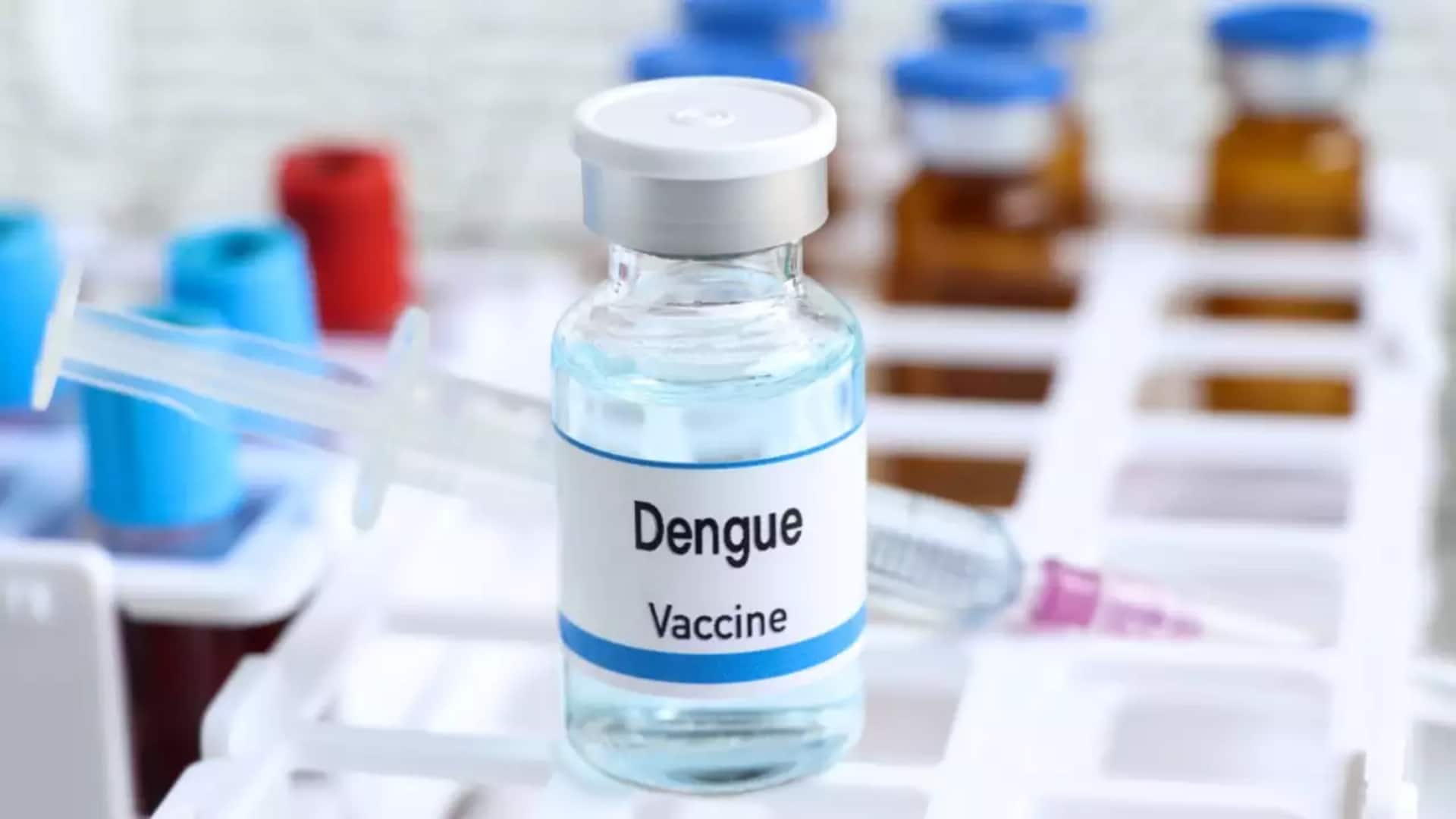
The Drug Controller General of India (DCGI) has approved QDENGA, a vaccine developed by Takeda Pharmaceutical Company, for the prevention of dengue in individuals aged 4 to 60 years. The authorization, granted under the New Drugs and Clinical Trials (NDCT) Rules, 2019, makes QDENGA the first-ever dengue vaccine approved for use in India.
The approval arrives as India faces a substantial public health challenge. According to Takeda, India accounts for nearly one-third of the global dengue burden. Reported cases in 2025 exceeded 113,000, though modelling analyses suggest the actual number of infections could be higher, potentially representing tens of millions of cases annually. Other government data shows a steady increase in cases over recent years, rising from around 44,000 reported cases in 2020 to over 230,000 in 2023 and 2024.
QDENGA is a tetravalent, live-attenuated vaccine designed to protect against all four dengue virus serotypes: DEN-1, DEN-2, DEN-3, and DEN-4. A key feature of the vaccine is that it can be administered regardless of a person's prior exposure to dengue and does not require pre-vaccination screening.
The vaccine is administered subcutaneously as a 0.5 mL two-dose regimen, with the second dose given three months after the first.
Clinical Evidence and Global Reach
The DCGI approval is based on Takeda’s global clinical development program, which consisted of 19 Phase 1, 2, and 3 clinical trials involving over 28,000 participants across endemic and non-endemic regions. This included the Phase III TIDES (DEN-301) trial with more than 20,000 participants in eight countries.
Data from the TIDES study showed an overall vaccine efficacy of 80.2% against virologically confirmed dengue 12 months after the second dose. At 18 months, the vaccine demonstrated 90.4% efficacy against dengue-related hospitalisation. Long-term data after 4.5 years showed 84.1% efficacy in preventing hospitalisations, and Takeda stated the vaccine has shown sustained safety and efficacy for up to seven years across all four serotypes.
Specific testing in India was conducted through a Phase III clinical trial (DEN-302), which evaluated safety and immunogenicity in participants aged 4 to 60. The study found QDENGA was immunogenic and well tolerated in children, adolescents, and healthy adults.
Since its 2022 launch, QDENGA has been approved in 43 countries across Europe, Latin America, and Asia. More than 32 million doses have been distributed globally. The vaccine is already part of Brazil’s National Immunisation Programme and is available through public programs in Colombia, Indonesia, and Argentina.
The World Health Organization (WHO) has recommended the vaccine for use in dengue-endemic settings and supports its inclusion in public immunization programs without pre-vaccination screening. It has also received WHO prequalification, which allows for procurement through international agencies like PAHO and UNICEF.
Manufacturing and Implementation
To support delivery, Takeda partnered with Indian vaccine manufacturer Biological E in 2024. Biological E intends to build a production capacity of 50 million doses annually. This collaboration is part of Takeda's broader objective to produce 100 million doses per year globally by the end of the decade.
"The latest seven-year data for QDENGA show continued protection against dengue infection and hospitalisation across all four serotypes, an important milestone for communities and health systems. Since its launch in 2022, QDENGA has been approved in 43 countries, with more than 32 million doses distributed globally. This approval marks an important step forward in strengthening dengue prevention in India."
Dr. Mahender Nayak, Head of Intercontinental Markets, via India Today
While the vaccine provides an additional layer of protection, health experts note it is not a standalone solution. Vector control, community engagement, personal hygiene, and keeping neighborhoods clean remain essential to reducing the incidence of the mosquito-borne disease.
Peter Streibl, General Manager for the Southeast Asia and India Cluster, stated that Takeda will work with healthcare professionals, public health authorities, and governments to support access to the vaccine and strengthen surveillance and awareness.
The vaccine is expected to roll out soon this year. Takeda will continue to coordinate with Indian regulatory authorities and public health stakeholders to plan the delivery and availability of QDENGA.
How significant is this development?
Participate in our community survey on the trajectory and real-world impact of this news.