WHO launches first clinical trials of antivirals for Bundibugyo Ebola
The World Health Organization has initiated randomized controlled trials for antiviral treatments and post-exposure prophylaxis to combat a deadly Bundibugyo Ebola outbreak in the DRC.
- Headline Dispatch: WHO launches first clinical trials of antivirals for Bundibugyo Ebola
- Core Takeaway: The World Health Organization has initiated randomized controlled trials for antiviral treatments and post-exposure prophylaxis to combat a deadly Bundibugyo Ebola outbreak in the DRC.
- Source Synthesis: Continuous live monitoring aggregated across major news wires and independent bureaus.
WHO launches first clinical trials of antivirals for Bundibugyo Ebola
The World Health Organization (WHO) has initiated the first randomized controlled trials to identify effective treatments for Bundibugyo virus disease (BVD), a rare and deadly strain of Ebola currently spreading in the Democratic Republic of Congo (DRC). The initiative, known as the PARTNERS trial, seeks to evaluate whether specific antiviral therapies can improve survival rates in patients diagnosed with the disease.
The outbreak was declared a public health emergency on May 15, 2026, after several deaths occurred in the mineral-rich Ituri province. Since then, the virus has spread across five DRC provinces and into neighboring Uganda. While official figures from the DRC state that more than 1,960 people have been infected and more than 700 have died, the WHO warned that the actual scale of the outbreak could be two to four times higher than those official tolls.
Dual-Track Research: Treatment and Prevention
The WHO is pursuing two distinct clinical paths to combat the virus: treating those already sick and preventing those exposed from developing the disease.
The PARTNERS trial, which opened enrollment on July 2, 2026, is assessing two candidates: remdesivir, an intravenous drug, and MBP134, a monoclonal antibody. Researchers are testing these drugs individually and in combination against standard supportive care. Remdesivir was originally developed for Ebola but underperformed against the Zaire strain in a previous trial; however, in vitro data suggests it is more potent against the Bundibugyo strain. MBP134 was developed using antibodies from a survivor of the 2013 West African outbreak and has shown success in pre-clinical models involving monkeys and ferrets.
Simultaneously, the WHO launched the EBO-PEP trial to test obeldesivir, an oral antiviral developed by Gilead Sciences. This trial focuses on post-exposure prophylaxis for people who have been in contact with confirmed Bundibugyo cases but are not yet showing symptoms. The EBO-PEP trial aims to recruit nearly 1,000 participants aged 12 and over who were exposed within the preceding five days. Participants will be monitored daily for 21 days, with a final visit at 42 days.
Operational Challenges and Community Trust
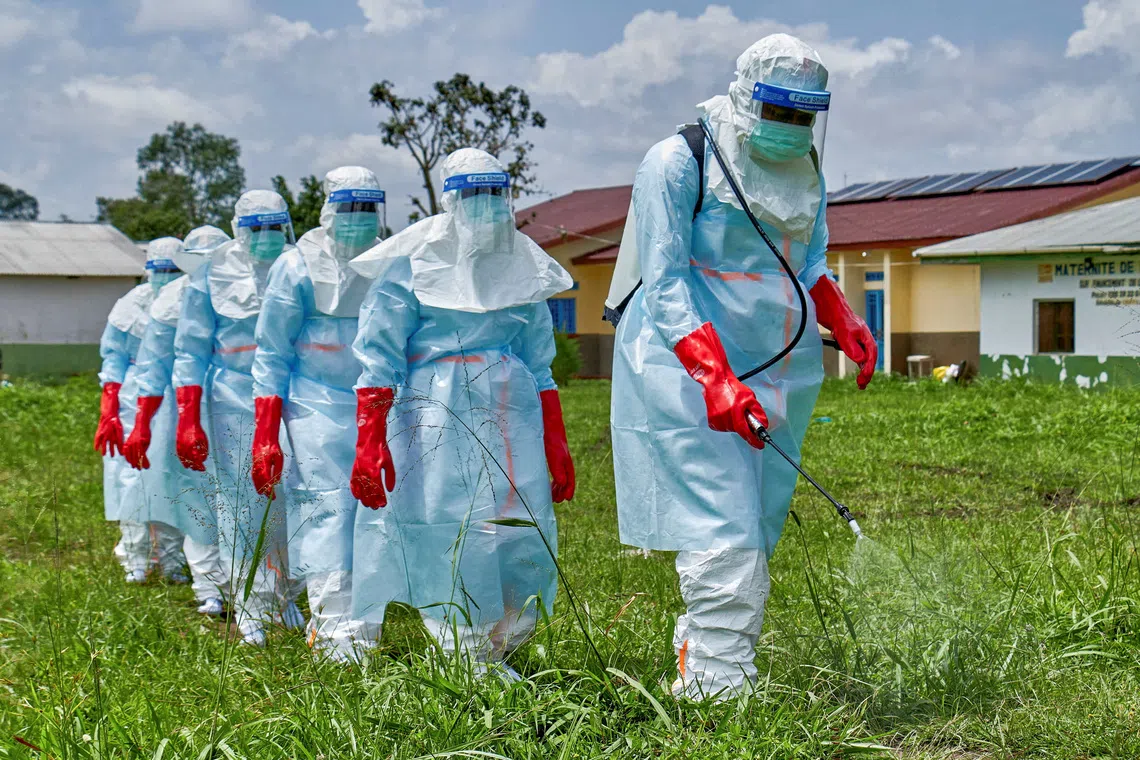
These trials are being conducted under extreme conditions. In Ituri, the epicenter of the outbreak, more than 1.3 million displaced people living in camps have hindered contact tracing. WHO emergencies chief Chikwe Ihekweazu reported that 80 percent of new cases are from unknown chains of transmission, meaning the outbreak is outpacing response efforts.
Community resistance has also plagued the response. In mid-May, relatives of a deceased patient set fire to isolation tents at a treatment center. John Katabuka, head of the Bunia General Hospital’s treatment unit, noted that this specific strain of Ebola often suppresses obvious symptoms until the virus reaches a point where medical intervention can no longer change the outcome.
The PARTNERS trial is a collaborative effort involving the Institut National de Recherche Biomédicale (INRB) in the DRC, the University of Oxford, the Institute of Tropical Medicine in Belgium, and Africa CDC. It is delivered in partnership with the NGO ALIMA and Médecins Sans Frontières (MSF). The trial is designed as a platform trial, allowing additional treatments to be added as they become available.
Global Risks and Moral Questions
The virus continues to expand geographically. Cases have been confirmed in Haut-Uele, a territory bordering the Central African Republic and South Sudan. France also reported a positive case on June 24 involving an ALIMA health worker. The United Nations Development Programme warned that if the virus reaches Angola or Rwanda, the economic impact could result in 328,000 eliminated jobs and a GDP loss of $3.6 billion for sub-Saharan Africa.
Adding to the complexity, the WHO recently confirmed a Marburg virus case in a toddler in western Uganda. The presence of two different hemorrhagic fevers in the same region creates diagnostic difficulties in rural clinics where rapid testing is unavailable.
The ethics of the research have also drawn scrutiny. Craig Spencer, a public health expert at Brown University, argued that it is a moral failure
to develop drugs using the biology of survivors in low-income countries and test them in those same regions, only to stockpile the results for use in wealthy nations.
WHO Director-General Tedros Adhanom Ghebreyesus stated that the PARTNERS trial offers real hope
for affected communities. The trials are expected to run for several months, potentially extending into next year, to produce definitive results on whether these antivirals can reduce mortality.
How significant is this development?
Participate in our community survey on the trajectory and real-world impact of this news.