
The S&P 500 retreated Tuesday, June 23, 2026, as a tech-sector sell-off led by Micron Technology, Nvidia, and AMD rattled markets. Technology sector declines dragged the Nasdaq Composite lower for a second consecutive session, as investors shifted to risk-off sentiment following recent hawkish signals from the Federal Reserve regarding persistent inflation.
Tech Sector Sell-Off and Market Sentiment
The AI-driven rally that dominated the year-to-date performance for the Technology sector cooled significantly this week. According to Yahoo Finance, major chipmakers including Nvidia, Micron, and AMD led the decline, with the broader Technology sector (XLK) acting as the primary drag on the Nasdaq Composite. Nvidia stock slipped nearly 3%, while Alphabet shares fell nearly 1%.
The shift in investor behavior marks a departure from earlier trends. Barclays equity strategist Rex Feng noted that while systemic equity positioning remains low, there is evidence that end-investor demand has changed. As reported by CNBC, Feng observed that the market has moved away from traditional dip-buying patterns. This transition is significant because the “buy the dip” mentality served as a key support mechanism during the prolonged rally in AI infrastructure and software stocks throughout the first half of 2026.
“The correlation between Tech fund flows and valuations indicates that end investor demand for Tech stocks has flipped from dip buying to upside chasing for the first time in roughly 12 months,” Rex Feng, Barclays equity strategist, via CNBC.
Micron Technology and the Memory Complex
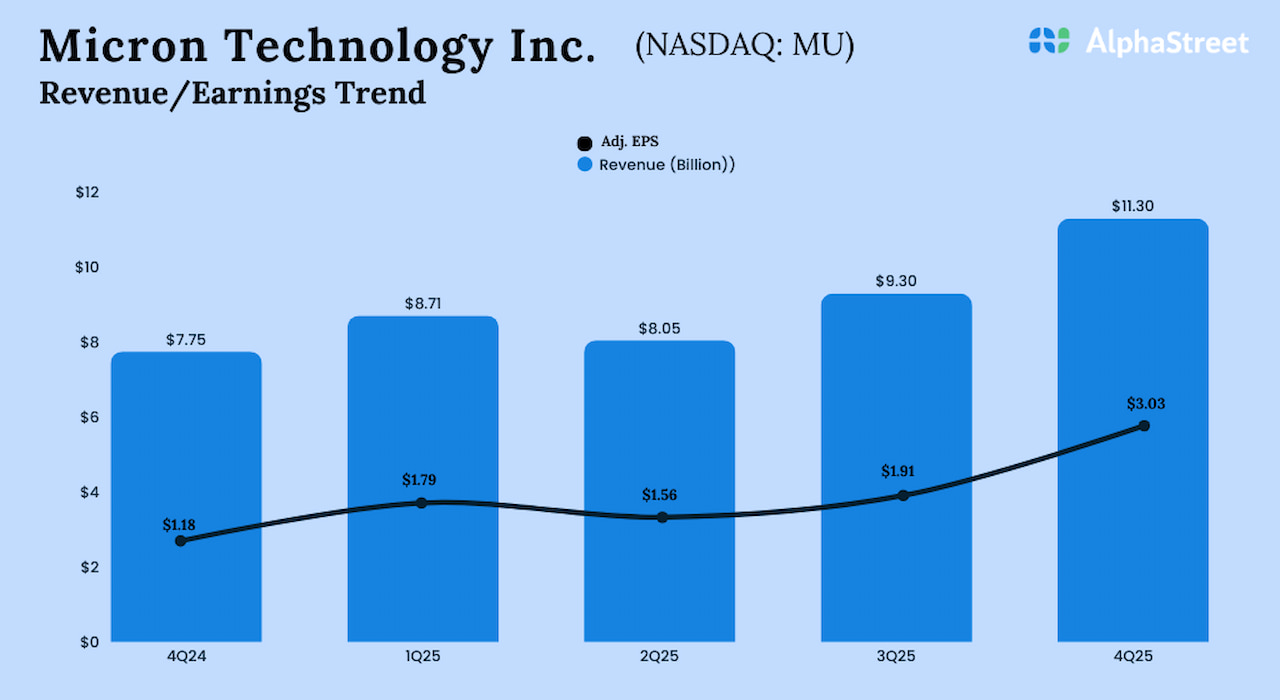
Micron Technology emerged as a focal point of Tuesday’s volatility. Shares of the memory chipmaker tumbled as much as 11% ahead of its upcoming earnings report scheduled for Wednesday. The decline in Micron shares mirrored broader weakness in the memory complex, with international peers like SK Hynix and Samsung Electronics also seeing share price drops in Asia. Historically, Micron’s earnings act as a bellwether for the semiconductor industry, as the company’s performance in DRAM and NAND flash memory production provides a tangible look at supply-chain health and demand from data center operators.

The sell-off in memory chip-related stocks prompted some investors to move toward more defensive sectors. Walmart gained more than 2%, Johnson & Johnson saw similar gains, and Coca-Cola shares rose 0.6%, according to CNBC market tracking. This rotation is a common phenomenon in market cycles, where capital flows out of high-beta growth stocks—those that typically outperform in bull markets but suffer in downturns—and into consumer staples and healthcare, sectors characterized by steady, predictable cash flows regardless of economic conditions.
For more on this story, see Dell Leads Tech Gains as S&P 500 Reaches All-Time Highs.
Valuation Concerns and Macroeconomic Pressures
Market analysts are pointing to a combination of high valuations and macroeconomic uncertainty as the catalyst for the current cooling period. Fears that the Federal Reserve may be forced to maintain higher interest rates have weighed on investor confidence. When interest rates remain elevated, the present value of future earnings for growth-oriented tech companies decreases, often leading to a contraction in price-to-earnings (P/E) multiples. Furthermore, the pipeline of high-profile market entries, including the SpaceX IPO and expected debuts for AI developers like Anthropic and OpenAI, has raised questions about the market’s capacity to absorb new supply while maintaining current valuation levels for existing AI-linked equities.
Despite the tech-heavy decline, some segments of the market continue to show resilience. On Tuesday, nine stocks in the S&P 500 reached new all-time highs, including:
- Monster Beverage
- Assurant
- Allstate
- Bank of NY Mellon
- Citizens Financial Group
- Globe Life
- Northern Trust
- State Street
- Travelers
Internal Moves and Market Positioning
As markets adjust, activity within individual companies remains under scrutiny. COO Kwang Tan recently disclosed the sale of 36,000 shares at an average price of around $144.51 per share, totaling approximately $5.2 million. While executive stock sales are often part of pre-arranged 10b5-1 trading plans, investors frequently monitor these filings for signals regarding management’s outlook on share price sustainability. Meanwhile, some companies face significant downward pressure; Trade Desk, Domino’s Pizza, and Palantir Technologies (PLTR) all traded at new 52-week lows on Tuesday, reflecting a broader dispersion in performance even within the growth category.

Barclays analysts suggest that while index skew indicates moderation in upside chasing, the dynamics for single-stock performance remain firmly in risk-on territory. With volume control exposure currently at roughly 60%, strategists believe there is clear capacity to increase equity exposure if market volatility fades into the summer months. The industry remains focused on Micron’s earnings on June 24 as a critical test for the memory complex and its role in the broader AI narrative. Should Micron report stronger-than-expected demand for high-bandwidth memory (HBM), which is essential for generative AI hardware, it could serve as a floor for sentiment; conversely, any sign of inventory buildup would likely exacerbate the current sector rotation.
Find more reporting in our Business section.
