Trump’s pick for spy chief: ‘I’m not an election denier’
Nominee Jay Clayton faces Senate questioning over 2020 election integrity and press subpoenas during his bid to lead the Office of the Director of National Intelligence.
Trump’s pick for spy chief: ‘I’m not an election denier’
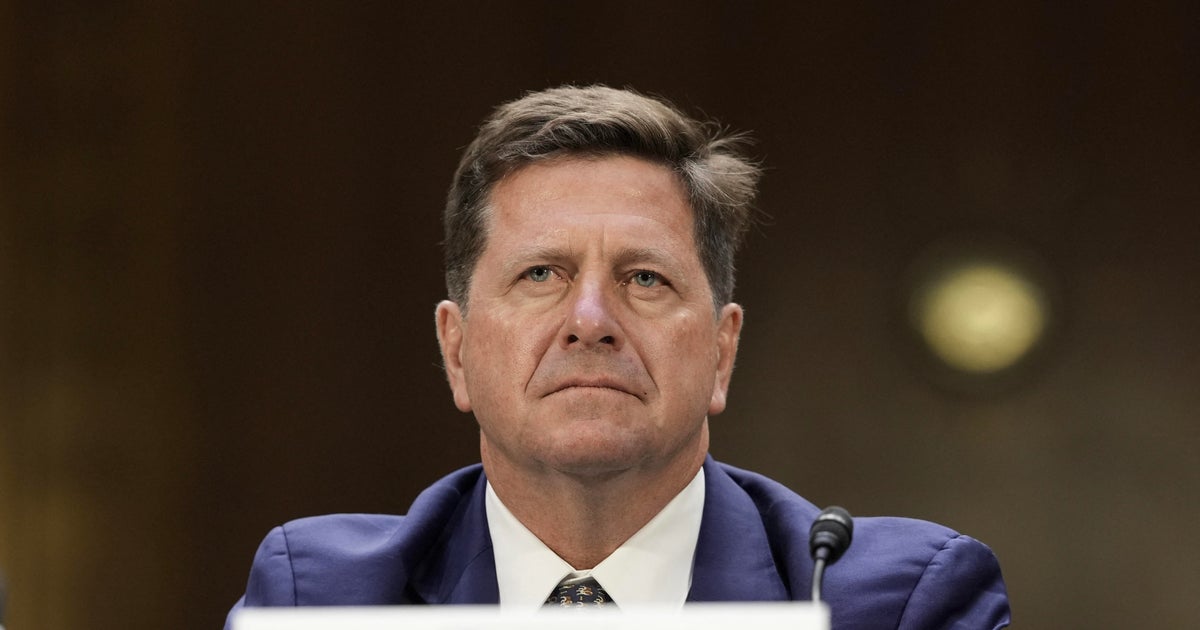
Jay Clayton appeared before the Senate Intelligence Committee on Wednesday for a confirmation hearing to become the director of national intelligence. The U.S. Attorney for the Southern District of New York and former Securities and Exchange Commission chairman sought to project an image of stability and professionalism as he attempts to replace an interim director who has faced criticism from both sides of the aisle.
In his opening statement, Clayton pledged to be mission-focused and team-oriented
and committed to enhancing the trust of the American people in the ODNI
. He pointed to his experience as a U.S. Attorney as providing significant national security experience
regarding counter-espionage, bribery, money laundering, foreign terrorist organizations, and the use of communications platforms to sow distrust.
Election Integrity and the 2020 Vote
Democratic senators focused their questioning on the 2020 election. When asked by Senator Mark Warner of Virginia about the outcome, Clayton stated, I'm not an election denier
, adding that Joe Biden was certified as the president of the United States
.
However, Clayton stopped short of stating that Biden won the election. This distinction drew a sharp response from independent Senator Angus King of Maine, who told Clayton, Saying Joe Biden was certified is not an answer
.
Clayton further told Senator King that the audit trail that we have available for our elections in a number of places is not the kind of audit trail that you would expect in something that is this important
. He argued that government processes for aggregating and providing data need to be improved greatly
. When pressed on whether the U.S. Has a problem with voter fraud, Clayton replied, I don't think we can say definitively whether there is or is not until we have better processes
.
Political Turbulence and the Acting Director
Clayton's path to the hearing was erratic. President Trump originally announced Clayton as the permanent pick on June 11, hours before the warrantless surveillance authority under Section 702 of the Foreign Intelligence Surveillance Act (FISA) was set to expire. However, in mid-June, the president abruptly canceled the original nomination hearing. Trump suggested the process was moving too quickly and argued that Clayton's nomination should wait until a replacement was found for his current role as U.S. Attorney.
This delay allowed Bill Pulte, a former housing official, to take over as acting DNI on June 19. Pulte has been criticized for lacking intelligence experience and for allegedly using his position to target adversaries of the president.
The appointment of Pulte caused a political logjam. Democrats refused to extend the Section 702 surveillance program while Pulte remained in the role. Senator Mike Rounds of South Dakota noted that confirming Clayton would be a good first step
toward renewing the lapsed law. But the renewal remains uncertain; Trump indicated on social media that he would not sign the FISA renewal without legislation requiring proof of citizenship for all voters, a bill that lacks sufficient Senate support.
Press Freedom and Legal Conflicts
The hearing also touched upon Clayton's recent actions as U.S. Attorney. Senator Ron Wyden of Oregon questioned Clayton about subpoenas issued last week to New York Times journalists. The subpoenas followed reporting that a new Air Force One donated by Qatar lacked certain advanced security features found in older aircraft. The journalists were ordered to testify before a Manhattan federal grand jury on the same day as the confirmation hearing.
Clayton declined to discuss details or whether he consulted the White House, stating only that the subpoenas were in connection with an ongoing national security investigation
. He told the committee he is absolutely committed to and respect our First Amendment and the role of the press
.
Bipartisan Views and Next Steps
Senate Intelligence Committee Chairman Tom Cotton, R-Ark., praised Clayton as a seasoned professional
who has operated with morality, decency and integrity
. Cotton also used his opening statement to argue that the ODNI has become a bloated agency
and should be pared down to dozens, maybe a couple hundreds at the maximum
of staff.
While Senator Warner has described Clayton as a capable public servant
, he expressed concern that the intelligence post is a very different job
than Clayton's previous roles and urged him to avoid the politicization of the intelligence community. Senator Richard Blumenthal of Connecticut stated he expects to vote against Clayton, though he would not object to an accelerated vote to remove Pulte from the position.
The Senate now weighs the nomination as the president prepares to deliver a primetime address on Thursday night, which may focus on election fraud allegations. When asked if he was involved in the address, Clayton replied that he was not involved
.