Scientists urge less cautious approach to finding life on Mars
Scientists urge less cautious approach to finding life on Mars
- Headline Dispatch: Scientists urge less cautious approach to finding life on Mars
- Core Takeaway: Scientists urge less cautious approach to finding life on Mars
- Source Synthesis: Continuous live monitoring aggregated across major news wires and independent bureaus.
Scientists urge less cautious approach to finding life on Mars
For decades, the search for life on Mars has been marked by a cautious approach, with scientists relying on a conservative burden of proof to guide their investigations. However, some experts now argue that this approach may be too restrictive, and that it's time to reconsider the criteria for detecting life on the Red Planet.
The debate centers around the idea that life may be more common in the universe than previously thought, and that the extraordinary claims of discovering life beyond Earth may not require extraordinary evidence. According to astrobiologist Amy Williams, "There's all these different lines of evidence that keep coming together that make me go, 'Gosh, it's becoming more and more difficult to explain everything on Mars abiotically.'"
The discussion is fueled by recent discoveries on Mars, including the finding of a reddish mudstone with "leopard spots" of mineral assemblages that contain chemically altered iron and organics. While the evidence is not definitive, it suggests that ancient Mars may have been an inhabited planet. As Chris McKay, an astrobiologist at NASA's Ames Research Center, notes, "The evidence for habitable environments and life on early Mars is getting stronger every time we look at it."
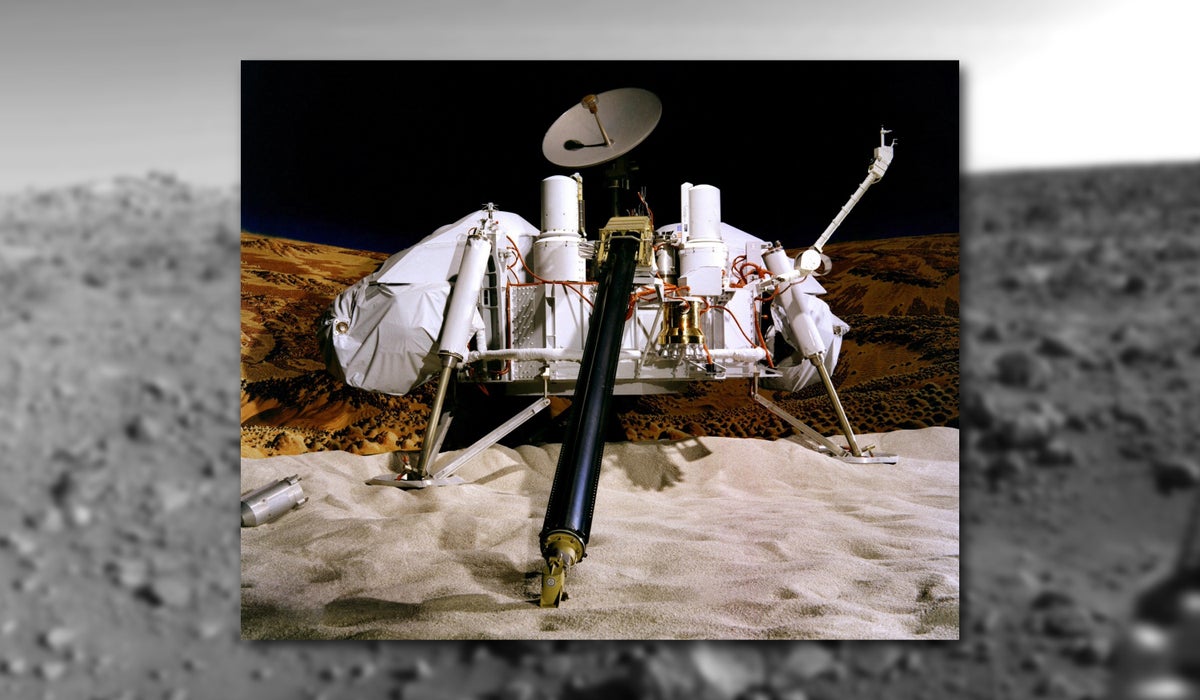
However, the scientific community remains divided on the issue. Some experts, like Steven Benner, argue that the Viking landers may have detected life on Mars as early as 1976, but the results were dismissed due to a lack of understanding of the planet's environment. Others, like David Catling, emphasize the need for a quantitative approach to biosignature analysis, stating that "we need a certain amount of data" to make definitive conclusions.
As the debate continues, scientists are urging a more nuanced approach to the search for life on Mars. Rather than relying on a single, definitive discovery, they argue that a cumulative approach, considering multiple lines of evidence, may be more effective. According to Morgan Cable, a planetary scientist, "When do we get over the threshold to say, 'Yeah, the likelihood of us finding this many potential biosignatures means we can remove the word potential'?"
According to Michael Wong, an astrobiologist, "What if we live in a universe where life is very ordinary? If we only let something's rareness guide us to life, we may miss a lot of life that is just ordinary life."
How significant is this development?
Participate in our community survey on the trajectory and real-world impact of this news.