Trump meets Xi at White House
President Trump hosted Chinese President Xi Jinping at the White House for a high-profile summit featuring a state dinner, a trade truce extension, and key discussions on AI and Taiwan.
- Headline Dispatch: Trump meets Xi at White House
- Core Takeaway: President Trump hosted Chinese President Xi Jinping at the White House for a high-profile summit featuring a state dinner, a trade truce extension, and key discussions on AI and Taiwan.
- Source Synthesis: Continuous live monitoring aggregated across major news wires and independent bureaus.
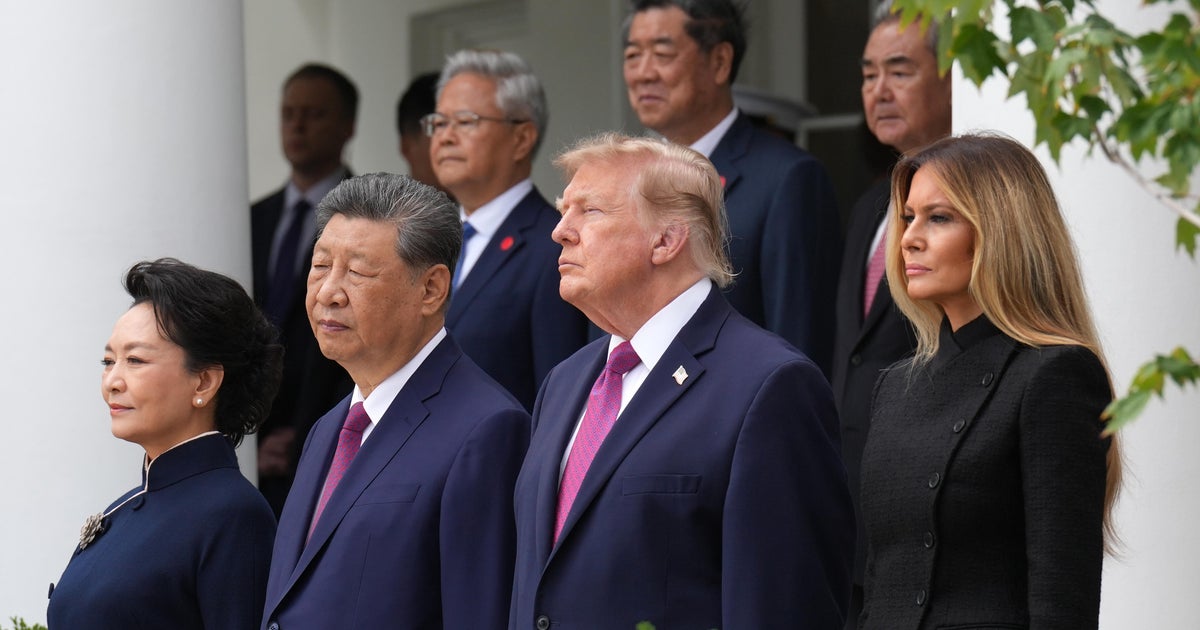
President Trump hosted Chinese President Xi Jinping for a high-profile diplomatic summit at the White House, featuring an elaborate ceremonial welcome, bilateral discussions in the Oval Office, and a state dinner in the East Room. The visit brought together senior administration officials, economic advisors, and prominent figures from the technology and banking sectors, even as deep-seated geopolitical frictions persisted behind the scenes.
Arrival Ceremonies and Diplomatic Pageantry
Xi arrived in Maryland, where he was greeted by President Trump and First Lady Melania Trump. The reception featured a red carpet, a 21-gun salute, military music, and flyovers by supersonic bomber aircraft. Following the airport arrival, the diplomatic delegation moved to the White House on Thursday morning for an elaborate South Lawn welcome ceremony involving the U.S. Army Old Fife and Drum Corps, the United States Army Herald Trumpets, and a military review in the Rose Garden.
While their husbands engaged in bilateral meetings in the Oval Office, First Lady Melania Trump and Madame Peng Liyuan toured the Smithsonian National Museum of Asian Art. Accompanied by a children's choir performance from a local Chinese school, the first ladies viewed historical artifacts, including the Peacock Room and the oil painting featuring a kimono-clad woman holding a fan.
The State Dinner and Cultural Exchange
The first day concluded with a state dinner in the East Room, characterized by red-themed decor honoring Chinese cultural symbolism. According to the Office of the First Lady, the evening featured a menu blending American culinary elements with Chinese touches, including a yellow squash velouté with wild mushroom fricassée, sesame-crusted sea bass with braised baby bok choy, and a dessert centered around White House honey ice cream. Guests raised a toast using Schramsberg “Blanc De Noir,” echoing the historic "Toast to Peace" shared by President Richard Nixon and Premier Zhou Enlai in Beijing.
| Event / Milestone | Location | Key Details |
|---|---|---|
| Arrival Reception | Joint Base Andrews, Maryland | Red carpet, 21-gun salute, and military flyovers welcoming the Chinese delegation. |
| First Ladies' Tour | Smithsonian National Museum of Asian Art | Cultural visit featuring the Peacock Room and a youth choir performance. |
| Bilateral Talks | White House Oval Office | Discussions covering trade truces, artificial intelligence, and regional security. |
| State Dinner | White House East Room | Bilateral banquet attended by tech and banking leaders, featuring a historic sparkling wine toast. |
Trade, Tariffs, and Critical Minerals
Economic discussions yielded a short-term extension of bilateral trade arrangements. Treasury Secretary Scott Bessent announced that U.S. And Chinese economic officials agreed to extend a trade truce originally struck in Busan, South Korea. The extension pushes the expiration date to January, maintaining a pause on punitive tariffs and providing negotiators additional time to deliberate.
Critical minerals and rare earths presented another acute structural challenge. Washington remains heavily reliant on Chinese processing capabilities for critical minerals. Data from Benchmark Mineral Intelligence indicates that while domestic output of primary rare earths has expanded, the United States will continue to rely on foreign imports for a substantial portion of its demand over the coming years, complicating White House ambitions to decouple supply chains.
Artificial Intelligence and Global Security
Artificial intelligence emerged as a primary item on the agenda. President Trump emphasized the competitive race for technological dominance, posting on social media that artificial intelligence would be a major topic of discussion while noting his preference to avoid heavy federal regulatory brakes. Conversely, Chinese President Xi called for artificial intelligence development to remain under strict human control, emphasizing healthy competition kept within defined bounds.
Security concerns extended beyond technology to international conflicts, including the war in Ukraine and tensions involving Iran. U.S. Lawmakers raised alarms regarding Chinese support for Tehran, while trade and diplomatic channels addressed monitoring mechanisms for national security incidents related to advanced technology.
The Taiwan Question and Regional Friction
Taiwan remained a critical friction point between the two superpowers. Ahead of the summit, Chinese defense and foreign policy spokespersons reiterated that the Taiwan question represents a primary red line in bilateral relations, urging extreme caution regarding U.S. Arms sales to the island. Simultaneously, Taiwan's government expressed gratitude for longstanding American support and maintained open communication channels to monitor developments from Washington.
Next Steps
Following the conclusion of Thursday's bilateral meetings and the evening state dinner, the itinerary includes a morning tea engagement in the Red Room on Friday. President Xi Jinping and Madam Peng Liyuan are scheduled to visit the National Archives before departing Washington to fly back to China.
How significant is this development?
Participate in our community survey on the trajectory and real-world impact of this news.


