Large asteroid will safely pass by Earth on Saturday
A massive 'potentially hazardous' asteroid is set for a safe close approach to Earth. Astronomers will use the event to conduct rare radar observations and improve planetary defense data.
- Headline Dispatch: Large asteroid will safely pass by Earth on Saturday
- Core Takeaway: A massive 'potentially hazardous' asteroid is set for a safe close approach to Earth. Astronomers will use the event to conduct rare radar observations and improve planetary defense data.
- Source Synthesis: Continuous live monitoring aggregated across major news wires and independent bureaus.
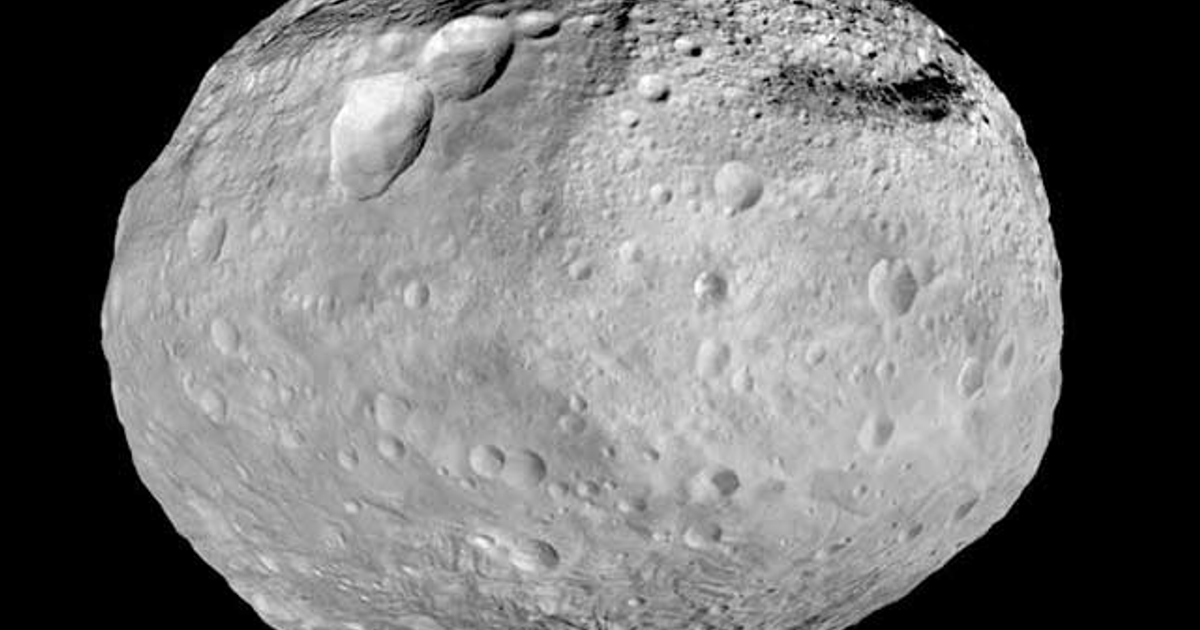
Large asteroid will safely pass by Earth on Saturday
A large near-Earth asteroid will make a close but safe approach to Earth on Saturday, June 27, 2026. The object, known as (152637) 1997 NC1, is estimated to be around 1 kilometer (0.6 miles) wide, making it significantly larger than most near-Earth objects that pass through the planet's neighborhood.
According to the European Space Agency (ESA), the asteroid will reach its closest point to Earth's surface at 11:14 UTC on June 27, passing at a distance of 1,590,375 miles (2,559,461 kilometers). This distance is approximately 6.66 lunar distances, or just under seven times the average distance between Earth and the moon. ESA reports the impact probability is zero.
The asteroid is categorized as an Aten-type Earth-crosser, meaning it spends most of its time inside Earth's orbit. Due to its size and the proximity of its pass, it carries a "potentially hazardous asteroid" (PHA) designation. This is a technical classification for objects larger than 50 meters whose orbits bring them within nearly 20 lunar distances of Earth. Current calculations show no threat of impact for at least the next century.
The size of 1997 NC1 makes it an unusual visitor. For comparison, it is roughly 50 to 60 times wider than the Chelyabinsk meteor that exploded over Russia in 2013. While that event caused shock waves that broke windows in six cities and sent 1,500 people for medical treatment, a 1-kilometer asteroid striking Earth would be catastrophic. Such an object would punch through the atmosphere intact, hitting the ground at roughly 20,000 mph (32,000 kph) and leaving a crater 6 to 9 miles wide and over a mile deep. The resulting blast would strip the landscape for hundreds of miles and launch dust and soot into the stratosphere, potentially blocking sunlight for months or years and triggering a global food crisis.
Astronomers view the upcoming pass as a rare opportunity for planetary defense research. NASA's Center for Near Earth Object Studies (CNEOS) currently tracks nearly 42,000 asteroids, but 1997 NC1 is one of only 872 discovered to date that are a kilometer or larger.
Radar observations planned for June 24, 25, and 27 aim to resolve discrepancies regarding the asteroid's optical albedo, spectral class, and diameter. "This object has not been observed with radar previously. We will use the 34-meter DSS-26 antenna as a transmitter (7190 MHz) and the 34-meter DSS-13 antenna as a receiver to observe this asteroid on June 24, 25, and 27."
These observations will take place at the Goldstone Deep Space Communications Complex in the Mojave Desert, California. Benner noted that these efforts will also help calibrate observations from the NEOWISE spacecraft and Spitzer Space Telescope. However, radar imaging is currently more difficult following the collapse of the Arecibo telescope in Puerto Rico on December 1, 2020, and the ongoing modernization of the DSS-14 dish at Goldstone, which remains offline until 2028.
For amateur astronomers, the asteroid will be visible from June 26 to June 28. It will appear as a faint, steadily moving point of light, resembling a star. To see it, observers will need a telescope with a diameter of 6 inches (15 cm) or larger, though astrophysicist Gianluca Masi stated a modest 4-inch (100 mm) telescope should suffice. The asteroid is expected to peak in brightness on June 28 at 00:00 UTC, reaching magnitude 10.1.
Masi, director of the Virtual Telescope Project, said: "The upcoming flyby of (152637) 1997 NC1 will be truly remarkable. People will have the opportunity to see it visually through a small telescope or even good binoculars..."
The asteroid will move from the constellation Lyra in the northern sky toward Norma in the southern hemisphere. While it remains brighter than magnitude 11.5 from June 25 to July 1, observers are cautioned that the "Strawberry Moon," which turns full on June 29, may interfere with visibility.
The Virtual Telescope Project will provide live broadcasts of the event on June 26 and 27, beginning at 23:00 UTC each night. Following this encounter, ESA lists the next close approach for 1997 NC1 as June 27, 2088.
How significant is this development?
Participate in our community survey on the trajectory and real-world impact of this news.