Iran denies Trump's claim that new talks will begin on Monday
The Iranian foreign ministry has denied claims by US President Donald Trump that new negotiations were set to begin on Monday. Tehran stated it is negotiating with Oman regarding the security of shipping through the Strait of Hormuz.
- Headline Dispatch: Iran denies Trump's claim that new talks will begin on Monday
- Core Takeaway: The Iranian foreign ministry has denied claims by US President Donald Trump that new negotiations were set to begin on Monday. Tehran stated it is negotiating with Oman regarding the security of shipping through the Strait of Hormuz.
- Source Synthesis: Continuous live monitoring aggregated across major news wires and independent bureaus.
Iran denies Trump's claim that new talks will begin on Monday
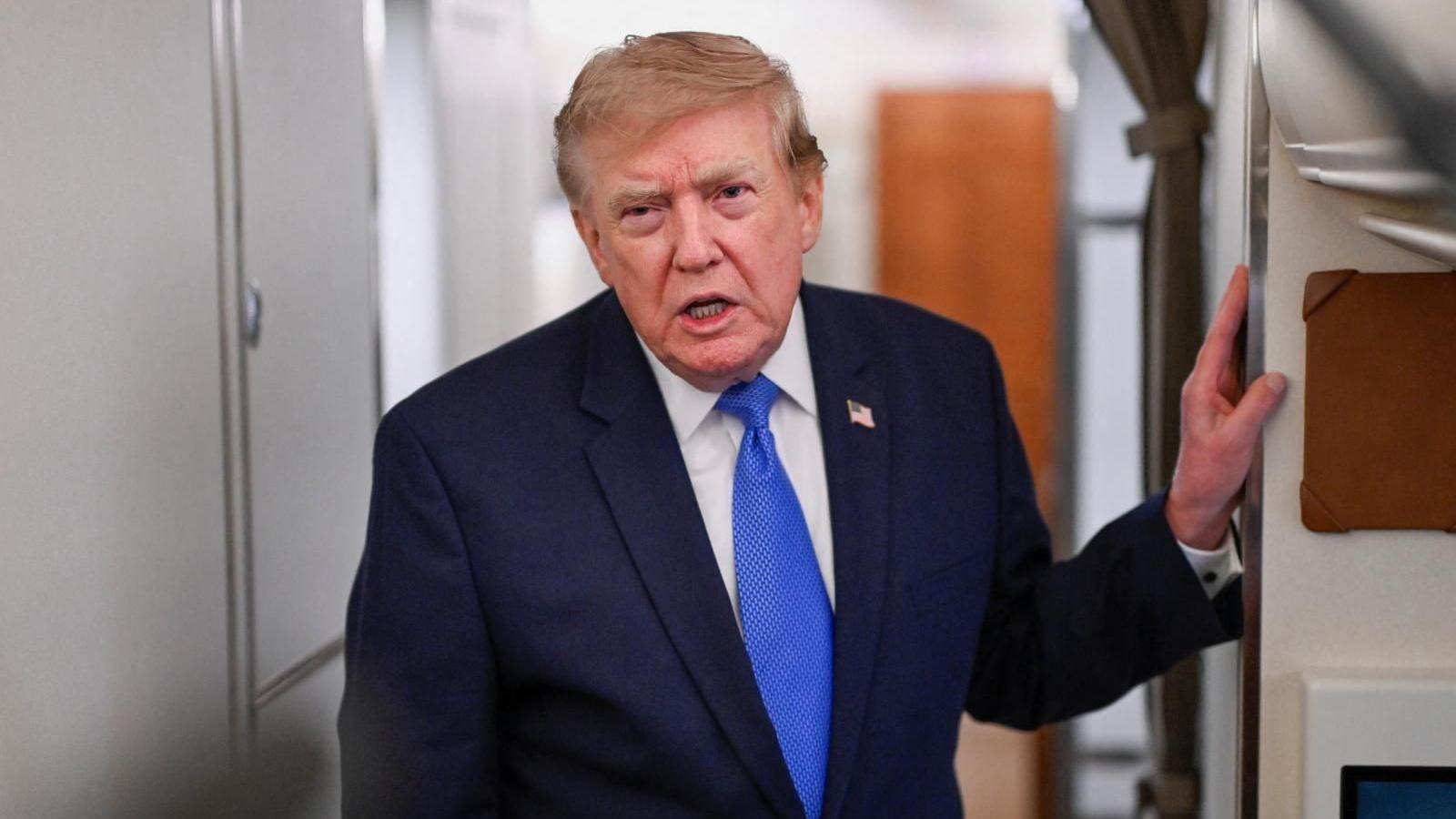
Iran has denied Donald Trump's claim that new talks on ending the conflict would begin on Monday, after the US president called off what he said would have been "massive" strikes on the country. Speaking on board Air Force One on Sunday, Trump said Iran "knew the extent of the attack because they saw it forming", adding: "We're talking to them in the form of a negotiation. It begins tomorrow afternoon."
However, on Monday, Iran's foreign ministry denied they were negotiating with the US, or that there were any plans to do so. Spokesperson Esmaeil Baghaei added that Tehran was negotiating with Oman to reach "an understanding over a path to ensure the security of shipping passage through the Strait of Hormuz". Earlier talks between the US and Iran have been facilitated through mediators.
Trump has repeatedly vowed that a negotiated end to the war is near, only for tit-for-tat strikes to resume. In his remarks on Air Force One, Trump declined to outline a deadline for a deal to be struck with Tehran, adding: "We'll just see how it is. We're ready to go anytime we want... I'm not looking to kill people." The US president did not specify where the talks on Monday would be held or who would attend.
Trump added that Saudi Arabia's Crown Prince Mohammed Bin Salman - as well as US partners such as the United Arab Emirates and Qatar - had urged him against conducting strikes over the weekend. "We were all set to go," Trump said. "The reason they asked is [that] they think there's a deal," he said. "There's a deal on Hormuz, and there will be a deal on the nuclear."
Global oil prices fell on Monday morning in Asia trading after Trump's announcement. Brent Crude oil was down by 4.5% at $83.98, while US-traded oil was 4.6% lower at $80.74. Energy prices have fluctuated since the conflict started as traders reacted to disruptions to shipping through the Strait of Hormuz. Around 20% of the world's crude oil and liquefied natural gas (LNG) usually flows through the strait.
Iran's semi-official Mehr news agency denied that Tehran had asked the US to hold off on further military action, saying Trump's claims were "nothing but a new lie". During his remarks on Air Force One, Trump said that the planned strikes would have been "the biggest attack since World War Two", and could have derailed prospects of a negotiated end to the months-long war.
Iran's acting Defence Minister Majid Ibn al-Reza earlier said Tehran viewed every threat from its adversaries as "real and credible" even if it formed part of psychological warfare. "We will neither be caught off guard nor remain passive," he added. The US president has previously issued apocalyptic warnings to Tehran, only to subsequently insist that diplomacy was being given a chance.
In an earlier post on Truth Social, Trump said he had been asked by Iran and US allies in the Middle East to "hold off" as the "perimeters" of a deal had been agreed. But Iran's foreign ministry spokesperson, Esmaeil Baghaei, said on Sunday that discussions involving Oman had brought the two sides closer to an understanding on how ships could move through the waterway.
"We are now going to reach an understanding on a route acceptable to both sides, neither the northern route nor the southern route, but one that respects the sovereign rights of both sides and safeguards our national interests and security," he said. He, however, stressed that any understanding reached would not necessarily mean that the Strait of Hormuz would be fully reopened.
Iranian lawmaker Hassan Ghashghavi, spokesman for the parliament's National Security Commission, said on Sunday that mediators were working to revive a memorandum of understanding reached between the US and Iran in June. The agreement was not designed as a final peace deal but was intended to serve as a basis for negotiations towards a broader settlement.
Meanwhile, tensions around the Strait of Hormuz remained high after a tanker sailing off the coast of Oman reported hearing an explosion nearby. The United Kingdom Maritime Trade Operations Centre said the incident was reported on Sunday, adding that the vessel and its crew were safe. The incident came amid continuing concerns over the safety of commercial ships using the strategic waterway.
Iranian President Masoud Pezeshkian, in a post on 𝕏, called for continued efforts to ensure that agreements reached during the conflict were respected. "We must strive to compel the enemy to remain committed to what it has signed," Pezeshkian said. The conflict between the US-Israel and Iran, which began in February, has left thousands of people dead and caused massive economic damage particularly in the Gulf states, which have faced repeated attacks from Iran.
The closure of the Strait of Hormuz has been particularly disruptive to the region's economy, and the long-term reopening of the waterway has been a primary goal. A spokesperson for Iran's parliamentary National Security Committee, Hassan Qashqavi, said on Monday that Tehran was close to reaching an agreement with Oman over the strait. He also confirmed that the country's mediators were seeking to revive the Memorandum of Understanding with Washington.
How significant is this development?
Participate in our community survey on the trajectory and real-world impact of this news.