Natural Sugar Floating in Space Between Stars
For the first time, researchers have identified a 'true sugar' floating in the gas clouds of the Milky Way. The discovery of erythrulose suggests that the building blocks of life may be widespread across the galaxy.
- Headline Dispatch: Natural Sugar Floating in Space Between Stars
- Core Takeaway: For the first time, researchers have identified a 'true sugar' floating in the gas clouds of the Milky Way. The discovery of erythrulose suggests that the building blocks of life may be widespread across the galaxy.
- Source Synthesis: Continuous live monitoring aggregated across major news wires and independent bureaus.
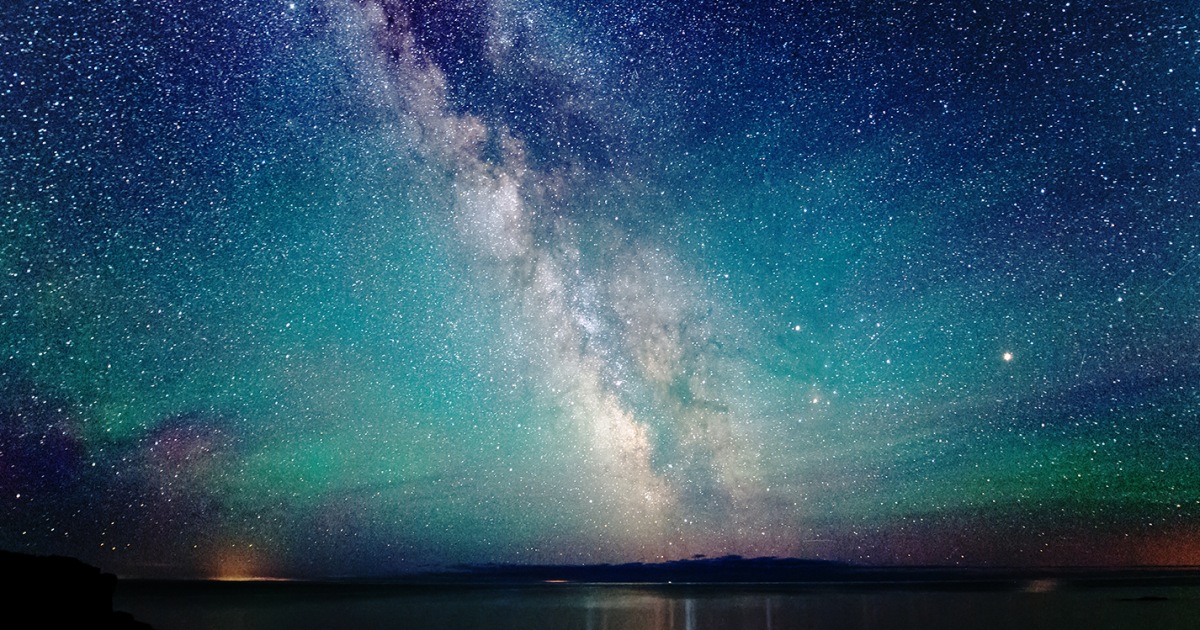
Natural Sugar Floating in Space Between Stars
Astronomers have identified a type of natural sugar floating in the interstellar medium, the thin clouds of gas and dust located between star systems. The compound, known as erythrulose, is the same sugar found in self-tanners and raspberries.
The discovery was made using two dish-shaped radio telescopes in Spain. Researchers analyzed data from a massive gas cloud situated near the center of the Milky Way, identifying the sugar in gas form by comparing the signals from the telescopes with lab samples. The region where the sugar was detected has also been crossed by NASA's twin Voyager spacecraft.
According to the study, published July 13 in the journal Nature Astronomy, this discovery is the first time a true sugar
has been found in interstellar space. True sugars are defined by having a spine of at least three carbon atoms; erythrulose possesses four. While other sugar-like compounds have been spotted previously, this finding confirms that sugars can form naturally in space, according to lead author Izaskun Jiménez-Serra, an astronomer at the Spanish National Research Council and the Center for Astrobiology in Madrid.
The presence of this complex sugar provides clues regarding the origins of life. While erythrulose itself is not essential for life, it can convert into forms that are considered crucial for kick-starting life on Earth. Specifically, it can change into the ingredients that create nucleic acids, which include RNA and DNA.
"The detection of erythrulose is very exciting because it opens up the possibility of discovering in space other sugars such as ribose, which is part of RNA, and other important molecules for the origin of life,"
Carlos Briones, study co-author, via space.com
Erika Hamden, an astrophysicist at the University of Arizona who was not involved in the research, described the discovery as a pristine example of the stuff that’s just floating out in the galaxy
. She noted that it is among the most complex sugars detected in space to date.
This finding contributes to a larger debate about how the building blocks of life arrived on Earth. One theory suggests that asteroids and comets delivered these ingredients via collisions approximately four billion years ago. Another theory proposes that the essential components were already present when the solar system formed. This new discovery lends evidence to the latter theory.
The detection follows other chemical finds in the galaxy. About 25 years ago, scientists spotted a cousin to table sugar near the Milky Way's center. More recently, NASA's Osiris-Rex spacecraft retrieved black grains from asteroid Bennu that contained a gum-like substance
and other sugars, including an ingredient key to DNA. Researchers stated those Bennu samples support a hypothesis that early earthly life relied on messenger molecules rather than the complex biological processes found today.
The discovery of erythrulose follows a pattern of kitchen-like chemicals being found in the cosmos; last month, researchers announced the discovery of salt clouds on the Pink Planet
.
Jiménez-Serra suggests that finding these ingredients in one location implies they likely exist in distant corners of the galaxy as well.
"The key ingredients for the origin of life could be present in other regions across the galaxy, opening the possibility for life to develop elsewhere in the universe,"
Izaskun Jiménez-Serra, astrophysicist at the Center for Astrobiology in Spain, via nbcnews.com
Jiménez-Serra added that erythrulose could have provided the feedstock for the first nucleic acids
.
Moving forward, researchers intend to search for additional sugars in space and investigate the processes by which they convert into different forms.
How significant is this development?
Participate in our community survey on the trajectory and real-world impact of this news.