Margaret Hamilton, Apollo software pioneer and computer scientist, dies at 90
Margaret Hamilton, the pioneering computer scientist who led software development for NASA's Apollo program and coined the term software engineering, has died at the age of 90.
- Headline Dispatch: Margaret Hamilton, Apollo software pioneer and computer scientist, dies at 90
- Core Takeaway: Margaret Hamilton, the pioneering computer scientist who led software development for NASA's Apollo program and coined the term software engineering, has died at the age of 90.
- Source Synthesis: Continuous live monitoring aggregated across major news wires and independent bureaus.
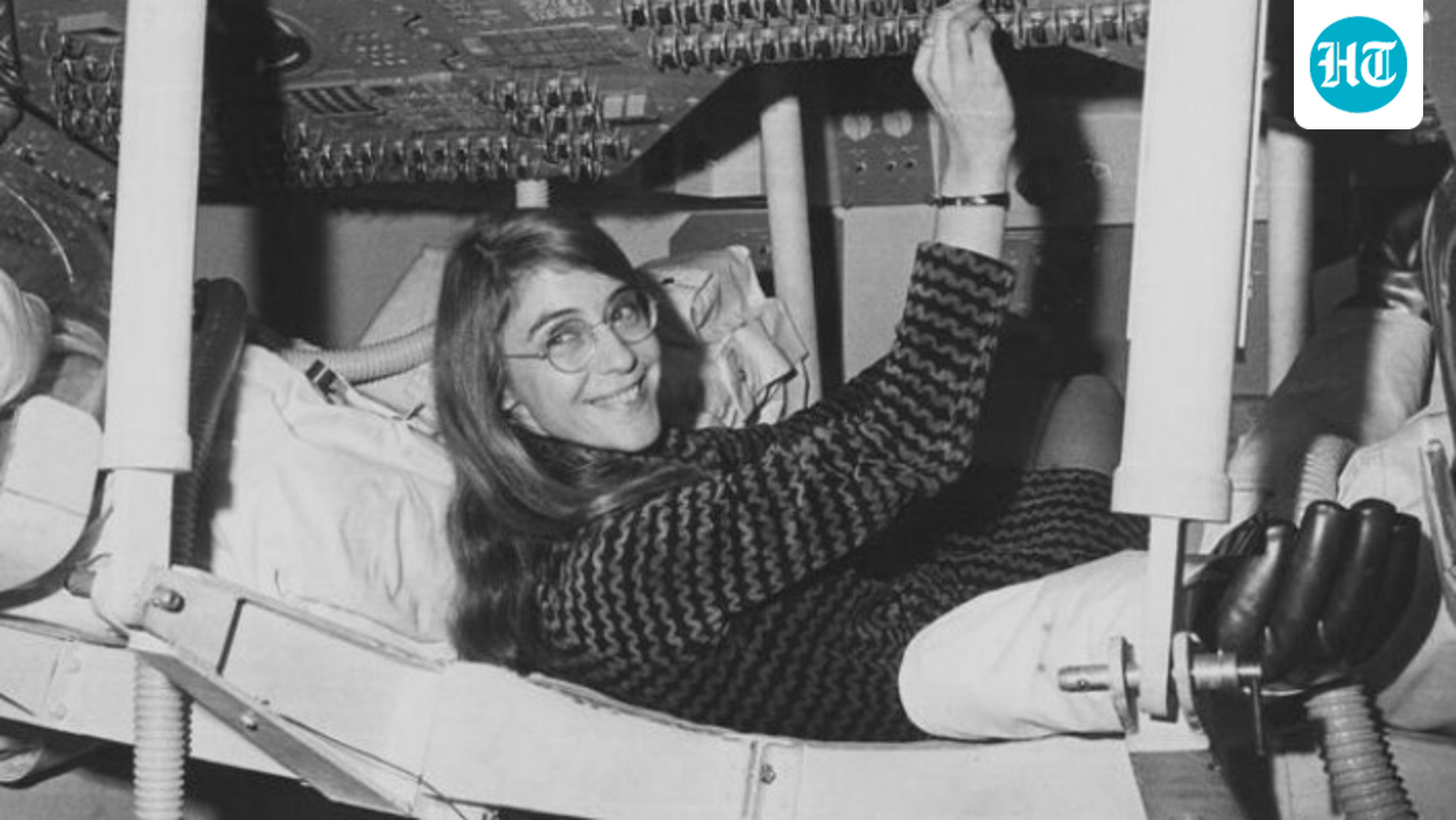
Margaret Hamilton, the pioneering computer scientist whose onboard flight software guided humanity to the lunar surface and helped establish software engineering as a dedicated professional discipline, has died at the age of 90. The Massachusetts Institute of Technology announced that she passed away on September 30, with the obituary published on October 7.
From Early Programming to NASA’s Apollo Program
Born in Indiana, Hamilton studied mathematics at the University of Michigan before earning a BA in mathematics from Earlham College. She moved to Boston, Massachusetts, alongside her husband, originally taking a job at MIT to support him during his law degree. Under the tutelage of a renowned MIT meteorologist, she learned to program and initially wrote software designed to detect enemy aircraft.
In 1965, after seeing an advertisement seeking programmers to develop software to send humans to the moon, Hamilton joined MIT’s Instrumentation Laboratory, which had secured NASA’s contract for the Apollo program's onboard flight software. Reflecting on the decision in a past interview, Hamilton noted that she was attracted both by the sheer idea and the fact that it had never been done before, becoming the first programmer to join and the first woman hired for the effort. She initially worked on uncrewed Apollo missions before ascending to leadership. By 1968, she served as assistant director in charge of the Command and Service Module team, overseeing more than 400 people working on Apollo software.
According to the Massachusetts Institute of Technology, Hamilton managed the Software Engineering Division during her tenure at the institute, which lasted from 1959 until the mid-1970s.
Coining "Software Engineering" and Pioneering Defensive Programming
In an era when writing code was largely viewed as an auxiliary task akin to secretarial work, Hamilton fought fiercely for legitimacy and respect for the craft. She began using the term "software engineering" to distinguish it from hardware and traditional branches of engineering, while treating each as an integral part of the overall systems engineering process. As she recalled in a later interview with a Spanish newspaper, the phrase was initially treated as an amusing joke and an ongoing source of playful teasing among her peers before the discipline eventually earned widespread respect.
Hamilton also pioneered defensive programming—a developmental practice focused on creating software capable of anticipating, detecting, and fixing errors independently. Her drive for error prevention was fueled in part by the desire to avoid system crashes that triggered flashing lights and ringing bells in the laboratory. The importance of such safeguards was underscored when an Apollo simulator program was accidentally triggered by her daughter, Lauren. Although her initial recommendations for safeguards were rejected at the time, a similar error during a subsequent mission prompted NASA to permanently incorporate her proposed changes.
Saving the Apollo 11 Lunar Landing
The resilience of Hamilton’s defensive programming architecture faced its ultimate test on July 20, 1969, during the Apollo 11 mission. Just minutes before the lunar module *Eagle* was scheduled to touch down on the Moon, the onboard computer generated a 1202 alarm, signaling that a hardware switch fault had overloaded the system.
As MIT and news reports detailed, the computer was overwhelmed, creating a moment of uncertainty over whether the complex landing could succeed.
However, Hamilton’s team had engineered priority-driven software designed to handle emergency overloads by automatically shutting down unnecessary background tasks and reserving processing power exclusively for mission-critical operations. Rather than crashing or forcing an abort, the system compensated for the hardware fault, restarted essential tasks, and allowed Neil Armstrong and Buzz Aldrin to land safely on the lunar surface.
Honors and Legacy
| Award or Honor | Organization / Presenter |
|---|---|
| Presidential Medal of Freedom | President Barack Obama |
| NASA Exceptional Space Act Award | NASA |
| Computer History Museum Fellow Award | Computer History Museum |
| Induction into National Aviation Hall of Fame | National Aviation Hall of Fame |
| Official LEGO Minifigure | LEGO Group |
In 2016, President Barack Obama presented Hamilton with the Presidential Medal of Freedom, praising her as a representative of the unsung women who helped humanity reach space and noting that the Apollo astronauts thankfully had her software when time ran short. Her iconic status was further cemented when the complete Apollo flight software code was published on GitHub, and when she was honored as an official LEGO minifigure.
Following her decades at MIT, Hamilton transitioned into entrepreneurship. She founded Higher Order Software in 1976 and later established Hamilton Technologies, where she continued developing advanced systems modeling languages, including the Universal Systems Language, aimed at maximizing reliability and reducing software development costs.
Olivier de Weck, the Apollo Program Professor and interim head of MIT’s Department of Aeronautics and Astronautics, paid tribute to her enduring impact:
"To say Margaret Hamilton was a pioneer — to say she was ahead of her time — would be a dramatic understatement."
Olivier de Weck, MIT Department of Aeronautics and Astronautics, via MIT News and Hindustan Times
Jerry M. Wohletz, president and CEO of Draper, added that Hamilton left an indelible mark on the organization. Earlham College similarly expressed gratitude for her extraordinary life and inspiring legacy.
Family and Future Observances
Hamilton is survived by her daughter, Lauren Hamilton, son-in-law Richard Selesnick, two grandsons, four great-grandchildren, and her siblings, John, David, and Kathryn.
According to announcements from the Massachusetts Institute of Technology, a memorial service honoring her life and contributions will take place in Cambridge, Massachusetts, in the spring.
How significant is this development?
Participate in our community survey on the trajectory and real-world impact of this news.