Artificial cloud brightening could neutralize El Nino, study finds
Research indicates that targeted geoengineering via marine cloud brightening could interrupt El Nino cycles, although the process carries significant ecological risks.
- Headline Dispatch: Artificial cloud brightening could neutralize El Nino, study finds
- Core Takeaway: Research indicates that targeted geoengineering via marine cloud brightening could interrupt El Nino cycles, although the process carries significant ecological risks.
- Source Synthesis: Continuous live monitoring aggregated across major news wires and independent bureaus.
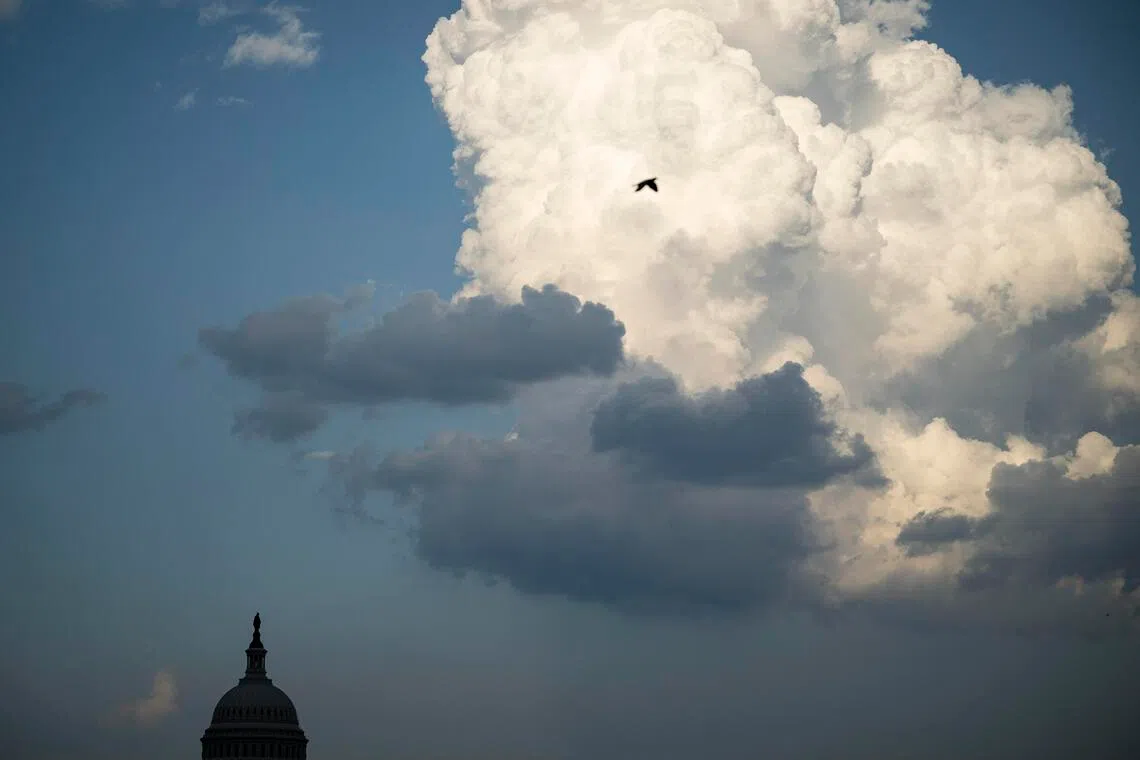
Artificial cloud brightening could neutralize El Nino, study finds
A brewing Super
El Nino cycle is poised to unleash global floods, heatwaves, and drought, with effects amplified by human-caused climate change. A new study published July 8 in Science Advances suggests that the phenomenon could be interrupted or effectively switched off
using a targeted geoengineering technique called marine cloud brightening (MCB).
The research, led by Jessica Wan, a post-doctoral researcher at the University of Chicago, proposes that artificially brightening clouds over the Pacific could neutralize this influential weather pattern. Unlike traditional geoengineering, which focuses on cooling the planet as a whole, this approach focuses on shorter-term, regional interventions.
The "Natural Experiment"
The premise was motivated by the Black Summer
bushfires in Australia from 2019-2020. Research indicated that the massive volume of smoke particles — almost 1 million metric tons — entered clouds and triggered chain reactions that made them brighter, reflecting more solar energy back into space. This natural occurrence played a key role in creating a multi-year, triple-dip
La Nina, the cool phase of the El Nino-Southern Oscillation (ENSO) cycle.
Wan and her colleagues used a forecasting model to determine if artificial MCB over a rectangular zone in the equatorial Pacific could have mitigated the 1997-1998 and 2015-2016 El Nino events. The process would involve ships fitted with nozzles spraying sea salt into the lower atmosphere to increase the number of cloud droplets, making the clouds more reflective.
The simulations indicated the intervention is most effective when started in June and continued through the following February. According to the model, nine months of spraying would have reduced warming of the Niño 3.4 region from 2°C or more to a little over 1°C and ended the events by January.
"You can basically stop the dominoes from falling early when you do marine cloud brightening,"
Jessica Wan, University of California San Diego, via New Scientist
Global Impacts and Risks
El Ninos are characterized by warming sea surfaces in the eastern tropical Pacific, which often cause drought in Australia and wetter winters in East Africa. The study found that modeled cloud brightening reversed most temperature and precipitation effects, making warmer regions cooler and wetter regions drier.
However, the intervention carries significant risks and logistical hurdles:
- Scale: Current nozzle technology cannot shoot enough volume. Even if perfected, the study estimates it would require roughly 2,400 ships to achieve the necessary impact.
- Unintended Consequences: Models showed potential warming over Asia and Europe. In the 2015-2016 simulation, the subsequent La Nina phase became stronger, which could disrupt rainfall and contribute to famine in regions like the Horn of Africa.
- Ecological Damage: Reflecting more sunlight could reduce photosynthesis, lowering productivity for forests, crops, and marine algae. Algae are critical as they produce roughly 70% of Earth's oxygen.
Divergent Geoengineering Results
Separate research published in Earth's Future by scientists at the University of California, Santa Barbara, compared MCB with stratospheric aerosol injection (SAI), which releases sulfate particles high in the atmosphere. While SAI had almost no measurable effect on ENSO, deploying MCB in the subtropical eastern Pacific dramatically reduced ENSO amplitude by approximately 61%.
Chen Xing, a doctoral student at UCSB, warned against using MCB over the eastern Pacific due to these super strong chain reactions
from the disappearance of ENSO. Associate Professor Samantha Stevenson noted that while the speed of change in these experiments, dropping 60% in 10 years, does not happen naturally even under climate change, the findings do not represent a blanket rejection of MCB in other locations.
The Moral and Political Debate
The proposal faces skepticism from those who argue geoengineering creates a moral hazard
, potentially allowing polluters to continue emitting carbon if the climate can be artificially cooled. Andrew Dessler, a professor at Texas A.M. University, described the actual execution as a political nightmare
that could lead to conflict or war if an unpredicted problem occurs.
But Wan argues that because the world is already locked into warming
, researching these methods is a necessity. She suggests that short-term interventions avoid termination shock
, where the abrupt stop of aerosol spraying causes pent-up warming to return rapidly.
The UCSB team plans to further investigate how different geoengineering strategies affect marine ecosystems in future studies.
How significant is this development?
Participate in our community survey on the trajectory and real-world impact of this news.