OpenAI's First Device Will Be Movable, Screenless Speaker Built as AI Companion
OpenAI is developing a movable smart speaker designed as a physical manifestation of ChatGPT, though the project faces a trade secret lawsuit from Apple.
- Headline Dispatch: OpenAI's First Device Will Be Movable, Screenless Speaker Built as AI Companion
- Core Takeaway: OpenAI is developing a movable smart speaker designed as a physical manifestation of ChatGPT, though the project faces a trade secret lawsuit from Apple.
- Source Synthesis: Continuous live monitoring aggregated across major news wires and independent bureaus.

OpenAI's First Device Will Be Movable, Screenless Speaker Built as AI Companion
OpenAI is developing a portable, screen-free smart speaker intended to serve as a humanlike AI companion for the home, according to people familiar with the matter. Internally, the company describes the hardware as a new type of computer built for the AI era to increase productivity for busy users.
The device will leverage the capabilities of ChatGPT, specifically using a more advanced version of the ChatGPT Voice Mode known as GPT-Live, which rolled out in July. This voice mode allows the device to process information quickly, adapt naturally during conversations, and listen and talk simultaneously.
Unlike traditional smart speakers, the device is designed to have a "personality" and build a connection with users. It features mechanical elements that move on their own to create the impression that it is alive rather than a static object. OpenAI intends for the speaker to be a physical manifestation of OpenAI's ChatGPT
.
Capabilities and Surveillance
The hardware will perform standard smart speaker functions, such as answering questions, playing media, responding to messages, and controlling smart-home appliances. However, it is designed to be proactive rather than purely utilitarian.
To offer personalized service and anticipate user needs, the device will actively gather data. This includes accessing personal information such as emails and using integrated cameras and sensors to understand the user's context and surroundings. According to a recording of an OpenAI staff meeting reported by The Wall Street Journal, the product is designed to be fully aware of a user's surroundings and life
while remaining unobtrusive.
The device includes a rechargeable battery, allowing users to carry it from room to room—such as from a kitchen for cooking assistance to a laundry room for chores—though it can also remain plugged into a single room.
Apple Ties and Legal Conflict
The development of the speaker involves a massive influx of former Apple talent. OpenAI spent $6.5 billion in 2025 to acquire io Products, a startup co-founded by former Apple designer Jony Ive. Ive's studio, LoveFrom, is assisting with the product lineup. Other key hires include Evans Hankey, former Apple head of industrial design, and Paul Meade, a former senior Apple executive who led development of the Vision Pro headset and future smart glasses.
This partnership has led to significant legal friction. Apple filed a lawsuit against OpenAI last week, alleging the company stole trade secrets to accelerate its hardware development. The lawsuit specifically accuses OpenAI Chief Hardware Officer Tang Tan, a co-founder of io Products and former head of iPhone product design, of leading a campaign to obtain confidential information regarding Apple's engineering practices and future products. The suit further claims OpenAI hired more than 400 people from Apple.
OpenAI has denied these allegations. A company spokesperson declined to comment on the specifics, but OpenAI stated it has no interest in other companies' trade secrets
and believes the complaint lacks merit. Sources familiar with the matter stated that OpenAI believes the speaker's audio system and hardware differ substantially from Apple's HomePod and HomePod mini, and therefore do not violate trade secrets.
Market Strategy and Future Roadmap
Reports from The Wall Street Journal suggest the company has plans to ship 100 million of these devices.
The smart speaker is the first of roughly five products currently in development. OpenAI's longer-term roadmap includes:
- A mobile AI device intended to replace the smartphone.
- Wearable products, such as a pendant.
- Home robotics.
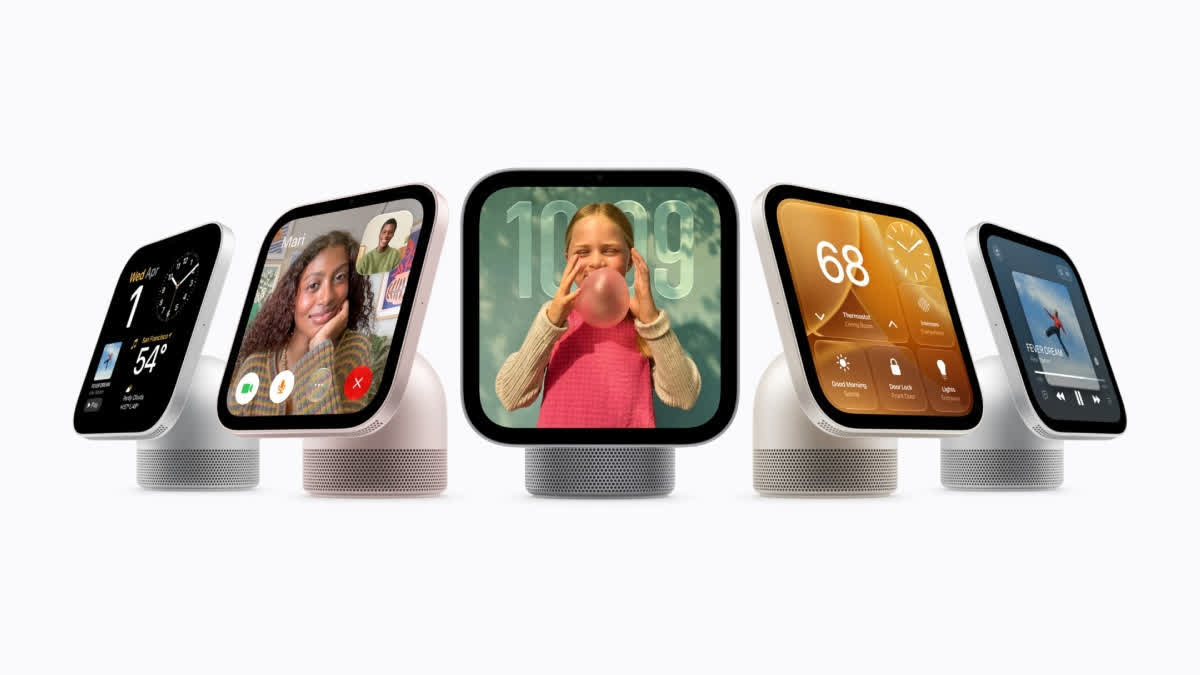
Apple is responding with its own AI-focused home hardware, including a long-delayed smart-home command center code-named J490. This device will feature a 7-inch square display, facial recognition, and the new Siri AI assistant as part of the upcoming iOS 27 operating system. Apple is also developing a display mounted on a robotic arm and a smart-home security system.
OpenAI aims to unveil its speaker in 2026 with a release scheduled for 2027. However, these timelines remain subject to change based on the ongoing legal process, as Apple is currently seeking an injunction that could delay the sale of the devices.
How significant is this development?
Participate in our community survey on the trajectory and real-world impact of this news.