Astronomers find Jupiter-size super-puff planets less dense than cotton candy
Two giant exoplanets with densities lower than cotton candy have been identified in a single system, marking some of the lightest planets of their size ever found.
- Headline Dispatch: Astronomers find Jupiter-size super-puff planets less dense than cotton candy
- Core Takeaway: Two giant exoplanets with densities lower than cotton candy have been identified in a single system, marking some of the lightest planets of their size ever found.
- Source Synthesis: Continuous live monitoring aggregated across major news wires and independent bureaus.
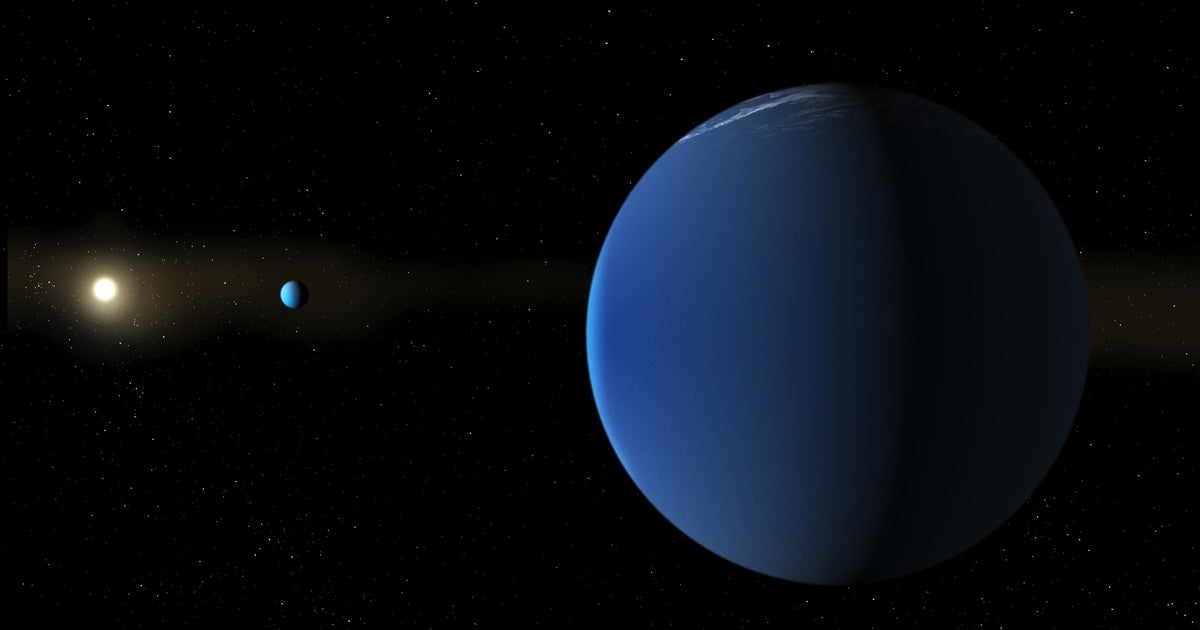
Astronomers find Jupiter-size super-puff planets less dense than cotton candy
An international research team has identified two giant exoplanets that are roughly the size of Jupiter but possess densities lower than that of cotton candy. These "super-puff" planets, named TOI-791 b and TOI-791 c, orbit an F7-type dwarf star located 1,110 light-years from Earth in the southern constellation Volans, also known as the flying fish.
The findings, published in Monthly Notices of the Royal Astronomical Society, describe the pair as the biggest exoplanets ever found with such low density. According to George Dransfield of the University of Oxford, who led the study, the worlds are the lightest known planets of their size.
"These two planets have densities comparable to a nice blob of shaving foam, fresh from the can,"
George Dransfield, University of Oxford, via email
Comparing Cosmic Densities
The diffuse nature of these worlds is highlighted by their specific measurements. TOI-791 b has a density of 0.038 grams per cubic centimeter, while TOI-791 c is 0.047 grams per cubic centimeter. For context, candy floss typically has a density of about 0.05 grams per cubic centimeter. Earth is significantly denser at an average of 5.5 grams per cubic centimeter.
Jupiter is far more compact than these two lightweights, with an average density of 1.33 grams per cubic centimeter. This makes Jupiter roughly 28 to 35 times denser than the newly discovered super-puffs.
A Rare Planetary Pairing
Super-puffs are uncommon in the known universe. While NASA has confirmed nearly 6,300 worlds outside our solar system, Dransfield notes that fewer than 40 are classified as super-puffs. Finding two such planets in a single system is even rarer, with only four other known systems containing multiple super-puff planets.
The "sibling" planets are linked by a 5:3 mean-motion resonance. This orbital arrangement means the inner planet completes five orbits for every three orbits completed by the outer planet. Their gravitational interaction causes measurable changes in transit timing. The planets also have unusually long orbital periods: one takes 139 days to circle the host star, and the other takes 232 days.
The Path to Discovery
The identification of these worlds was a multi-year effort involving citizen science and global cooperation. Volunteers with the Planet Hunters TESS project first flagged TOI-791 b in 2019 and TOI-791 c in 2023 using data from NASA's Transiting Exoplanet Survey Satellite (TESS).
To determine the planets' mass and density, researchers utilized ground-based telescopes. A critical component of this work was provided by the ASTEP (Antarctic Search for Transiting ExoPlanets) telescope at Concordia Station in Antarctica. The region's long winter nights allowed for uninterrupted observations of the planets' transits, which each last more than 11 hours. Researchers stated these are the longest continuous planetary transits ever fully observed from the ground.
Professor Tristan Guillot of Université Côte d'Azur emphasized that combining observations from space, Antarctica, and observatories across several continents was essential to revealing the nature of these planets.
Solving the Super-Puff Puzzle
The existence of these planets challenges current astronomical expectations. Jon Jenkins of NASA's Ames Research Center said the planets are interesting because scientists didn't expect to see them at all
, and they represent a puzzle regarding how giant planets and super-puffs form.
Current theories suggest super-puffs form in gas-rich disks around newborn stars where gas outweighs dust. These planets may have developed enormous atmospheres of hydrogen and helium in cold regions of the protoplanetary disc before migrating. Over time, they may have shed much of their material.
Despite the "cotton candy" comparison, Dransfield suspects the planets are not pink, but instead white or blue depending on cloud cover.
The next phase of research involves the James Webb Space Telescope. Professor Amaury Triaud of the University of Birmingham stated that space-based observations are proposed to check for carbon-, nitrogen-, and oxygen-bearing species in the atmospheres. This data will be used to test competing theories on how these unusual worlds originated.
How significant is this development?
Participate in our community survey on the trajectory and real-world impact of this news.