UK farmers rethink winter drilling plans amid poor harvests and high costs
Poor harvests and high input costs are leading some British growers to consider abandoning conventional cropping in favor of non-food-producing land options.
- Headline Dispatch: UK farmers rethink winter drilling plans amid poor harvests and high costs
- Core Takeaway: Poor harvests and high input costs are leading some British growers to consider abandoning conventional cropping in favor of non-food-producing land options.
- Source Synthesis: Continuous live monitoring aggregated across major news wires and independent bureaus.
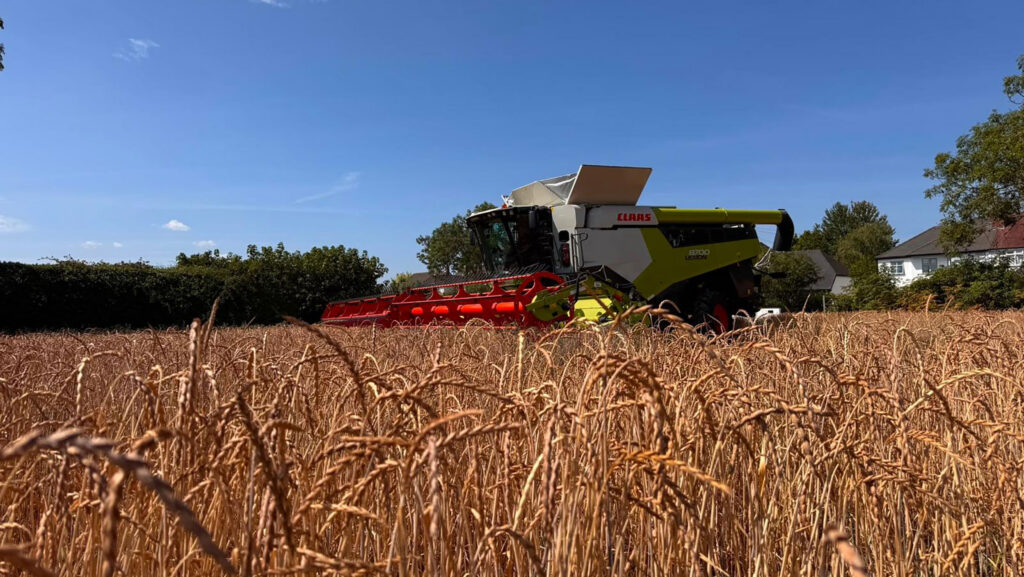
UK farmers rethink winter drilling plans amid poor harvests and high costs
Arable farmers across the United Kingdom are questioning the viability of planting winter crops this autumn following a combination of disappointing yields, high input costs, and erratic weather. The economic pressure has led some growers to consider abandoning conventional cropping in favor of non-food-producing land options.
Clive Bailye, a farmer near Lichfield in Staffordshire, reported that wheat crops which appeared to be high performers were instead significantly less productive. According to Bailye, crops that looked like 10t/ha performers instead yielded between 5-7t/ha. He expects his overall result to be 30-40% below his initial anticipations.
Bailye noted that a heritage wheat variety used for the speciality health food market performed no worse, if not better
than the latest blended varieties. This has raised questions regarding whether the most recent genetics provide sufficient resilience against extreme weather.
The financial strain is compounded by current fuel and fertilizer prices. Bailye stated that planting this autumn would be a pure gamble
on the hope that commodity prices rise before the next harvest. He argued that to compensate for a 40% drop in yield, he would require a 40% rise in price.
Beyond the balance sheet, the repeated poor harvests are impacting mental health. Bailye said that such failures lead farmers to question their own self-worth and professional ability, even when the cause is weather-related.
Some farmers are now looking toward diversification or government agreements to survive. Bailye is utilizing the final year of an uncapped SFI 23 agreement, which allows him to potentially place up to 90% of his farm into options such as winter bird food and pollinator mixes. These options currently offer a more attractive return than growing wheat.
In Merseyside, farmer Olly Harrison told the BBC that extreme weather is making farming increasingly difficult without alternative income sources. He noted that some farmers may as well leave farms empty, citing the impact of having up to half as much produce to sell while facing higher costs to make crops marketable. Harrison added that for farms in the North West, there is no future without diversification unless the farm is large, has no borrowing, and possesses cash reserves.
The struggle varies by crop and region. Ally Hunter Blair, a grower in Herefordshire, described his 2026 harvest as miserable
. While his winter oilseed rape performed particularly well and winter wheat did reasonably on lighter land, spring crops were a major disappointment. Hunter Blair stated that any form of legume was a complete waste of anyone’s time and money
and that spring barley yields were very average
.
Machinery experts have added a technical warning: a dry growing season may have left hard, baked seedbeds. This condition increases the strain on components and increases wear on cultivator points during autumn operations.
Hunter Blair intends to take a break before deciding on autumn planting, though he expects that poor harvests across the UK and other regions may provide some support to grain prices.
How significant is this development?
Participate in our community survey on the trajectory and real-world impact of this news.