West Antarctic sea ice fails to refreeze after winter heatwave
Satellite data reveals a massive loss of sea ice in the Bellingshausen Sea, indicating a new, much reduced state for the region's winter freeze.
- Headline Dispatch: West Antarctic sea ice fails to refreeze after winter heatwave
- Core Takeaway: Satellite data reveals a massive loss of sea ice in the Bellingshausen Sea, indicating a new, much reduced state for the region's winter freeze.
- Source Synthesis: Continuous live monitoring aggregated across major news wires and independent bureaus.
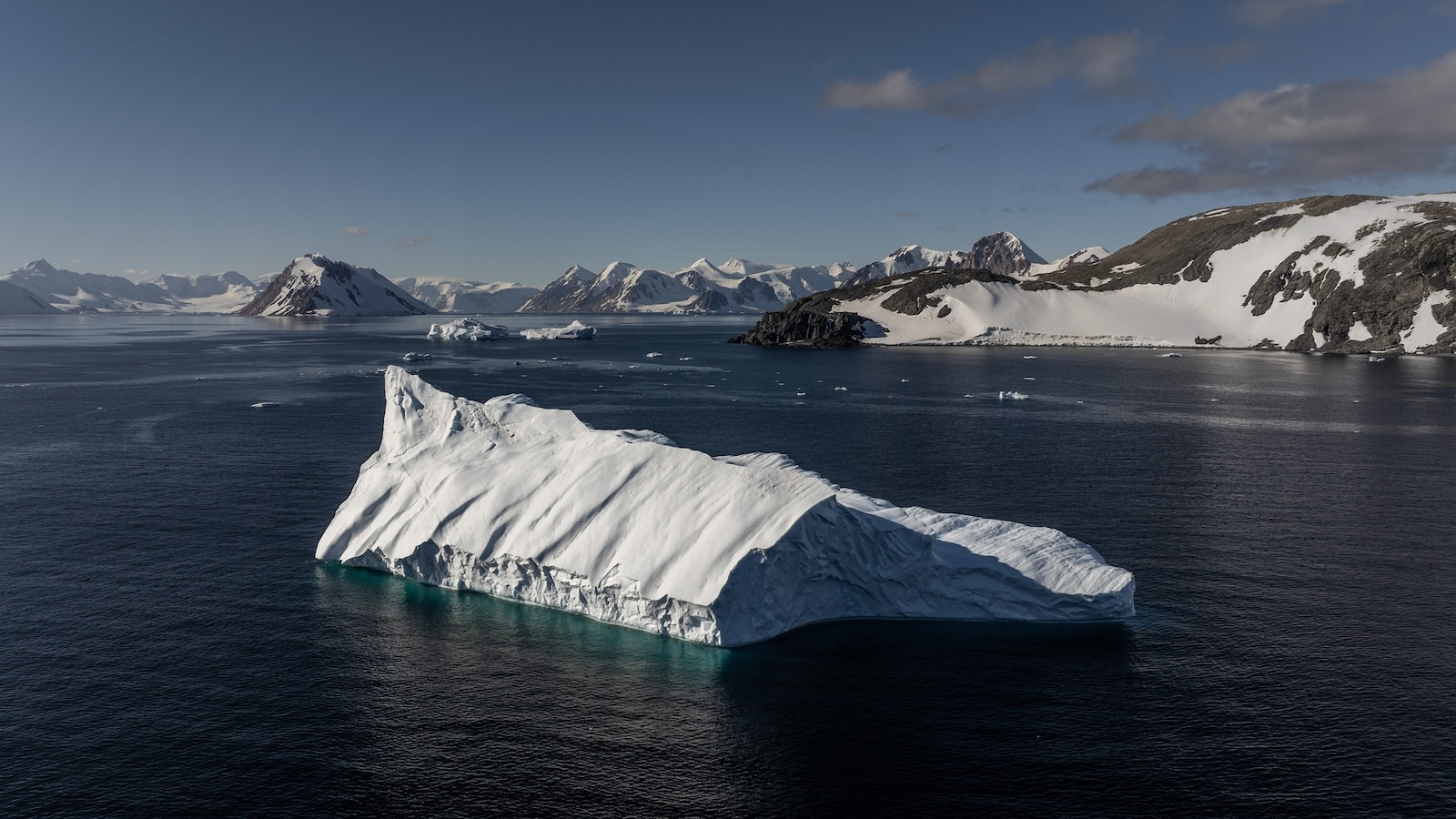
West Antarctic sea ice fails to refreeze after winter heatwave
Satellite imagery from the University of Colorado Boulder's National Snow and Ice Data Center, dated July 12, 2026, reveals that a massive section of sea ice in West Antarctica has failed to refreeze following a winter heatwave. The area of missing ice measures approximately 150,000 square miles, which is roughly the size of Montana.
While Antarctic sea ice typically expands during the Southern Hemisphere's mid-winter, peaking in September, the Bellingshausen Sea—located on the west side of the Antarctic Peninsula—was almost completely ice-free by June. Other reports indicate the region is missing about 650,000 square kilometers (250,000 square miles) of sea ice compared to the 1991-2020 average, an area roughly the size of France.
Peter Neff, a glaciologist at the University of Minnesota, stated that Antarctic sea ice has entered a new, much reduced state
since 2015. Neff estimated that sea ice levels in West Antarctica this year are about 50% lower than average. He attributed these changes to rising sea and air temperatures, as well as strengthening westerly winds connected to global warming.
Heatwaves and Atmospheric Anomalies
The lack of refreezing follows a period of above-average temperatures. National Oceanic and Atmospheric Administration data shows that from January through April, the Bellingshausen Sea experienced surface temperatures between 1.8 and 5.4 degrees Fahrenheit above average. In May, temperatures remained 1.8 to 3.6 degrees Fahrenheit above average, and June saw variations up to 1.8 degrees Fahrenheit above normal.
Ellen Buckley, an assistant professor at the University of Illinois Urbana-Champaign, noted that a low-pressure anomaly north of the Bellingshausen Sea is likely drawing warm air from higher latitudes into the region. This prevent sea ice from forming. The effect is compounded by the lack of a reflective white ice surface, which Neff said contributes to the heatwave because there is no ice to keep the region cold.
The Antarctic Peninsula is warming about five times faster than the global average. Recent spikes have been extreme; Argentina's Servicio Meteorológico Nacional reported that the Esperanza base saw maximum temperatures of 15.4 degrees Celsius on June 5 and 13.4 degrees Celsius on June 6. These figures are more than 20 degrees Celsius above the average daily maximum of minus 6.2 degrees Celsius. Dr. Will Hobbs of the University of Tasmania suggested the heatwave was made worse by the lack of sea ice
.
Implications for Glaciers and Sea Levels
The Pine Island and Thwaites glaciers are among the continent's major contributors to ice loss.
The Thwaites Glacier, often called the Doomsday Glacier
, already contributes to 4% of overall sea level rise. Neff stated that the deterioration of its remaining floating ice shelf has accelerated in recent months and will likely break off in the coming weeks or months. While this will not completely destabilize the glacier, he said it will contribute significantly to global sea level rise.
The potential for larger-scale collapse is severe:
- A 2025 study by the International Thwaites Glacier Collaboration suggests a total collapse of the West Antarctica Ice Sheet could contribute more than 10 feet in sea level rise.
- A June 2025 study in Communications Earth & Environment found that irreversible collapse could begin at ocean temperatures between zero and 0.25°C above current levels.
Ecological and Geological Risks
The loss of sea ice threatens marine ecosystems. Dr. Will Hobbs noted the region is critical for krill, which typically hide under winter ice to graze on algae. Dr. Peter Fretwell of the British Antarctic Survey described the ice loss as a serious problem for penguins, especially emperors
, as ice forms too late and breaks up too early. This follows a 2022 event where thousands of emperor penguin chicks died in four colonies, leading UN advisers to list the species as endangered
.
Beyond immediate melting, geological research suggests that a collapse of the West Antarctic ice sheet could trigger catastrophic geology
. According to researchers Christine Siddoway, Anna Ruth Halberstadt, and Keiji Horikawa, sediment cores from the Amundsen Sea show that during the Pliocene Epoch, the retreat of the ice sheet led to increased volcanic activity, earthquakes, and tsunamis. They found that as the weight of the ice is removed, the land rises, which can trigger these geological events.
Research Challenges
Monitoring these changes is difficult. Neff noted that while satellites provide data, they cannot see into the ocean, leaving researchers with limited ability to study the region during winter.
To address this, the University of Gothenburg deployed the unmanned submarine Ran to map the underside of the Dotson Ice Shelf. The submersible discovered that the glacier melts faster where strong underwater currents erode its base.
The situation remains volatile. Rose Malanga, a Ph.D. Student at the University of Illinois Urbana-Champaign, warned that June's sea ice levels may surpass the record lows set in 2025. Scientists continue to monitor the western region closely to understand why the freeze-thaw cycle has behaved so differently in the last 10 years compared to the previous 30.
How significant is this development?
Participate in our community survey on the trajectory and real-world impact of this news.