Anthony Fauci invokes Fifth Amendment during Senate Covid origins hearing
Dr. Anthony Fauci invoked the Fifth Amendment to refrain from answering questions during a Senate committee hearing regarding the origins of the pandemic.
- Headline Dispatch: Anthony Fauci invokes Fifth Amendment during Senate Covid origins hearing
- Core Takeaway: Dr. Anthony Fauci invoked the Fifth Amendment to refrain from answering questions during a Senate committee hearing regarding the origins of the pandemic.
- Source Synthesis: Continuous live monitoring aggregated across major news wires and independent bureaus.
Anthony Fauci invokes Fifth Amendment during Senate Covid origins hearing
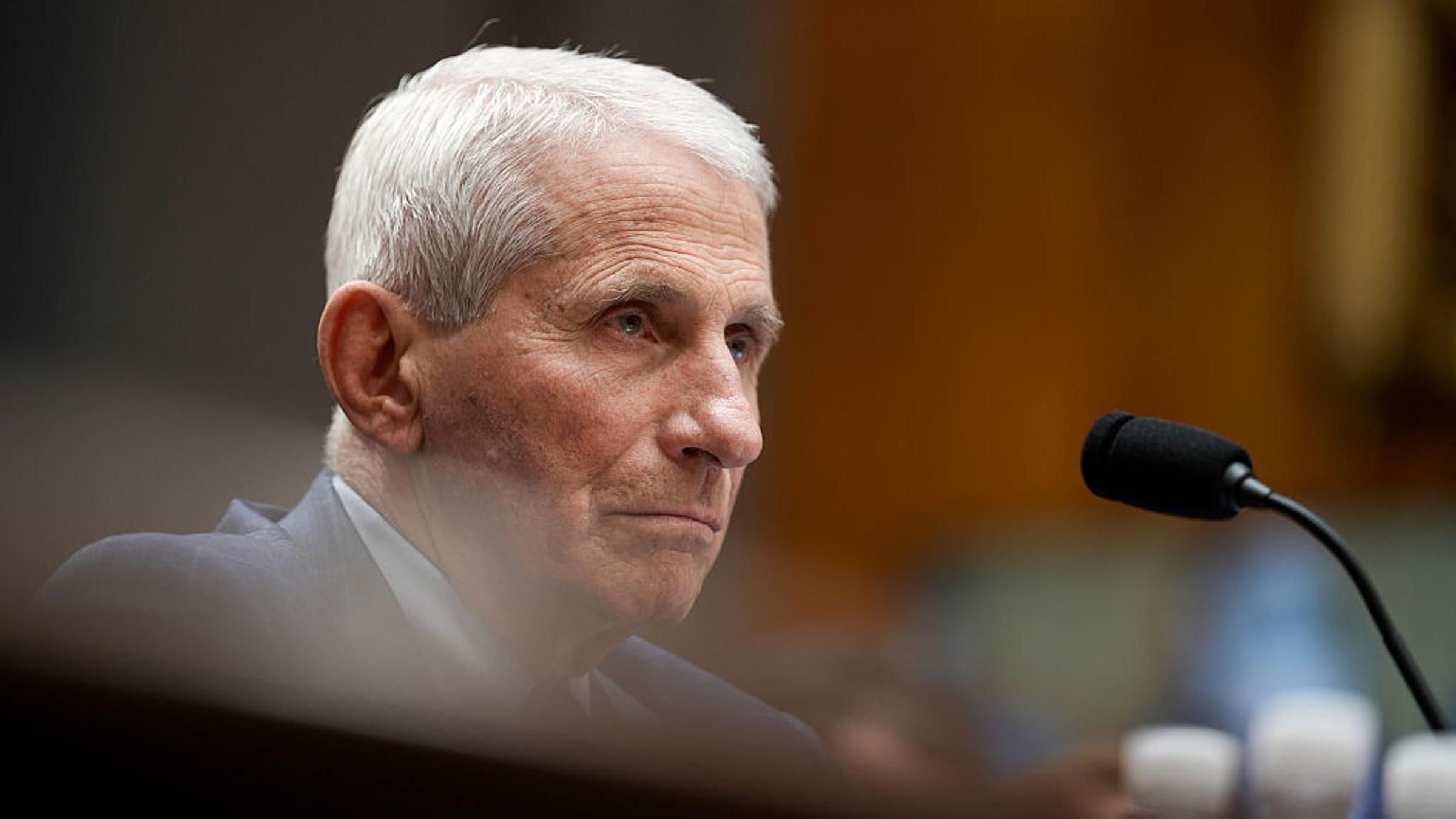
Dr. Anthony Fauci, the former director of the National Institute of Allergy and Infectious Diseases, invoked his Fifth Amendment right against self-incrimination Wednesday during a Senate hearing on the origins of the COVID-19 pandemic. The move came minutes into the proceedings before the Senate Homeland Security and Governmental Affairs Committee.
Fauci appeared before the panel after being subpoenaed by the committee's Republican chairman, Senator Rand Paul of Kentucky. Despite having appeared before Congress hundreds of times over four decades, this was the first time the infectious disease expert used the Fifth Amendment to refrain from answering questions.
In an opening statement, Fauci asserted that Senator Paul's intent was not to seek information but to secure his prosecution. The only conclusion I can reach is that the sole reason he is calling me before this committee is to get me to say something, anything, that could vindicate his repeated public pledges that I end up, in his words, 'behind bars,'
Fauci said. He further accused Paul of an obvious obsession
regarding his prosecution and claimed the release of his personal pandemic diary was an attempt to embarrass and intimidate him.
Senator Paul argued that the hearing remained necessary despite a preemptive pardon granted to Fauci by former President Joe Biden in the final hours of his administration.
Paul added that such a pardon does not erase documents or convert misleading statements into truthful ones."A pardon that protects a person from criminal prosecution doesn't rewrite history,"
Rand Paul, Senator, via Time
The hearing centered on the disputed origins of the coronavirus and allegations that the National Institutes of Health funded gain-of-function research at the Wuhan Institute of Virology. While Fauci has consistently denied these claims, Paul released roughly 1,100 pages of Fauci's pandemic-era diary ahead of the hearing, alleging the documents reveal discrepancies between Fauci's private thoughts and public testimony.
The proceedings were marked by high tension. At one point, Senator Paul had David Schertler, one of Fauci's attorneys, removed from the hearing room after Paul declared the lawyer was being disruptive and was not recognized by the committee. This removal drew applause from attendees.
Throughout the questioning, Fauci repeated a single phrase: On the advice of counsel, I respectfully decline to answer based upon my rights under the Fifth Amendment to the Constitution.
This included refusing to confirm if there was a red folder in front of him detailing the conditions of his subpoena.
Pressure on Fauci had mounted prior to the hearing from the current administration. Health and Human Services Secretary Robert F. Kennedy Jr. Stated earlier in the week that Fauci could face perjury charges if he lied during the hearing, asserting that there are many things that (Fauci) said that we know are lies.
President Donald Trump also criticized Fauci on Truth Social, claiming the doctor made too many bad calls
and noting that he did not let Fauci shut the Country down.
Democrats on the committee condemned the hearing as a partisan exercise. Senator Gary Peters of Michigan, the top Democrat on the panel, argued the hearing was an attempt to turn Fauci into a scapegoat
for a crisis involving hundreds of officials. Peters suggested such proceedings would deter other scientific experts from pursuing public service.
Senator Richard Blumenthal of Connecticut described the event as a show trial
and a perjury trap
designed to put Fauci in criminal jeopardy. Blumenthal compared the effort to the McCarthy hearings of 1953 to 1954. Meanwhile, Senator Maggie Hassan of New Hampshire expressed a preference for hearings on current crises, such as vaccine hesitancy and an ongoing cyclospora foodborne parasite outbreak, rather than relitigating the pandemic.
The debate over the virus's origin remains unresolved. While Fauci has maintained his belief that the virus came from an animal, a 2025 CIA finding shifted its previous assessment to conclude it was likely the virus came from a lab, though the agency noted it had low confidence
in that judgment. Federal reviews have not reached a definitive conclusion, and no evidence has emerged that the virus was engineered and leaked from a laboratory.
How significant is this development?
Participate in our community survey on the trajectory and real-world impact of this news.