Trump says he views strait of Hormuz as ‘American territory’
Donald Trump has asserted that he views the Strait of Hormuz as American territory, linking the waterway's status to potential peace agreements with Tehran.
- Headline Dispatch: Trump says he views strait of Hormuz as ‘American territory’
- Core Takeaway: Donald Trump has asserted that he views the Strait of Hormuz as American territory, linking the waterway's status to potential peace agreements with Tehran.
- Source Synthesis: Continuous live monitoring aggregated across major news wires and independent bureaus.
Trump says he views strait of Hormuz as ‘American territory’
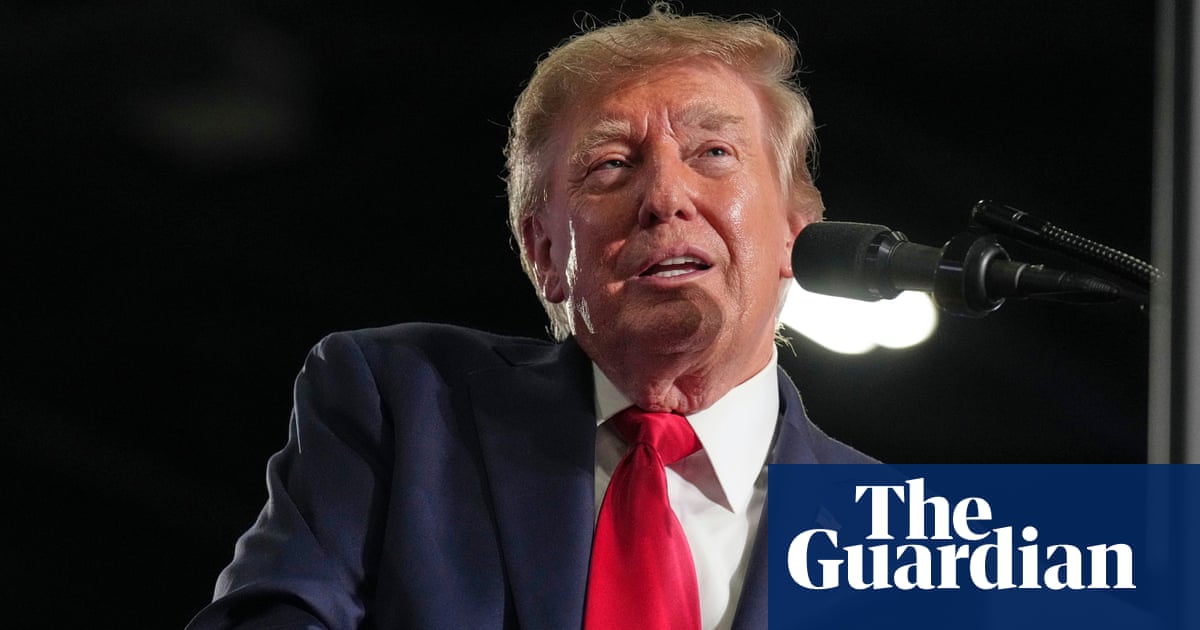
President Donald Trump declared on Friday, August 22, 2026, that he views the Strait of Hormuz as an American territory
during a campaign rally in Myrtle Beach, South Carolina. The comments come as the United States maintains a military blockade of Iranian ports and shipping, while the administration struggles to conclude a war with the country that is approaching the six-month mark.
Speaking to a crowd in support of senatorial candidate Darline Graham, Trump linked the status of the waterway to the possibility of a peace agreement with Tehran.
"They want to make a deal so badly, we don't even know if we want [a deal] because I view the Strait of Hormuz as an American territory right now, it's an American territory,"
Donald Trump, President, via Al Jazeera
The President’s assertions began earlier in the day at Joint Base Andrews, where he told reporters the U.S. Maintains total control
of the region. He stated that the blockade ensures no ships pass unless the U.S. Permits it, and he expressed support for formally declaring the waterway a U.S. Territory. To illustrate this claim, Trump shared an AI-generated map on Truth Social labeling the waterway as NEW U.S. Territory
.
The Strait of Hormuz, bordered by Oman and Iran, is a critical artery for global energy, with roughly one-fifth of the world's seaborne oil supply typically passing through its waters.
During the South Carolina rally, Trump also addressed nuclear proliferation, stating that the U.S. Cannot allow Iran to obtain a nuclear weapon, warning that if they did, you will see some very bad things
. In a lighter moment, Trump joked about whether he should go back and bomb Iran a little bit more
before reciting a poem called The Snake, which he uses to highlight anti-immigrant policies.
The U.S. Central Command (Centcom) reported on Friday that American forces have redirected 68 commercial vessels to ensure compliance with the ongoing blockade. This military pressure is paired with an aggressive financial strategy. Treasury Secretary Scott Bessent has pledged the toughest sanctions in history
, and Vice President JD Vance described economic pressure as Washington's most effective tool in the current phase of the war.
Trump characterized the current effort as the most crushing economic operation ever taken
and warned of tremendous economic consequences
for any nation providing government, business, or financial support to Tehran. China has already pushed back against these threats, describing Trump's "economic D-Day" as something that does not fit the interest of any party
.
From the U.S. Perspective, Trump claims Iran is desperate for a deal but is not yet prepared to accept the necessary terms. Speaking to reporters, he claimed Iran has no money
, no navy, and no air force, adding that the country is facing 350% inflation and failing to pay its police and soldiers.
Iranian officials have dismissed these claims as delusions. Deputy Foreign Minister Kazem Gharibabadi stated on X that Trump's assertions would be corrected
either by circumstances or by Iran. Mohsen Rezaei, head of Iran's Supreme National Security Council, mocked the claim of ownership, stating the gap between the U.S. Claim and its inability to reopen the Strait of Hormuz
is greater than the 7,000-mile distance between the waterway and Washington.
Iranian Foreign Minister Abbas Araghchi argued that the current pressure campaign is bound to fail, citing previous failed attempts at Maximum pressure
and crippling sanctions
over the last 14 years.
The path to resolution remains blocked by conflicting demands. Iranian Parliament Speaker Mohammad Bagher Ghalibaf stated that Tehran will not reopen the Strait of Hormuz until the U.S. Fulfills a 14-point memorandum of understanding. These requirements include the release of frozen Iranian assets, the easing of oil sanctions, and the lifting of the military blockade.
How significant is this development?
Participate in our community survey on the trajectory and real-world impact of this news.